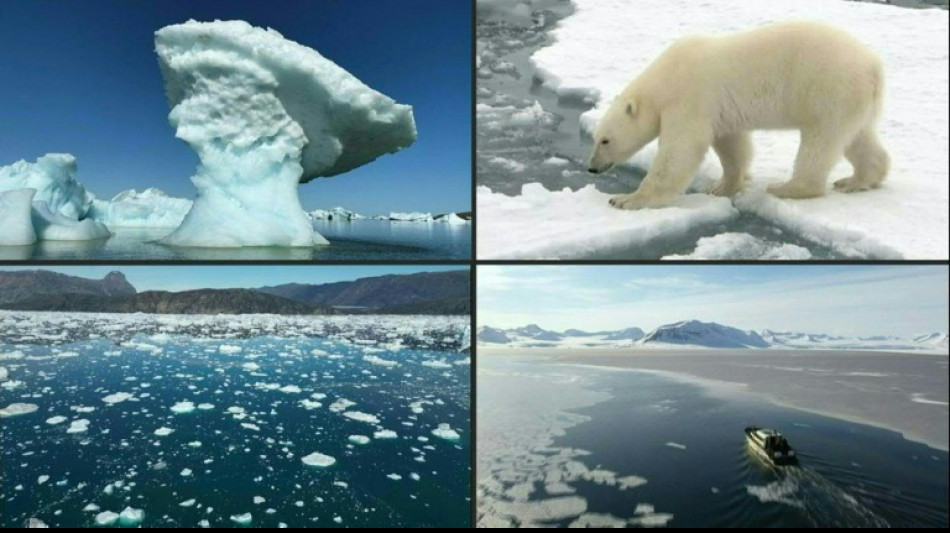
Arctic sea ice levels second lowest on record for January: US data / Photo: Viken KANTARCI, Ekaterina ANISIMOVA, Jonathan NACKSTRAND, Viken KANTARCI, Odd ANDERSEN, Madeleine PRADEL, Diane DESOBEAU - AFP

 مليبانד: الوضع الإنساني في غزة مفجع والحكومة البريطانية لن تقف مكتوفة الأيدي

 First-time boat buyers advised to assess full ownership costs

 Planning and preparation can reduce stress of interstate relocation

 Two more arrested in Carrie Mullane suspected murder investigation

 Mayo school appeals for information after convent and chapel vandalism

 GLP-1 Users Show Higher Rates of Nail Detachment in New Studies

 Canadian soldier Aidan Goulding remembered at Vancouver funeral

 Tayyab Arif hits 57 on Pakistan Test debut against Sri Lanka

 Robert Trujillo discusses literacy and social justice children’s books

 Civil rights advocate William Bill Tucker dies aged 98

 US Treasury order targets bank transfers linked to crypto exchange MEXC

 Eagles record six sacks as rushing attack struggles against Giants

 Thames Water seeks to delay £12bn in debt repayments

 Newark boxing gym expands alternative education programme

 Democrats consider impeachment drive against Defence Secretary Hegseth

 Rail journey offers a slower route to a Berlin city break

 Arsenal control title race as Manchester United fall into bottom three

 Suspected Krakow gunman dies after attack that killed six

 Carrick backs Dalot after hostile reception from Manchester United fans

 Belgian PM Bart De Wever Given New Deadline to Resolve €10 Billion Budget Deadlock

Both the North and South Pole regions have warmed by some three degrees Celsius compared to late 19th-century levels, much faster than the global average.
The US National Snow and Ice Data Center (NSIDC) said the Arctic sea ice surface area was at a record low in December and continued near record lows in during January. It said the surface in January averaged 13.13 million square kilometers (5.07 million square miles).
"In contrast to the cold conditions dominating the contiguous United States, much of the Arctic experienced above-average January temperatures," the NSIDC said.
This was particularly marked north of Greenland and over central Alaska, the report said, with temperatures as much as eight degrees Celsius (14 degrees Fahrenheit) above average for the month.
Greenland is located between the United States and Europe in a region of increasing strategic value as the melting of Arctic sea ice opens up new shipping routes.
President Donald Trump has signalled that he wants the Arctic island -- which is believed to hold large untapped mineral and oil reserves -- to become part of the United States.
Last year annual surface air temperatures in the Arctic were the second-warmest on record, according to the US National Oceanic and Atmospheric Administration.
Rising temperatures melt sea ice which in turn contributes to accelerated warming in the region, as dark sea water absorbs more solar radiation and thus helps to heat up the atmosphere, which then further accelerates the melting of the ice.
In a 2023 study, researchers found that the Arctic Ocean's ice cap would likely disappear in summer as soon as the 2030s and a decade earlier than thought, no matter how aggressively humanity draws down the carbon pollution that drives global warming.
The retreating ice also has a major impact on polar bears, which need sea ice to hunt.
A study published in the journal Science last week found that around half of the decline in Canada's Hudson Bay polar bears from 1979 to 2021 was due to climate-driven sea ice loss.
Y.Shaath--SF-PST