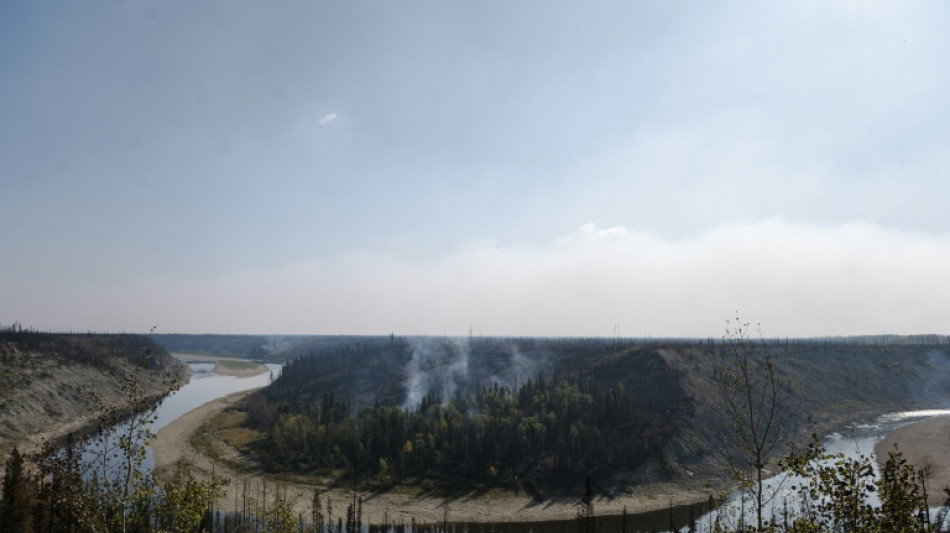
Warmest Arctic summer caused by accelerating climate change / Photo: ANDREJ IVANOV - AFP/File

 Kroenke to buy baseball's Los Angeles Angels: statement

 US defends Trump's Venezuela oil deal

 OpenAI to launch new model with 'stronger safeguards' after hack

 Fans mourn 'bittersweet' final Ariana Grande gig in London

 Norway's King Haakon VIII swears allegiance to constitution

 Syria site infrastructure 'consistent with nuclear reactor': IAEA

 Juventus sign Woltemade, Sarr on loan from Premier League

 US strikes Iran in latest tit-for-tat attacks

 China's Xi arrives in Egypt as US sanctions threat looms over Iran links

 Car bomb at Colombian police station kills one, injures 11

 Rain delays start of play on US Open

 Man City agree blockbuster deal to sign Chelsea star Fernandez: reports

 Alkemya Metacore Secures $50M via Tokenised Equity to Scale Nickel Energy and Security Tech

 Man City chase Fernandez, Arsenal sell Jesus on deadline day

 EU says Russian 'hybrid attacks' won't halt aid to Ukraine

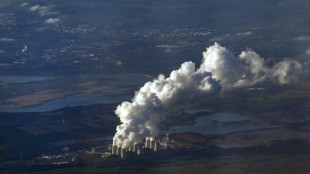 Explosives used in sabotage attack on German power lines

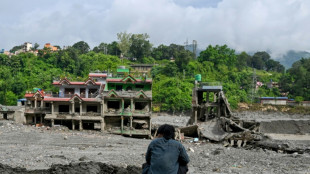
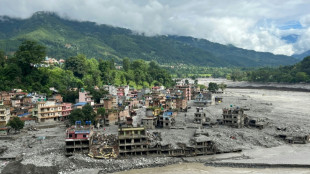 Nepali families hold symbolic funerals for missing after floods

 Newcastle sign Lille forward Fernandez-Pardo

 Even at Elysee, phones are handed in, Macron tells French pupils
 Chelsea agree to sign Atalanta's Ahanor, with Palace loan for this season

 Chelsea sign Atalanta's Ahanor and loan him to Palace

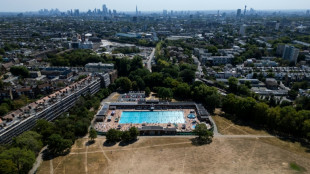 UK chalks up hottest summer on record for second year running

 China's Xi visits Egypt as US sanctions threat looms over Iran links

 RISE Robotics Awarded $100,000 MassVentures Grant to Accelerate Commercialization of Beltdraulic Technology

 Global bond sell-off deepens on inflation concerns

Summer surface air temperatures in 2023 were the warmest ever observed in the Arctic as a result of accelerating human-caused climate change, an official report card published Tuesday said.
The average temperature from the months of July-September was 43 degrees Fahrenheit (6.4 Celsius), the highest since record-keeping began in 1900.
"The overriding message from this year’s report card is that the time for action is now," National Oceanic and Atmospheric Administration administrator Rick Spinrad said in a statement.
"We as a nation and global community must dramatically reduce greenhouse gas emissions that are driving these changes."
Average summer temperatures have been rising 0.31 F (0.17 C) per decade.
Overall, it was the Arctic's sixth warmest year, at 20 degrees Fahrenheit (-7 C).
Now in its 18th year, the NOAA Arctic Report Card is the work of 82 authors across 13 countries.
Observations from this year's report emphasize an ongoing trend line of warming sea and air temperatures, decreasing snow cover, diminishing sea ice, and continued melting of the Greenland Ice Sheet.
But the year also brought high impact events that had the "clear signature" of climate change, for example the Canadian Arctic experienced its worst wildfire season on record, causing the evacuation of 20,000 people from the town of Yellowknife in August.
Also in August, a glacial lake near Juneau, Alaska burst through its dam, causing massive flooding and property damage along the Mendenhall River, as a result of two decades of glacial thinning.
The long term warming trend has a variety of uneven impacts across ecosystems and food webs that people rely upon.
For example, sockeye salmon reached a record-high abundance in Bristol Bay, Alaska in the years 2021 and 2022.
The species, a staple of commercial fisheries, has thrived under warmer waters, which allow juveniles to grow faster in lakes and increase their odds of survival when they reach the ocean.
On the other hand, chinook and chum salmon have drastically declined following heat waves that negatively impact their growth rates, contributing to smaller adults.
Another chapter of the report examines subsea permafrost, a field that is relatively little known, even among scientists -- though potentially an important source of greenhouse gas emissions.
As the world emerged from the last ice age, rising ocean waters in the Arctic covered permafrost, transforming it into subsea permafrost over thousands of years.
"An estimated 2.5 million km2 of subsea permafrost remains today, but it continues to thaw due to the original ocean inundation event and more recent, rapid Arctic warming," the report said.
R.Halabi--SF-PST