World's richest 1% emit as much carbon as bottom two-thirds: report / Photo: Patrick T. Fallon - AFP/File

 Man City sign Fernandez, Ndiaye as Premier League clubs set new spending record

 Alcaraz aims to step it up in round two of US Open title defense
 Honduran judge drops corruption charges against ex-leader Hernandez

 Mudryk joins Spurs on loan from Chelsea after doping ban ends
 What's next after judge strikes down New York's landmark climate fund law

 Cobolli claws out five-set victory at rain-hit US Open
 Ndiaye seizes 'chance of a lifetime' in Man City move

 Global bond sell-off, surging oil prices send markets into the red

 Zuckerberg, Musk make plea at G20 for more AI data centers
 'Discomfort' at G20 finance talks as US hosts Russian minister
 Man City set to sign Fernandez for record fee, Ndiaye on deadline day

 Back-to-school in Cuba a grim day with shortages of everything
 Canadian minister says Russia's G20 presence sparked 'discomfort'

 IMF reaches agreement with Senegal on new $2.2 bn loan programme
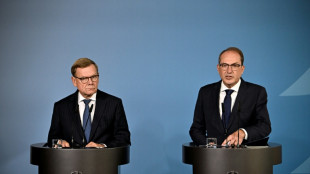 Germany blames Russia for airport drone incident, hits back with sanctions

 Iran president urges return to truce, hails Russian support

 Aster and World Liberty Financial Launch USD1 RWA Boost: Phase 1, Offering 125M $WLFI + 6.25M USD1 in Rewards

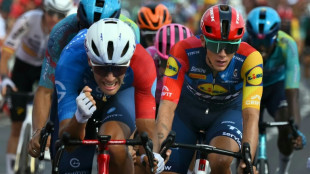 Tronchon sprints to Vuelta stage 10 win, Mas keeps red jersey

 Germany defender Rudiger announces international retirement
 Musk defends AI data centers, slams EU rules at G20
 Activists blame Kenya for Ugandan opposition figure's plight
 Iran president offers US olive branch, hails Russian support

 TrustFinance Community Choice Awards 2026 Opens Global Voting
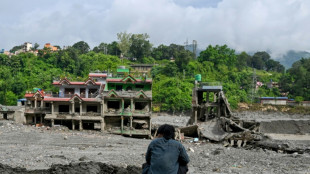 Nepal disaster a climate 'warning signal': foreign minister

 France winger Diaby returns to Leverkusen until 2031

The richest one percent of the global population are responsible for the same amount of carbon emissions as the world's poorest two-thirds, or five billion people, according to an analysis published Sunday by the nonprofit Oxfam International.
While fighting the climate crisis is a shared challenge, not everyone is equally responsible and government policies must be tailored accordingly, Max Lawson, who co-authored the report, told AFP.
"The richer you are, the easier it is to cut both your personal and your investment emissions," he said. "You don't need that third car, or that fourth holiday, or you don’t need to be invested in the cement industry."
"Climate Equality: A Planet for the 99%", was based on research compiled by the Stockholm Environment Institute (SEI) and it examined the consumption emissions associated with different income groups up to the year 2019.
It was published as world leaders prepare to meet for climate talks at the COP28 summit in Dubai later this month. Fears are growing that limiting long-term warming to 1.5 degrees Celsius could soon be impossible to achieve.
Among the key findings of this study are that the richest one percent globally -- 77 million people -- were responsible for 16 percent of global emissions related to their consumption.
That is the same share as the bottom 66 percent of the global population by income, or 5.11 billion people.
The income threshold for being among the global top one percent was adjusted by country using purchasing power parity -- for example in the United States the threshold would be $140,000, whereas the Kenyan equivalent would be about $40,000.
Within country analyses also painted very stark pictures.
For example, in France, the richest one percent emit as much carbon in one year as the poorest 50 percent in 10 years.
Excluding the carbon associated with his investments, Bernard Arnault, the billionaire founder of Louis Vuitton and richest man in France, has a footprint 1,270 times greater than that of the average Frenchman.
The key message, according to Lawson, was that policy actions must be progressive.
"We think that unless governments enact climate policy that is progressive, where you see the people who emit the most being asked to take the biggest sacrifices, then we're never going to get good politics around this," he said.
These measures could include, for example, a tax on flying more than ten times a year, or a tax on non-green investments that is much higher than the tax on green investments.
While the current report focused on carbon linked only to individual consumption, "the personal consumption of the super-rich is dwarfed by emissions resulting from their investments in companies," the report found.
Nor are the wealthy invested in polluting industries at a similar ratio to any given investor -- billionaires are twice as likely to be invested in polluting industries than the average for the Standard & Poor 500, previous Oxfam research has shown.
B.Mahmoud--SF-PST