
Climate change, El Nino drive hottest June on record / Photo: GREG BAKER - AFP

 Kroenke to buy baseball's Los Angeles Angels: statement

 US defends Trump's Venezuela oil deal

 OpenAI to launch new model with 'stronger safeguards' after hack

 Fans mourn 'bittersweet' final Ariana Grande gig in London

 Norway's King Haakon VIII swears allegiance to constitution

 Syria site infrastructure 'consistent with nuclear reactor': IAEA

 Juventus sign Woltemade, Sarr on loan from Premier League

 US strikes Iran in latest tit-for-tat attacks

 China's Xi arrives in Egypt as US sanctions threat looms over Iran links

 Car bomb at Colombian police station kills one, injures 11

 Rain delays start of play on US Open

 Man City agree blockbuster deal to sign Chelsea star Fernandez: reports

 Alkemya Metacore Secures $50M via Tokenised Equity to Scale Nickel Energy and Security Tech

 Man City chase Fernandez, Arsenal sell Jesus on deadline day

 EU says Russian 'hybrid attacks' won't halt aid to Ukraine

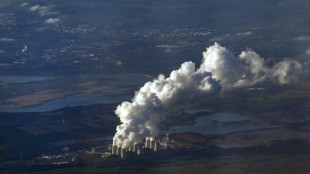 Explosives used in sabotage attack on German power lines

 Nepali families hold symbolic funerals for missing after floods

 Newcastle sign Lille forward Fernandez-Pardo

 Even at Elysee, phones are handed in, Macron tells French pupils

 Chelsea agree to sign Atalanta's Ahanor, with Palace loan for this season

 Chelsea sign Atalanta's Ahanor and loan him to Palace

 UK chalks up hottest summer on record for second year running

 China's Xi visits Egypt as US sanctions threat looms over Iran links

 RISE Robotics Awarded $100,000 MassVentures Grant to Accelerate Commercialization of Beltdraulic Technology

 Global bond sell-off deepens on inflation concerns

The world saw its hottest June on record last month, the EU's climate monitoring service said Thursday, as climate change and the El Nino weather pattern looked likely to drive another scorching northern summer.
The announcement from the EU monitor Copernicus marked the latest in a series of records for a year that has already seen a drought in Spain and fierce heat waves in China and the United States.
"The month was the warmest June globally at just over 0.5 degrees Celsius above the 1991-2020 average, exceeding June 2019 -– the previous record -– by a substantial margin," the EU monitor said in a statement from its C3S climate unit.
Temperatures reached June records across northwest Europe while parts of Canada, the United States, Mexico, Asia and eastern Australia "were significantly warmer than normal", Copernicus noted.
On the other hand it was cooler than normal in western Australia, the western United States and western Russia, it said.
- 'Hottest day ever' -
It was the latest in a series of heat records over recent years, reflecting the impact of global warming driven by greenhouse gases released from human activity.
Preliminary readings published Wednesday by US meteorologists indicated Tuesday was the hottest day ever recorded, based on data from the US National Oceanic and Atmospheric Administration's National Centers for Environmental Prediction.
Copernicus noted that sea surface temperatures were higher globally than any previous June on record, with "extreme marine heatwaves" around Ireland, Britain and the Baltic.
Antarctic sea ice reached its lowest extent for June since satellite observations began, at 17 percent below average.
C3S scientist Julien Nicolas told AFP the June record was driven largely by "very warm ocean surface temperatures" in the Pacific and Atlantic due to El Nino, a periodic warming phenomenon.
"On top of that is this warming trend of the ocean absorbing 90 percent of heat released by human activity," he added.
The global temperature was 0.53 C above the 30-year average at an average of 16.51C (61.72F), he calculated.
"June 2023 is way above the others. This is the kind of anomaly we are not used to," Nicolas said.
Petteri Taalas, secretary-general of the UN's World Meteorological Organization, warned on Monday that El Nino "will greatly increase the likelihood of breaking temperature records and triggering more extreme heat in many parts of the world and in the ocean."
He urged governments "to mobilise preparations to limit the impacts on our health, our ecosystems and our economies."
- Heatwave deaths -
El Nino is a naturally occurring pattern associated with increased heat worldwide, as well as drought in some parts of the world and heavy rains elsewhere.
In addition, human activity –- mainly the burning of fossil fuels -– is continuing to emit roughly 40 billion tonnes of planet-warming CO2 into the atmosphere every year.
As well as withering crops, melting glaciers and raising the risk of wildfires, higher-than-normal temperatures also cause health problems ranging from heatstroke and dehydration to cardiovascular stress.
In the United States, local officials said last week that at least 13 people died from an extreme heat wave in Texas and Louisiana.
China issued its highest-level heat alert for northern parts of the country as Beijing baked in temperatures around 40 degrees Celsius (104 Fahrenheit).
After a record hot June in Britain, water use restrictions were imposed in parts of southeastern England, and Scotland put regions on water scarcity alert.
The world has warmed an average of nearly 1.2 C since the mid-1800s, unleashing extreme weather including more intense heatwaves, more severe droughts in some areas and storms made fiercer by rising seas.
X.AbuJaber--SF-PST