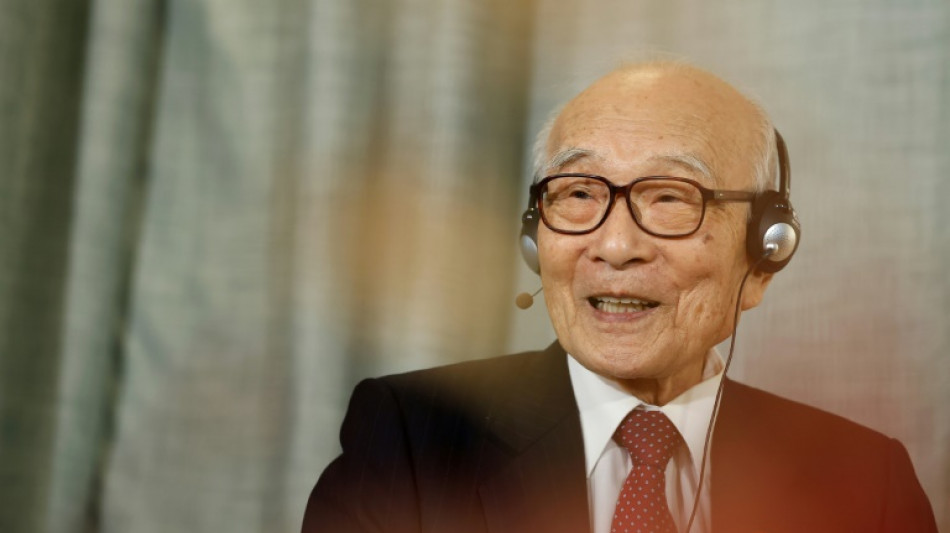
Japan's atomic bomb survivors to accept Nobel Prize in Oslo / Photo: Odd ANDERSEN - AFP

 'I'll adapt': First pregnant candidate navigates French presidential race
 Hong Kong convicts Tiananmen vigil activists of inciting subversion
 The Hong Kong Tiananmen vigil activists convicted in national security trial

 Eel-powered Japan whizz-kid, 11, chases Asian Games history
 Asian markets extend rally as traders assess US Treasuries pledge

 Barcelona enter new era as Flick targets La Liga hat-trick

 Pogacar favourite for Vuelta with Grand Tour treble in sight

 Bangladesh coach Simmons wary of Australia backlash in second Test
 Hong Kong Tiananmen activists to receive national security verdict
 Who are the candidates vying to lead the UN?
 Swiatek into Cincinnati semis after Rybakina injury

 University suspends academic behind Jason Arday plagiarism charges

 Key European leaders demand Israel halt West Bank settlement project
 McIlroy bounces back to share BMW Championship lead

 Cobolli fueled by candy in sweet defeat of Paul
 Jailed Pakistan ex-PM Khan moved to hospital on court order: party
 Pogacar eyes 'missing' piece ahead of Vuelta return
 US, Canada 'very close' to trade deal, Ottawa says, as details emerge

 Ronaldinho returns in search of 'beautiful' 300th goal
 US pushes allies, China to back Trump's economic war on Iran
 Former NBA MVP Harden reportedly set to return to Cavaliers

 Brook makes Pakistan pay for drop as England dominate first Test

 MemeCore Arrives on Nasdaq Through $1 Billion Landmark Treasury Transaction
 First US deportees land in Liberia
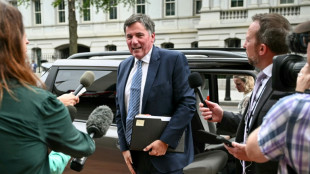 US, Canada resume talks to finalize trade deal as details emerge

This year's Nobel Peace Prize will be presented Tuesday to Japan's atomic bomb survivors' group Nihon Hidankyo, which lobbies against the weapons now resurging as a threat 80 years after the Hiroshima and Nagasaki bombings.
The three co-chairs of Nihon Hidankyo will accept the prestigious award during a ceremony starting at 1:00 pm (1200 GMT) in Oslo's City Hall, at a time when states like Russia increasingly threaten to break the international taboo on the use of nuclear arms.
"Nuclear weapons and humanity cannot co-exist," one of the three co-chairs, Terumi Tanaka, told a press conference on Monday in the Norwegian capital.
"Humanity may come to its end even before climate change brings its devastating impacts," the 92-year-old said.
Nihon Hidankyo works tirelessly to rid the planet of the weapons of mass destruction, with testimonies from survivors of Hiroshima and Nagasaki, known as "hibakusha".
Around 140,000 people were killed in Hiroshima when the United States detonated an atomic bomb over the Japanese city on August 6, 1945.
A further 74,000 were killed by a US nuclear bomb in Nagasaki three days later.
Survivors suffered from radiation sickness and longer-term effects, including elevated risks of cancer.
The bombings, the only times nuclear weapons have been used in history, were the final blow to imperial Japan and its brutal rampage across Asia. It surrendered on August 15, 1945.
Tanaka was 13 when the bomb was dropped on Nagasaki, killing five members of his family.
On Monday, he expressed alarm at the resurgence of nuclear threats and urged Russian President Vladimir Putin to stop brandishing the threat to prevail in the war in Ukraine.
"President Putin, I don't think he truly understands what nuclear weapons are for human beings," he said.
"I don't think he has even thought about this."
- Firing signals -
Putin began making nuclear threats shortly after Russia's full-scale invasion of Ukraine in February 2022. He signed a decree in late November lowering the threshold for using atomic weapons.
Russia has the largest nuclear arsenal in the world.
On November 21, Moscow fired its new Oreshnik hypersonic missile on the Ukrainian city of Dnipro in an escalation of the almost three-year war.
The missile is designed to be equipped with a nuclear warhead, but was not in this case.
Russian Foreign Minister Sergei Lavrov said Thursday that Moscow was ready to use "any means" to defend itself.
"It is crucial for humanity to uphold the nuclear taboo, to stigmatise these weapons as morally unacceptable," the chairman of the Norwegian Nobel Committee, Jorgen Watne Frydnes, said on Monday.
"To threaten with them is one way of reducing the significance of the taboo, and it should not be done," he added.
"And of course, to use them should never be done ever again by any nation on Earth."
North Korea, which has increased its ballistic missile tests, and Iran, which is suspected of developing nuclear weapons though it denies this, are also seen as posing a threat to the West.
Nine countries now have nuclear weapons: Britain, China, France, India, North Korea, Pakistan, Russia, the United States, and, unofficially, Israel.
In 2017, 122 governments negotiated and adopted the historic UN Treaty on the Prohibition of Nuclear Weapons (TPNW), but the text is considered largely symbolic as no nuclear power has signed it.
This year's Nobel prizes in the other disciplines -- medicine, physics, chemistry, literature and economics -- will be awarded at a separate ceremony in Stockholm.
G.AbuOdeh--SF-PST