-
 Drovix Launches In-House Multi-Asset Liquidity and Execution Stack for Sub-Millisecond Fills, Tighter Spreads
-
Australia charges man with trying to pass Ukraine military intel to Russia
-
 'So bad it's good': rough animated film becomes surprise Chinese hit
-
Ex-Pakistan PM Khan taken back to jail after hospital checks: govt

-
 'I'll adapt': First pregnant candidate navigates French presidential race
-
China, Indonesia hold talks on security, defence

-
 Hong Kong convicts Tiananmen vigil activists of inciting subversion
-
Train to nowhere? South Korea's lonely push for peace with the North

-
 The Hong Kong Tiananmen vigil activists convicted in national security trial
-
Australia's Hussey mulls role with England for Ashes series

-
 Eel-powered Japan whizz-kid, 11, chases Asian Games history
-
Indian captain 'scapegoat' in Britain's Russia shadow fleet case, wife says

-
 Asian markets extend rally as traders assess US Treasuries pledge
-
Rosenior seeks to match Paris FC's capital ambition as Ligue 1 returns

-
 Barcelona enter new era as Flick targets La Liga hat-trick
-
Inter set for Serie A title defence as Milan get Amorim reboot

-
 Pogacar favourite for Vuelta with Grand Tour treble in sight
-
'Greatest' Springboks face All Blacks in clash of juggernauts

-
 Bangladesh coach Simmons wary of Australia backlash in second Test
-
William and Harry: Britain's warring royal brothers

-
 Hong Kong Tiananmen activists to receive national security verdict
-
UN holds second informal poll for next leader
-
 Who are the candidates vying to lead the UN?
-
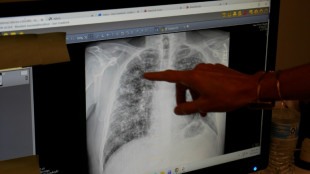
In US mining hub, black lung rates soar
-
 Swiatek into Cincinnati semis after Rybakina injury
-
Champions Arsenal embrace being 'hunted' as Premier League returns

-
 University suspends academic behind Jason Arday plagiarism charges
-
World No.2 Rybakina retires from Cincinnati clash with Swiatek

-
 Key European leaders demand Israel halt West Bank settlement project
-
'I heard you missed me': Melania Trump jokes about month out of spotlight

-
 McIlroy bounces back to share BMW Championship lead
-
Amazon Prime Video to invest $2 bn in Latin America productions

-
 Cobolli fueled by candy in sweet defeat of Paul
-
Panama Canal to reduce shipping over El Nino-fueled drought

-
 Jailed Pakistan ex-PM Khan moved to hospital on court order: party
-
Maradona trial on hold over possible medical evidence mix-up

-
 Pogacar eyes 'missing' piece ahead of Vuelta return
-
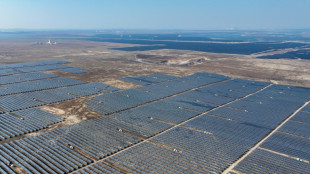
'Green dilemma': China's solar boom hurt birds, says study
-
 US, Canada 'very close' to trade deal, Ottawa says, as details emerge
-
Pegula hangs on to dispatch Anisimova, reach Cincinnati semi-finals

-
 Ronaldinho returns in search of 'beautiful' 300th goal
-
US charges woman with IS-inspired plot to blow up New York State Capitol

-
 US pushes allies, China to back Trump's economic war on Iran
-
What a record-breaking El Nino could mean for the world

-
 Former NBA MVP Harden reportedly set to return to Cavaliers
-
Duplantis edges Karalis to win Lausanne Diamond League pole vault

-
 Brook makes Pakistan pay for drop as England dominate first Test
-
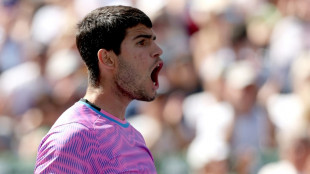
Alcaraz to return for US Open title defence
-
 MemeCore Arrives on Nasdaq Through $1 Billion Landmark Treasury Transaction
-
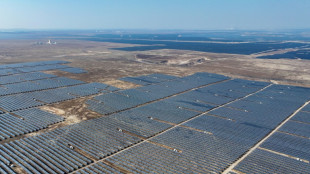
China's rapid solar expansion hurt bird diversity: study
EU supports reduced protection for wolves
EU member states on Wednesday voted in favour of lowering the protection status of wolves, a move decried by conservationists that paves the way for a relaxation of tight hunting restrictions.
Grey wolves were virtually exterminated in Europe a century ago, but their numbers have rebounded thanks to conservation efforts, triggering howls of protest from farmers angered at livestock losses.
Representatives of the 27 EU states backed a proposal to push for changes to an international wildlife convention that would see the species downgraded from "strictly protected" to "protected".
Only two countries voted against, according to a diplomatic source and the the European Commission, which put forward the plan, welcomed its approval.
Steffi Lemke, Germany's environment minister, said a rising wolf population made the decision "justifiable from a nature conservation perspective and necessary from the point of view of livestock farmers."
In 2023, there were breeding packs of grey wolves in 23 European Union countries, with a total population estimated at around 20,300 animals, bringing the elusive creatures into more frequent contact with humans.
In announcing plans to revise the protection status last year, Commission chief Ursula von der Leyen said the "concentration of wolf packs in some European regions has become a real danger especially for livestock".
Von der Leyen herself lost her beloved pony Dolly to a wolf that crept into an enclosure on her family's rural property in Germany two years ago -- leading some to suggest the matter had become personal.
- 'Politically motivated' -
The wolf became a "strictly protected" species under the 1979 Bern Convention, to which the EU is a party.
The text allows for the animal to be killed or captured only when it poses a threat to livestock, health or safety.
The commission's proposal would loosen such rules by demoting wolves to "protected" species, which would allow hunting under strict regulation.
This year has seen rolling protests by farmers around Europe against the bloc's environmental rules.
The pan-European farmers group Copa-Cogeca welcomed "a major step forward in the management of wolf populations and harmonious co-existence" while the FACE European Hunting Federation called it an all-round "victory".
But animal rights activists fear that the change could result in large numbers of wolves being hunted.
Already in 2022, several Austrian regions authorised the killing of wolves in what critics argued was a breach of current European laws.
More than 300 environmental and animal protection organisations opposed a status downgrade, arguing it was premature since while population numbers have grown, their recovery is ongoing.
In a letter, they said there was no evidence that culling reduced depredation on farmed animals. Hunting was no replacement for other prevention measures, such as fencing, they argued.
"We see this as a proposal that is politically motivated and not at all based on science," Sabien Leemans, senior policy officer at environmental group WWF, told AFP.
- Small impact -
A 2023 EU report found that the overall impact of wolves on livestock was "very small". Only 0.065 percent of the bloc's 60 million sheep were mauled to death every year and just over 18 million euros ($20 million) was paid to compensate for wolf damage annually.
The report said horses, dogs and other animals were also sometimes slain -- but that no fatal wolf attacks on people have been recorded in Europe over the past 40 years.
Wednesday's vote, once formally adopted by the bloc's environment ministers, will give the EU a mandate to push for a change in the Bern Convention at a meeting in December.
A two-thirds majority is required to alter the text, which was signed by 50 countries, including the 27 EU members.
If the convention is changed, the commission will then be allowed to move to amend related EU rules.
"Today's decision... empowers rural communities to take the necessary steps to protect themselves," said Herbert Dorfmann, a lawmaker with the conservative European People's Party (EPP), the largest group in the European Parliament.
But Leemans of the WWF warned it risked opening a "Pandora's box". Some countries are already pushing to ease hunting rules for brown bears too, she argued -- a concern dismissed by the commission.
"What we're talking about is the wolf, and only the wolf," commission spokesman Adalbert Jahnz told reporters.
W.Mansour--SF-PST