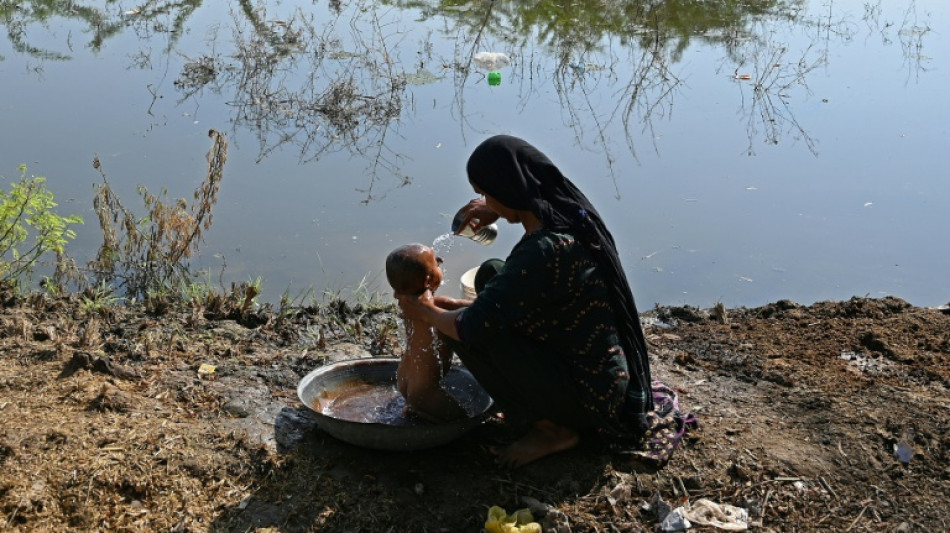
Rewire financial system to aid climate-hit nations: UN chief / Photo: Aamir QURESHI - AFP

 Lyon down Palace in Europa League, Sunderland leave it late

 UniCredit says receives ECB green light for Commerzbank takeover
 New York City pension fund asks Anthropic to delay IPO

 Venezuela's Maduro denies US torture charges as 'false accusations'

 Somalia sets May presidential election despite insecurity

 Chelsea's Caicedo eager to be more of a leader

 Rahm reaches separation deal with LIV in bankruptcy court

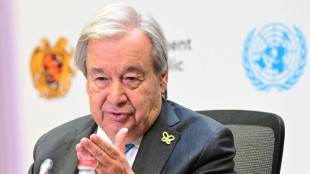 UN chief urges nations to end 'war on nature'

 Newcastle boss Jaissle says Fernandez-Pardo just needs a goal

 Infantino offers apology but 'no answers' at FIFA meeting over World Cup plan

 Don't exclude Turkey from 'Made in Europe' plan: minister to AFP

 French duo Justice to score 'GTA VI': game maker

 El Nino a 'terrifying' threat to coral reefs: UN biodiversity expert

 Barcola must get used to Liverpool highs and lows, says Iraola

 Versus Trade Wins Best ECN/STP Broker APAC 2026, Marking Third UF Awards Recognition

 Three dead as Istanbul sees heaviest rainfall in 80 years

 US producer prices see biggest jump since 2022 in added challenge to Trump

 Swiatek avoids seed exodus to breeze into Wuhan last eight

 PM condemns 'chaos' as violent protests grip Albania

 'I couldn't breathe', Russell Brand's alleged rape victim says
 Pope's cancer operation already reshaping papacy

 Zverev cruises past De Minaur to reach Shanghai semi-finals

 Ukraine's Zelensky defies Trump with Russian refinery strikes

 Holders Australia edge New Zealand 24-22 to open Rugby league World Cup

 'Ocarina of Time': Nintendo gives Zelda classic a modern makeover

The world needs to rethink the international financial system to provide debt relief to countries battered by devastating and costly climate impacts like Pakistan, UN chief Antonio Guterres said Monday.
The catastrophic flooding that put a third of Pakistan under water this year displaced millions of people, swamped swathes of key farmland, and destroyed homes, roads and bridges.
The disaster caused more than $30 billion of damages and economic losses, according to World Bank estimates, piling pressure on an already fragile economy.
"Pakistan deserves massive support directly from the international community," Guterres said, at a packed meeting with Pakistani Prime Minister Shehbaz Sharif at the UN COP27 climate summit in Egypt.
Guterres renewed support for "loss and damage" funds to help vulnerable nations deal with the accelerating impacts of climate change.
But he said the world needs to go further and rewire how countries access finance, particularly from the multilateral development banks.
"It is important to review the way the international financial system works in order for Pakistan to have access to effective debt relief," he said, as well as to access "concessional funding" needed for the "huge" levels of reconstruction.
- 'Billions to trillions' -
Pakistan, already facing a cost-of-living crisis, a nose-diving rupee and dwindling foreign exchange reserves, saw inflation surge after the floods.
Ratings agency Moody's later downgraded its sovereign credit rating, saying the floods had exacerbated Pakistan's liquidity and external credit weaknesses.
Guterres said Pakistan was a "victim of being a middle-income country", which means it has not been able to access sufficient debt relief.
The UN chief called for arrangements in which the country could swap debt payments for investments in rehabilitation and recovery.
Guterres also said G20 rich nations, which hold sway over the boards of the International Monetary Fund and World Bank and are meeting next week in Indonesia, should promote reforms.
His calls echo those of Barbados Prime Minister Mia Mottley, who said Monday that the "world looks still too much like it did when it was part of an imperialistic empire".
Calling for a "new deal" for the post-World War II Bretton Woods financial system, Mottley said lending should be expanded "from billions to trillions".
While wealthy nations can borrow at rates of between one to four percent, nations in the global south are saddled with rates of 14 percent, severely hampering the abilities of emerging economies to meet their climate goals, she noted.
What she called "fault lines" in the global industrial strategy dominated by wealthy nations, meanwhile, constrain the access of developing nations to renewable energy technology.
"The global south remains at the mercy of the global north on these issues," she said.
In recent weeks the IMF has announced financing deals with Barbados and Costa Rica under a new arrangement called the Resilience and Sustainability Trust (RST).
The Washington-based lender aims to mobilise $45 billion for a new facility funded by member governments, and to provide 20-year loans to about 140 low- and middle-income eligible nations.
O.Farraj--SF-PST