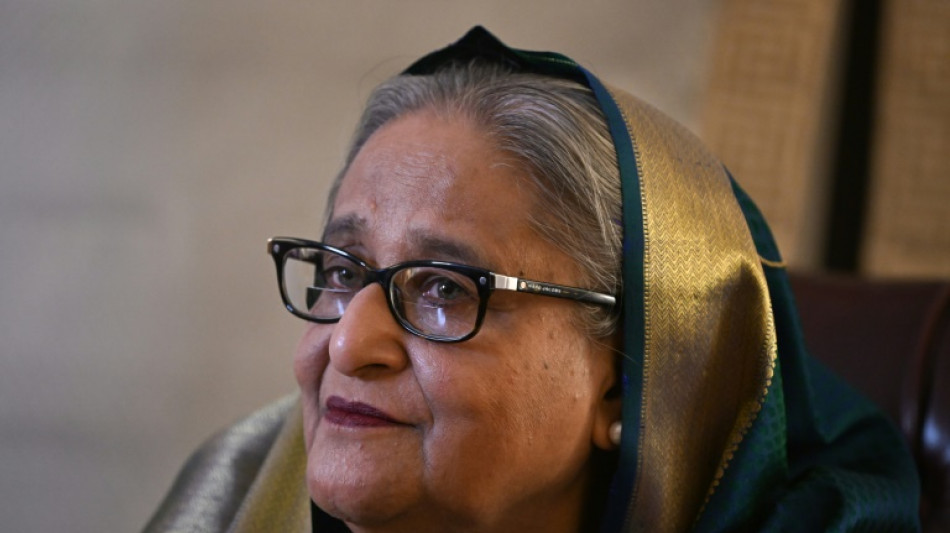
Bangladesh PM denounces 'tragedy' of rich nations on climate / Photo: Ed JONES - AFP

 El Nino a 'terrifying' threat to coral reefs: UN biodiversity expert
 Barcola must get used to Liverpool highs and lows, says Iraola

 Versus Trade Wins Best ECN/STP Broker APAC 2026, Marking Third UF Awards Recognition
 Three dead as Istanbul sees heaviest rainfall in 80 years

 US producer prices see biggest jump since 2022 in added challenge to Trump
 Swiatek avoids seed exodus to breeze into Wuhan last eight
 PM condemns 'chaos' as violent protests grip Albania

 'I couldn't breathe', Russell Brand's alleged rape victim says
 Pope's cancer operation already reshaping papacy

 Zverev cruises past De Minaur to reach Shanghai semi-finals

 Ukraine's Zelensky defies Trump with Russian refinery strikes
 Holders Australia edge New Zealand 24-22 to open Rugby league World Cup

 'Ocarina of Time': Nintendo gives Zelda classic a modern makeover

 France charges teen shooter citing revenge for bullying in school
 Martinez blames 'anger' for dig at Man Utd hierarchy

 Crowds build as Albanian PM tours protest aftermath
 China-North Korea bridge opens, 12 years late
 Asian Cup in Saudi Arabia could be postponed but 'no hurry' to decide: AFC
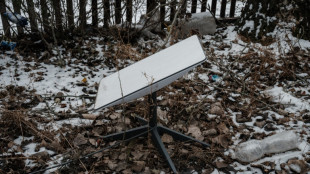
 Conrad wields axe after South Africa loss to Australia
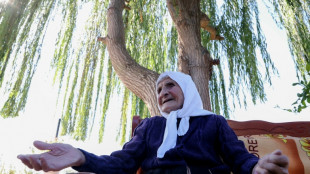
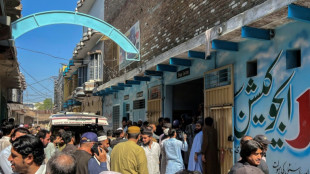 School roof collapse kills teacher, 27 children in NW Pakistan
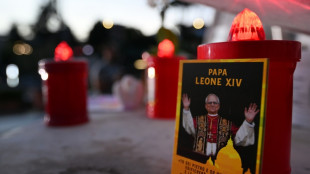
 Haze turns Indonesia skies orange, shuts schools in East Timor
 California puts first US billionaire tax to the vote
 School headscarf ban meets resistance in Austria
 World's top cocoa producer aims for a climate-tough bean
 Why is Shell facing lawsuits over climate disasters in Brazil and the Philippines?

A country of fertile, densely populated deltas, low-lying Bangladesh is among the most vulnerable nations in the world to climate change.
But the urgency of the situation is not being matched by actions of countries responsible for emissions, Prime Minister Sheikh Hasina said.
"They don't act. They can talk but they don't act," she told AFP on a visit to New York for the United Nations General Assembly.
"The rich countries, the developed countries, this is their responsibility. They should come forward. But we are not getting that much response from them. That is the tragedy," she said.
"I know the rich countries, they want to become more rich and rich. They don't bother for others."
Bangladesh has produced a miniscule amount of the greenhouse gas emissions that have already contributed to the warming of the planet by an average of nearly 1.2 degrees Celsius above pre-industrial levels.
The Paris accord called for $100 billion a year by 2020 from wealthy nations to help developing nations cope with climate change. That year, $83.3 billion was committed, including through private sources, according to Organization for Economic Co-operation and Development figures.
One key issue facing the next UN climate summit, to take place in Egypt in November, is whether wealthy nations also need to pay for losses and damages from climate change -- not just to pay for adaptation and mitigation.
"We want that fund to be raised. Unfortunately we didn't get a good response from the developed countries," Hasina said.
"Because they are the responsible ones for these damages, they should come forward," the 74-year-old added.
Wealthy nations have agreed only to discuss the loss and damage issue through 2024.
This year's General Assembly featured repeated calls for climate justice. The leader of tiny Vanuatu urged an international treaty against fossil fuels while the prime minister of Pakistan warned that floods that have swamped one-third of his country could happen elsewhere.
- Questions on Rohingya -
Climate is not the only issue on which Bangladesh sees inaction from the West.
Some 750,000 Rohingya fled to Bangladesh in 2017 after a scorched-earth campaign against the minority group by troops in neighboring Myanmar, a campaign that the United States has described as genocide.
While the world has saluted Bangladesh for taking in the refugees -- along with 100,000 who fled earlier violence -- attention has shifted since the Covid-19 pandemic and now Russia's invasion of Ukraine.
"As long as they are in our country, we feel that it is our duty," she said. But for Bangladeshi hosts, patience is running thin, she said.
Michelle Bachelet, then the UN human rights chief, said on a visit in August that there was growing anti-Rohingya sentiment in Bangladesh.
"Local people also suffer a lot," Hasina said. "I can't say that they're angry, but they feel uncomfortable."
"All the burden is coming upon us. This is a problem."
The Rohingya refugees, who are mostly Muslim, live largely in ramshackle camps with tarpaulins, sheet metal and bamboo.
Bachelet on her visit said there was no prospect of sending them back to Buddhist-majority, military-run Myanmar, where the Rohingya are not considered citizens.
But in her interview, Hasina signaled that there were few options other than for the Rohingya to reside in camps.
"It is not possible for us to give them an open space because they have their own country. They want to go back there. So that is the main priority for everybody," Hasina said.
"If anybody wants to take them, they can take them," she added. "Why should I object?"
D.AbuRida--SF-PST