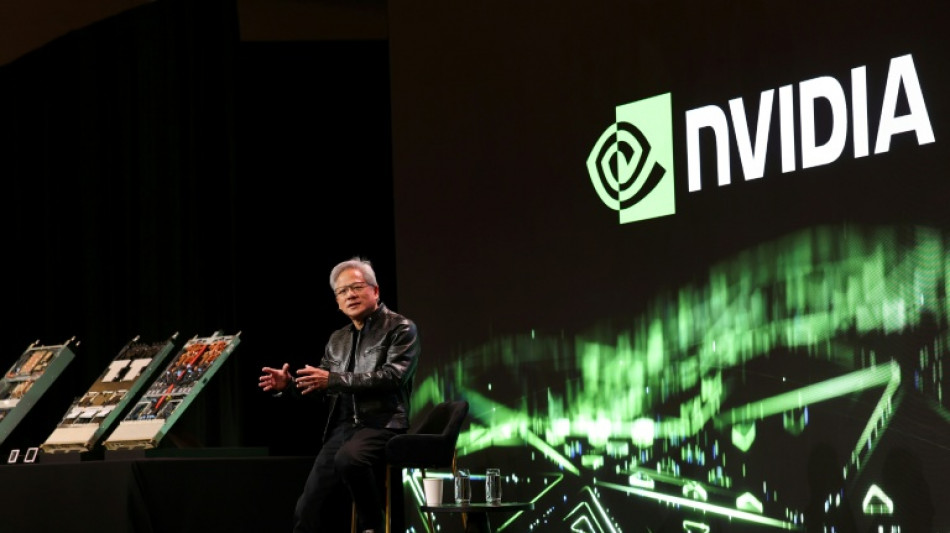
US allows Nvidia to send advanced AI chips to China with restrictions / Photo: Patrick T. Fallon - AFP

 West must embrace 'national power' or face decline: Rubio

 Shell refining margins reach record highs as wars hit supply

 Former Spain, Barca winger Pedro retires from football
 Arteta signs new Arsenal deal until 2030

 Stocks decline as oil climbs on Mideast flareup
 Gauff says online abuse was 'draining' after China Open exit

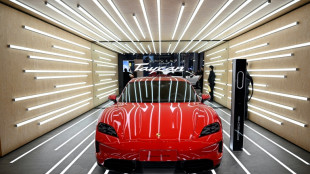 As sector struggles, Porsche puts luxury ahead of volume
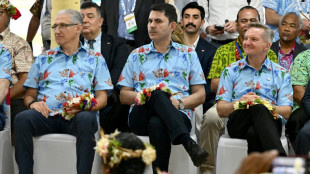
 'It's personal': Fiji minister pushes better climate finance at pre-COP

 Russia glosses over dark Soviet past in reinvented museum

 UK tax body opened probe into Man City in 2018: FT

 Yemen's Houthis claim new attacks on Saudi airports as conflict deepens

 Germany factory production at highest level for 18 months
 Thailand floods death toll rises to 60 since mid-September
 US pushes Russia for information on plague reports

 Myanmar leader lands in Malaysia for migrant return talks

 Indian central bank hikes rates for first time since 2023

 US military on Okinawa face curfew, alcohol ban after murder case

 Fierce lobbying in EU over 'forever chemicals'

 Dodgers beat Braves and Padres avoid sweep in MLB playoffs

 Mourning, war and elections as Israel marks October 7

 Messi says Argentina retirement is 'saddest day of my career'
 Oil rises and stocks fall as Hormuz worries flare

 Pacific presses world for help 'surviving' climate change at pre-COP summit
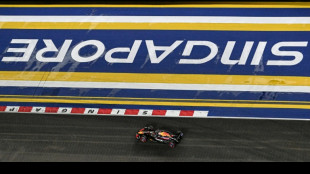 Verstappen revival to be put to the test in steamy Singapore

 US woman who survived botched execution is conscious, speaking: lawyers
The US Commerce Department on Tuesday opened the door for Nvidia to sell advanced artificial intelligence chips in China with restrictions, following through on a policy shift announced last month by President Donald Trump.
The change would permit Nvidia to sell its powerful H200 chip to Chinese buyers if certain conditions are met -- including proof of "sufficient" US supply -- while sales of its most advanced processors would still be blocked.
However, uncertainty has grown over how much demand there will be from Chinese companies, as Beijing has reportedly been encouraging tech companies to use homegrown chips.
Chinese officials have informed some tech companies they would only approve buying H200 chips under special circumstances, such as development labs or university research, news website The Information reported on Tuesday, citing people with knowledge of the situation.
The Information had previously reported that Chinese officials were calling on companies there to pause H200 purchases while they deliberated requiring them to buy a certain ratio of AI chips made by Nvidia rivals in China.
In its official update on Tuesday, the Commerce Department's Bureau of Industry and Security (BIS) said it had changed the licensing review policy for H200 and similar chips from a presumption of denial to handling applications case by case.
Trump announced on December 9, 2025 that he had reached an agreement with Chinese President Xi Jinping to allow Nvidia to export its H200 chips to China, with the US government getting a 25-percent cut of sales.
The move marked a significant shift in US export policy for advanced AI chips, which Joe Biden's administration had heavily restricted over national security concerns about Chinese military applications.
Democrats in Congress have criticized the shift as a huge mistake that will help the Chinese military and economy.
Nvidia chief executive Jensen Huang has advocated for the company to be allowed to sell some of its more advanced chips in China, arguing the importance of AI systems around the world being built on US technology.
The chips -- graphic processing units or GPUs -- are used to train the AI models that are the bedrock of the generative AI revolution launched with the release of ChatGPT in 2022.
The GPU sector is dominated by Nvidia, now the world's most valuable company thanks to frenzied global demand and optimism for AI.
China and the United States are competing for dominance in AI.
H200s are roughly 18 months behind the US company's most state-of-the-art offerings, which will still be off-limits to China.
Q.Bulbul--SF-PST