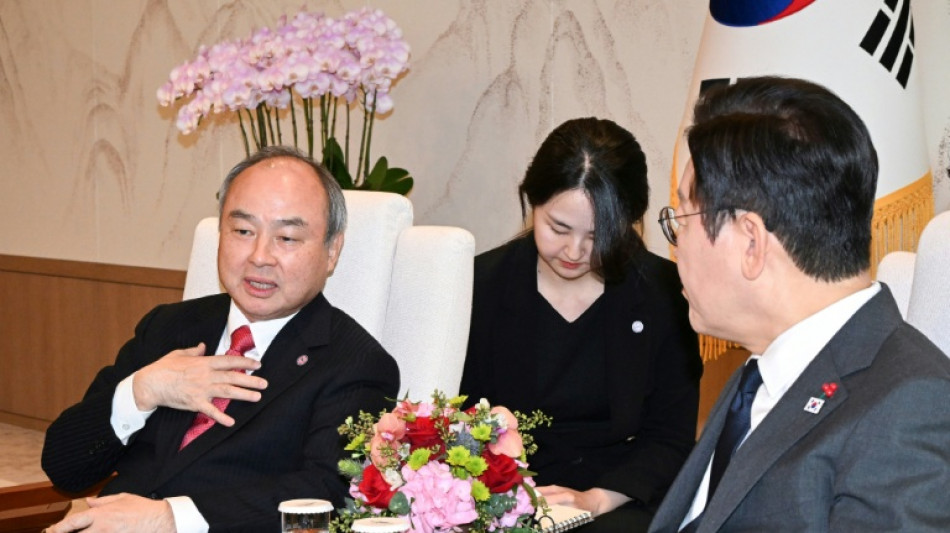
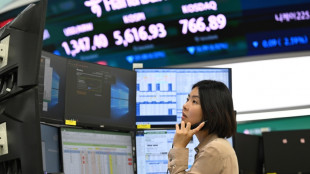
Softbank's Son says super AI could make humans like fish, win Nobel Prize / Photo: KIM Min-Hee - POOL/AFP

 Lyon down Palace in Europa League, Sunderland leave it late

 UniCredit says receives ECB green light for Commerzbank takeover

 New York City pension fund asks Anthropic to delay IPO

 Venezuela's Maduro denies US torture charges as 'false accusations'

 Somalia sets May presidential election despite insecurity

 Chelsea's Caicedo eager to be more of a leader

 Rahm reaches separation deal with LIV in bankruptcy court
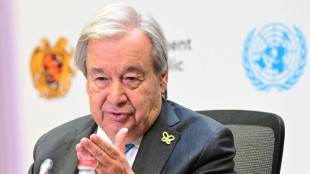 UN chief urges nations to end 'war on nature'
 Newcastle boss Jaissle says Fernandez-Pardo just needs a goal

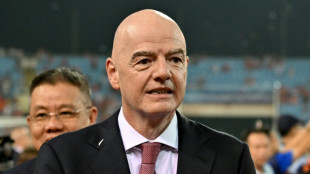 Infantino offers apology but 'no answers' at FIFA meeting over World Cup plan

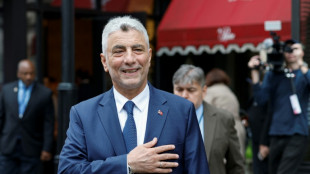 Don't exclude Turkey from 'Made in Europe' plan: minister to AFP

 French duo Justice to score 'GTA VI': game maker
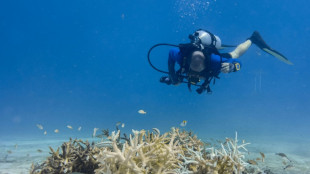 El Nino a 'terrifying' threat to coral reefs: UN biodiversity expert
 Barcola must get used to Liverpool highs and lows, says Iraola
 Versus Trade Wins Best ECN/STP Broker APAC 2026, Marking Third UF Awards Recognition
 Three dead as Istanbul sees heaviest rainfall in 80 years

 US producer prices see biggest jump since 2022 in added challenge to Trump
 Swiatek avoids seed exodus to breeze into Wuhan last eight
 PM condemns 'chaos' as violent protests grip Albania

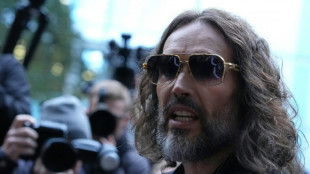
 'I couldn't breathe', Russell Brand's alleged rape victim says

 Pope's cancer operation already reshaping papacy

 Zverev cruises past De Minaur to reach Shanghai semi-finals
 Ukraine's Zelensky defies Trump with Russian refinery strikes
 Holders Australia edge New Zealand 24-22 to open Rugby league World Cup

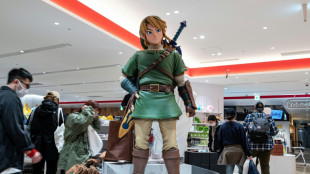 'Ocarina of Time': Nintendo gives Zelda classic a modern makeover

Softbank CEO and AI investor Masayoshi Son said Friday that advanced artificial intelligence could surpass humans to the extent that "we become fish" and could even win the Nobel Prize in Literature.
Meeting South Korean President Lee Jae Myung in Seoul, Son, whose SoftBank is a major backer of ChatGPT maker OpenAI, described a future in which an advanced AI surpasses humans by a magnitude of 10,000.
"The difference between the human brain and the... goldfish in the pot -- the difference is 10,000 times," he said.
"But it's going to be different -- we will become fish, they (the AI) become like humans," he said.
"They will be 10,000 times smarter than us," he told President Lee, who had vowed to turn South Korea into an AI powerhouse.
Son compared the relationship between this artificial super intelligence (ASI) and humankind to relations between human beings and their pets.
"We try to make them happy... we try to live in peace with them," he said.
"We don't need to eat them... ASI does not eat protein. They don't need to eat us -- don't worry."
Lee responded laughing that he was "a bit concerned now".
He asked Son whether ASI could win a Nobel Prize in Literature, won last year by South Korean author Han Kang.
"I do not believe this is a desirable situation," Lee said.
"I think it will," Son replied.
ASI has been described as a hypothetical scenario when AI overtakes humans.
Scientists still consider it a long way off, but say a crucial first step -- artificial general intelligence (AGI), which would outperform humans across most tasks -- could arrive within a decade.
Q.Bulbul--SF-PST