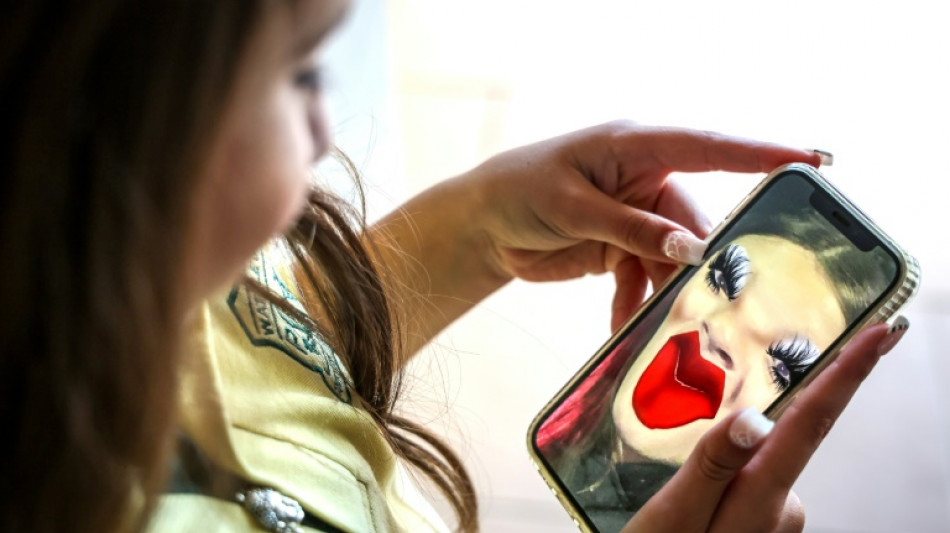
Australia ban offers test on social media harm / Photo: DAVID GRAY - AFP/File

 Lyon down Palace in Europa League, Sunderland leave it late

 UniCredit says receives ECB green light for Commerzbank takeover

 New York City pension fund asks Anthropic to delay IPO

 Venezuela's Maduro denies US torture charges as 'false accusations'

 Somalia sets May presidential election despite insecurity
 Chelsea's Caicedo eager to be more of a leader

 Rahm reaches separation deal with LIV in bankruptcy court

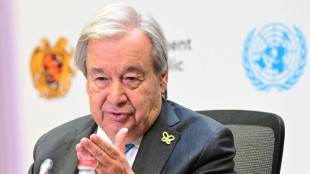 UN chief urges nations to end 'war on nature'
 Newcastle boss Jaissle says Fernandez-Pardo just needs a goal
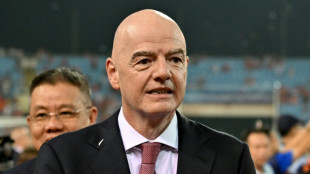 Infantino offers apology but 'no answers' at FIFA meeting over World Cup plan

 Don't exclude Turkey from 'Made in Europe' plan: minister to AFP
 French duo Justice to score 'GTA VI': game maker
 El Nino a 'terrifying' threat to coral reefs: UN biodiversity expert

 Barcola must get used to Liverpool highs and lows, says Iraola
 Versus Trade Wins Best ECN/STP Broker APAC 2026, Marking Third UF Awards Recognition
 Three dead as Istanbul sees heaviest rainfall in 80 years
 US producer prices see biggest jump since 2022 in added challenge to Trump

 Swiatek avoids seed exodus to breeze into Wuhan last eight
 PM condemns 'chaos' as violent protests grip Albania

 'I couldn't breathe', Russell Brand's alleged rape victim says

 Pope's cancer operation already reshaping papacy

 Zverev cruises past De Minaur to reach Shanghai semi-finals
 Ukraine's Zelensky defies Trump with Russian refinery strikes
 Holders Australia edge New Zealand 24-22 to open Rugby league World Cup
 'Ocarina of Time': Nintendo gives Zelda classic a modern makeover

Australia's under-16 social media ban will make the nation a real-life laboratory on how best to tackle the technology's impact on young people, experts say.
Those in favour of the world-first December 10 ban point to a growing mass of studies that suggest too much time online takes a toll on teen wellbeing.
But opponents argue there is not enough hard proof to warrant the new legislation, which could do more harm than good.
Adolescent brains are still developing into the early 20s, said psychologist Amy Orben, who leads a digital mental health programme at the University of Cambridge.
A "huge amount" of observational research, often based on surveys, has tracked a correlation between teen tech use and worse mental health, she told AFP.
But it is hard to draw firm conclusions, because phones are so ingrained into daily life, and young people may turn to social media because they are already suffering.
"With technology, because it's changing so fast, the evidence base will always be uncertain," Orben said.
"What could change the dial are experimental studies or evaluations of natural experiments. So evaluating the Australia ban is hugely important because it actually gives us a window on what might be happening."
- No 'smoking gun' -
To try and shed light on the cause-and-effect relationship, Australian researchers are recruiting 13- to 16-year-olds for a "Connected Minds Study" to assess how the ban affects their wellbeing.
A World Health Organization survey last year found that 11 percent of adolescents struggled to control their use of social media.
Other research has shown a link between excessive social media use and poor sleep, body image, school performance and emotional distress, such as a 2019 study of US schoolchildren in JAMA Psychiatry that found those who spent over three hours a day on social media could be at heightened risk for mental health problems.
So some experts argue the right time to act is now.
"I actually don't think this is a science issue. This is a values issue," said Christian Heim, an Australian psychiatrist and clinical director of mental health.
"We're talking about things like cyberbullying, the risk of suicide, accessing sites on anorexia nervosa and self-harm," he told AFP.
Evidence of a risk is growing, Heim said -- pointing to a 2018 study by neuroscientist Christian Montag that linked addiction to the Chinese messaging app WeChat to shrinking grey matter volume in part of the brain.
"We can't wait for stronger evidence," Heim said.
Scott Griffiths of the Melbourne School of Psychological Sciences said a "smoking gun research study" was unlikely to emerge soon to prove the harms of social media.
But the ban was worth trying, he said.
"I'm hopeful that the major social media companies seeing this full-throated legislative action come into play will finally be motivated to more meaningfully protect the health and wellbeing of young people."
- 'Too blunt' -
More than three-quarters of Australian adults agreed with the new legislation before it passed, a poll indicated.
However, an open letter signed by more than 140 academics, campaigners and other experts cautioned that a ban would be "too blunt an instrument".
"People were saying: 'Well, kids are getting more anxious. There must be a reason -- let's ban social media'," argued one signatory, Axel Bruns, a digital media professor at Queensland University of Technology.
Children may simply have more reasons to be anxious, under pressure from pandemic-interrupted schooling and troubled by wars in Gaza and Ukraine, he told AFP.
And a ban might push some teens to more extreme, fringe sites, while preventing other marginalised young people from finding community.
Noelle Martin, an activist focused on image-based online abuse and deepfakes, feared the Australian ban would do little to help, given the country's history on enforcement of existing laws.
"I don't believe it will stop, prevent or do much to meaningfully combat this issue," Martin said.
In any case, the political decision has been taken in Australia.
"Social media is doing social harm to our children," Prime Minister Anthony Albanese said this year.
"There is no doubt that Australian kids are being negatively impacted by online platforms, so I'm calling time on it."
S.Barghouti--SF-PST