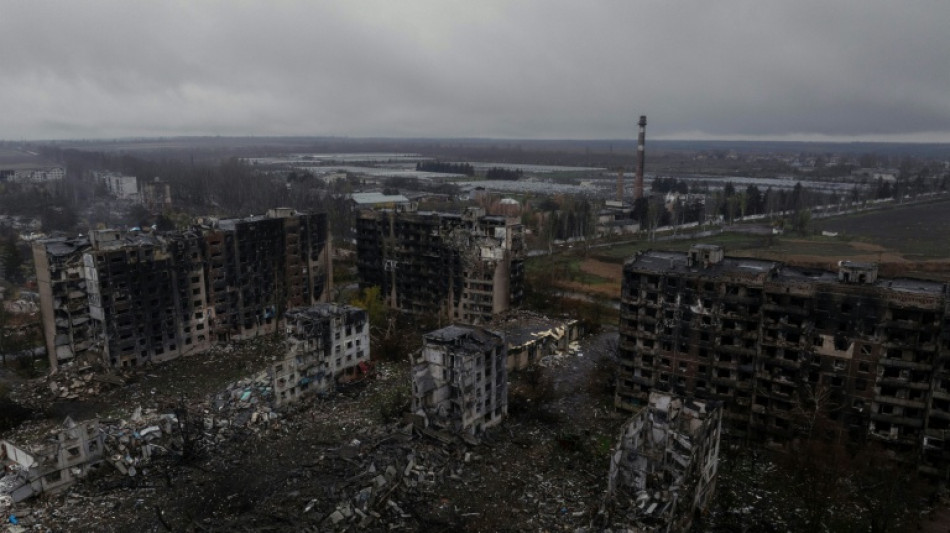
Where do Ukraine and Russia stand after four years of war? / Photo: Iryna Rybakova - 93RD SEPARATE MECHANIZED BRIGADE "KHOLODNYI YAR"/AFP

 Ronaldo opens door for Portugal return, apologises for walkout

 'Nobody seems to care': Russian city shrugs off plague reports
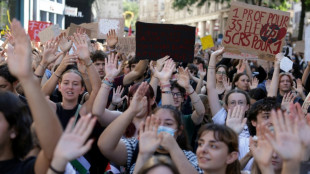
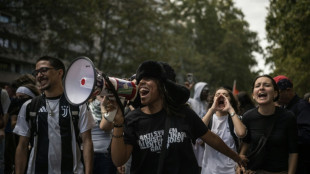 Hundreds arrested in French school protests as Macron summons ministers
 WADA seeks tough anti-doping stance from Kenya
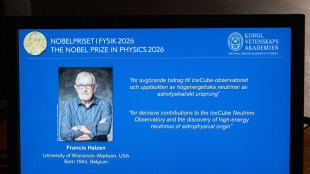
 German ex-spy chief arrested for suspected espionage, treason
 Furyk vows US will 'do more' to end Ryder Cup losing streak

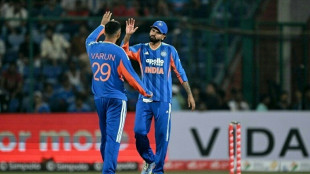
 Iyer hits ton as India hammer West Indies in T20 opener
 Mandhana named India women's team captain after Kaur quits
 'The sound keeps coming back': children maimed in Ethiopia's Tigray clashes
 Paris Women's Fashion Week: the key trends
 i-payout Introduces a New Approach to Payments, Closing the Beneficiary Information Gap

 New Generation of Crypto Miners Released by ASICID

 New investor forecasts LIV Golf teams could be worth $100 mn each
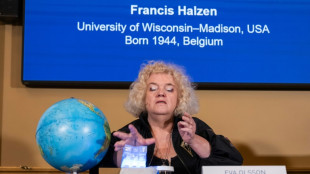
 Shakira, Pique return to court over children visit arrangements
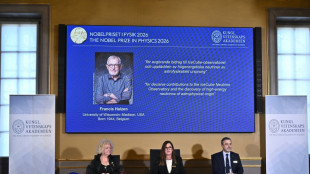 Nobel physics prize hails 'ghostly messengers' from space
 France's Mistral unveils latest model in sovereign AI push
 Stocks climb as oil prices retreat
 Vstock Transfer Names Securities Industry Veteran Erica Goodstein General Counsel and Chief Compliance Officer

 Four Indonesian seamen return home after Somali pirate ordeal

 Crisis-striken Haiti postpones elections
 Germany arrests ex-spy chief on suspicion of giving secrets to foreign powers
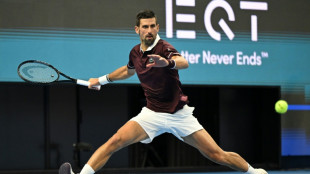
 Djokovic wins China Open after de Minaur retires
 IMF warns cost-of-living shocks cause 'lasting deterioration' in affordability
 Alcaraz wins Japan Open for first title since injury return
 'We're working to keep football clean', Turkish minister says

Russia launched its full-scale invasion of Ukraine on February 24, 2022, unleashing the deadliest war in Europe since World War II.
As the conflict reaches its four-year mark, AFP looks at the state of the conflict and some of the consequences for both countries:
- Destruction -
The war has resulted in widespread destruction in Ukraine.
Entire cities in Ukraine's east and south, among them Bakhmut, Toretsk and Vovchansk, have been reduced to rubble by fighting.
The World Health Organisation has verified more than 2,800 attacks on healthcare facilities since 2022, while Russian attacks on energy infrastructure have cut heating and power to millions.
Around a fifth of Ukraine is contaminated by mines or unexploded ordnance, according to the UN's Mine Action Service.
The total cost of reconstruction in Ukraine is estimated at around $588 billion over the next decade, the World Bank reported Monday.
- Death -
The United Nations has verified over 15,000 civilian deaths in Ukraine since 2022, although it says the actual number is likely considerably higher as it has no access to areas under Russian occupation, like the port city of Mariupol where thousands are reported to have died in a Russian siege.
Ukrainian retaliatory attacks on Russian border regions have also killed hundreds.
Around 20,000 children have been forcibly displaced or kidnapped from Russian-occupied Ukrainian land, according to estimates by Kyiv.
Forced to flee when Russia invaded, around 5.9 million Ukrainian refugees live outside the country and another 3.7 million are displaced internally, the UN Refugee Agency says.
Neither side releases reliable data on military casualties.
Ukrainian President Volodymyr Zelensky said earlier this month 55,000 of his soldiers had been killed -- a toll widely believed to be an underestimate.
Russia has not given an official update on losses since September 2022.
The BBC and Mediazona, an independent Russian site, have verified the deaths of at least 177,000 Russian soldiers through public obituaries and announcements by family and local officials -- a toll also believed to be below the real number.
The Center for Strategic and International Studies (CSIS) think tank estimates as many as 325,000 Russian soldiers may have been killed since 2022, while putting the number of Ukrainian soldiers killed at 100,000-140,000.
- Frontline & diplomacy -
Moscow occupied around 19.5 percent of Ukraine as of mid-February, according to data from the Institute for the Study of War (ISW).
Around seven percent -- the Crimean peninsula and part of the eastern Donbas region -- was already occupied before the invasion.
Moscow's advances were the biggest since 2022 last year, although they have slowed considerably since the opening months of its campaign, according to ISW data.
The Kremlin is pushing for full control of Ukraine's eastern Donetsk region and a ban on Western military support for Kyiv.
Ukraine says giving in would leave it vulnerable to future attack, is constitutionally impossible, and unacceptable to much of Ukrainian society.
Since Donald Trump returned to the White House, several rounds of talks -- in Istanbul, Abu Dhabi and Geneva -- have failed to secure a deal.
- Economy -
The war has decimated Ukraine's economy and put Russia's under massive strain.
After growing strongly on the back of massive military spending -- up to nine percent of GDP -- Russia's economy has slowed, posting just a one percent expansion last year.
Oil and gas revenues -- which provide roughly a quarter of state budget income -- fell to a five‑year low last year, as a wave of Western sanctions and Ukrainian attacks on oil facilities crimped exports.
Ukraine's economy shrank by almost a third in the year after Russia's invasion. It has clawed a little of that back, but its government now depends on the International Monetary Fund and other foreign lenders to cover day-to-day spending.
- Politics and society -
The war has had a deep impact on politics and society in both countries.
Ukraine has suspended elections due to martial law and lately been rocked by a corruption scandal in the war-battered energy sector.
In Russia, authorities have orchestrated a domestic crackdown on dissent unprecedented since the Soviet era.
Russian prosecutors have opened more than 10,000 cases against people accused of criticising its armed forces, Russian news site Mediazona reported in 2024.
Returning veterans in Russia, many of them former convicts recruited to fight, have been blamed for an increase in violent crime.
- Allies -
Ukraine is heavily dependent on Western weapons, intelligence and finance.
Europe has delivered 201 billion euros in aid since 2022, according to figures from Germany's Kiel Institute.
The United States has supplied $115 billion in total, but Trump has partially suspended arms deliveries and is pushing Europe to pick up the tab.
North Korea sent thousands of soldiers to fight with the Russian army and is widely reported to have sent millions of artillery shells to Moscow.
Iran has supplied drone technology to Moscow, and China has become its vital economic partner, accused in the West of helping the Kremlin avoid sanctions.
X.Habash--SF-PST