AI delay may affect Europe's future, says ECB chief / Photo: Kirill KUDRYAVTSEV - AFP

 Lyon down Palace in Europa League, Sunderland leave it late

 UniCredit says receives ECB green light for Commerzbank takeover

 New York City pension fund asks Anthropic to delay IPO

 Venezuela's Maduro denies US torture charges as 'false accusations'

 Somalia sets May presidential election despite insecurity

 Chelsea's Caicedo eager to be more of a leader

 Rahm reaches separation deal with LIV in bankruptcy court

 UN chief urges nations to end 'war on nature'

 Newcastle boss Jaissle says Fernandez-Pardo just needs a goal

 Infantino offers apology but 'no answers' at FIFA meeting over World Cup plan

 Don't exclude Turkey from 'Made in Europe' plan: minister to AFP

 French duo Justice to score 'GTA VI': game maker

 El Nino a 'terrifying' threat to coral reefs: UN biodiversity expert

 Barcola must get used to Liverpool highs and lows, says Iraola
 Versus Trade Wins Best ECN/STP Broker APAC 2026, Marking Third UF Awards Recognition
 Three dead as Istanbul sees heaviest rainfall in 80 years

 US producer prices see biggest jump since 2022 in added challenge to Trump

 Swiatek avoids seed exodus to breeze into Wuhan last eight

 PM condemns 'chaos' as violent protests grip Albania

 'I couldn't breathe', Russell Brand's alleged rape victim says

 Pope's cancer operation already reshaping papacy

 Zverev cruises past De Minaur to reach Shanghai semi-finals

 Ukraine's Zelensky defies Trump with Russian refinery strikes
 Holders Australia edge New Zealand 24-22 to open Rugby league World Cup

 'Ocarina of Time': Nintendo gives Zelda classic a modern makeover

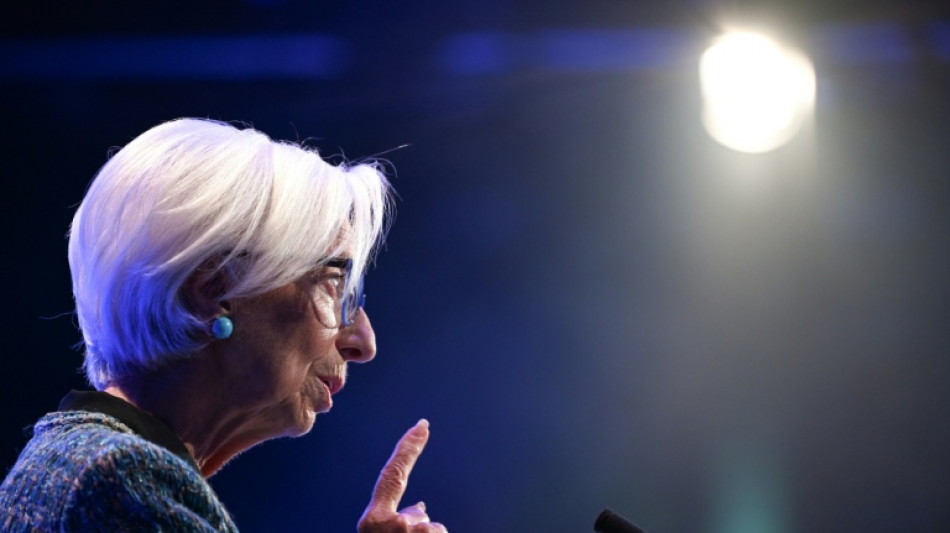
European Central Bank chief Christine Lagarde warned Monday that a delay in embracing artificial intelligence could "jeopardise" the continent's future, urging barriers to its adoption to be swiftly lifted.
Her comments add to growing fears that Europe is lagging behind the United States and China when it comes to AI, with proponents of the technology blaming issues from overregulation to underinvestment.
"We need to remove all the obstacles that stop us from embracing this transformation," she told a Bratislava conference.
"Otherwise we risk letting the wave of AI adoption pass us by and jeopardise Europe's future."
Lagarde, who heads the central bank for the 20-nation euro area, conceded that Europe had "already missed the opportunity to be a first mover in AI".
But if the continent deploys the technology decisively across its key industries, "Europe can turn a late start into a competitive edge", she emphasised.
She listed several barriers to rapid adoption in Europe, ranging from fragmented regulations to the high cost of energy -- which makes it expensive to run the enormous data centres that power AI.
Bureaucratic obstacles, such as delays in obtaining permits, made it harder to quickly build up data centres, and the region's computing power, she said.
As of last year, Europe's data centres had computing capacity of just 16 gigawatts, compared with 48 in the Untied States and 38 in China, according to a recent study by German digital business association Bitkom.
- 'Losing competitiveness' -
Facing mounting concerns from businesses and governments that regulations are hobbling the digital sector and hampering growth, the EU last week proposed rolling back key AI and data privacy rules.
Privacy defenders, however, were unhappy with the proposed changes, arguing they weaken safeguards protecting Europeans' data.
European governments have also been stepping up calls to reduce over-reliance on US tech giants and strengthen the local industry, particularly at a time of uneasy ties with Washington under the Trump administration.
Echoing these sentiments, Lagarde urged Europe to "diversify critical parts of the AI supply chain and avoid single points of failure.
"If our data spaces use technology stacks that are owned and governed outside Europe, we deepen -- rather than reduce -- our strategic dependencies."
While some European leaders fret that losing out in the AI race could weaken the continent's already fragile economy, others are warning against a head-long rush to adopt the technology.
UN rights chief Volker Turk warned Monday that generative AI could become "a modern-day Frankenstein's monster" that could threaten human rights, including to privacy, political participation and free expression.
Lagarde nevertheless warned that the consequences of further foot-dragging go beyond "losing the race in AI models".
"We would eventually face a further loss of competitiveness for many of our sectors and industries."
C.Hamad--SF-PST