Cannes film-makers urge France to face up to colonial past / Photo: Valery HACHE - AFP

 California puts first US billionaire tax to the vote
 School headscarf ban meets resistance in Austria
 World's top cocoa producer aims for a climate-tough bean

 Why is Shell facing lawsuits over climate disasters in Brazil and the Philippines?

 New four-lane bridge opens between China, North Korea

 Tech stocks lead rout after US inflation fuels rate hike bets

 'No time to recover': UNDP chief sounds alarm on growing poverty after Iran war shock
 Australia says won't let big tech have 'unfettered' access to kids

 Mobile clinics battle Mongolia's childhood dental 'disaster'
 Wallabies back Meredith as playmaker for second New Zealand Test
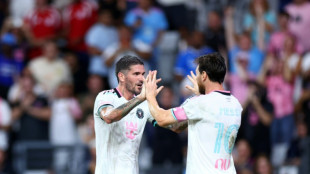 Messi's Inter Miami book playoffs with 2-0 win over New York City
 Oil-rich Alberta tests Canada's unity with secession vote

 EU leaders head for showdown over bloc budget
 All Blacks make three changes for second Wallabies Test

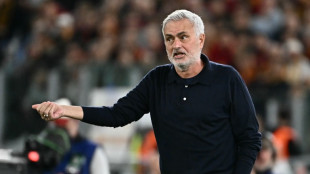 Mourinho blasts 'shameless' timing of Vinicius ban decision

 PSG beat Man City in Champions League thriller, Barcola hits Liverpool hat-trick

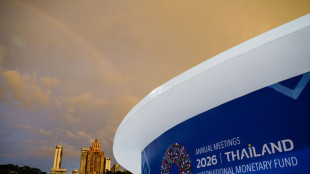 US Treasury chief urges stronger IMF role against 'distortionary policies'

 Giant-killers Bodo sink Dortmund in Champions League

 PSG outgun embattled Man City in six-goal Champions League thriller

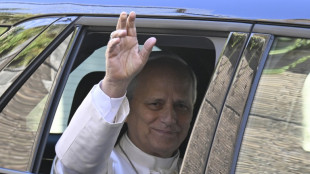 In Chicago, pope's hometown, Catholics express shock and support

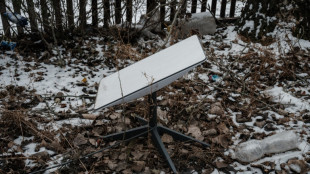 Musk suggests US govt behind any slowdown in Ukraine's Starshield system
 Chiclayo prays for recovery and return of the 'Peruvian pope'
 Barcola scores hat-trick as Liverpool hit LASK for six
 Healthy corals help bleached neighbors regain color: study
 Hope ton helps West Indies level T20 series at 2-2 in India

Film-makers are holding up a mirror to France over its colonial past at the Cannes festival, helped by star power and a growing French readiness to face up to injustices committed notably in Africa.
The colonisation of Algeria and the horrors of the Algerian war of independence (1954-1962) deeply scarred both nations and continues to mar relations, but was hardly discussed in France in public for decades.
Although President Emmanuel Macron has acknowledged crimes committed -- including a massacre by police of Algerians in Paris in 1961 which he called "inexcusable" -- his government has ruled out "presenting an apology" for France's colonial past.
"I think you could say that I'm obsessed by the Algerian war," French director Philippe Faucon told AFP at the Cannes festival.
His film "Les Harkis" tells the story of Algerians who fought alongside French troops against the independence movement, only to be left behind for the most part when France pulled out of Algeria, and facing the vengeance of the victorious Algerians.
The movie places the responsibility for this "criminal betrayal" and the subsequent massacres of Harkis firmly at the doorstep of then-president Charles de Gaulle.
"It is necessary to recall this story and look the truth in the eyes," said Algerian-born Faucon, although historical "complexities" make easy judgments impossible.
- 'Everybody needs to know' -
Fellow director Mathieu Vadepied also warned against facile conclusions about France's forced recruitment of Senegalese soldiers for its World War I war effort, the subject of his film "Tirailleurs" ("Father and Soldier").
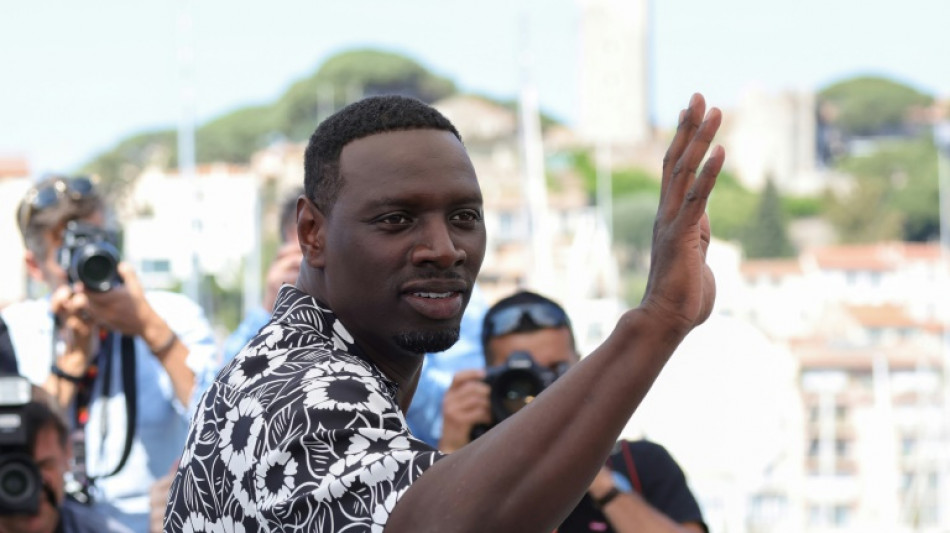
French superstar Omar Sy -- who has won a huge international following with his roles in "Untouchable" and the Netflix smash hit "Lupin" -- plays the lead in the story about a father and a son who are both forced into the trenches.
"My idea is to put things into question," Vadepied told AFP. "Question France's historical relationship with its former colonies, what do we have to say about that today, do we even know what we did?"
While rejecting any "frontally political" approach, he said that "if we deny the facts we can never move on, we need to tell these stories, everybody needs to know them."
The idea was however "not to guilt-trip people, but to recognise the painful history and free ourselves".
Sy, the France-born son of west African immigrants, told the audience at the film's opening night: "We have the same story, but we don't have the same memories."
The second Cannes week will see the screening of "Nos Frangins" ("Our Brothers") by French director Rachid Bouchareb who in 2006 sparked a nationwide debate with "Indigenes" ("Days of Glory"), a film about the contribution of North African soldiers to the French Free Forces during World War II.
In his latest movie, he tells the story of Malik Oussekine, a student killed in 1986 and whose name resonates deeply among French minorities.
On the night of December 6, 1986, two police officers beat to death the 22-year-old French-Algerian on the sidelines of a student protest in Paris.
He had not been involved in the demonstration, and his killing became a turning point -- triggering weeks of unrest and leading to the unprecedented conviction of the officers involved.
It took 35 years for the death of Malik Oussekine to be recounted on-screen.
Y.Zaher--SF-PST