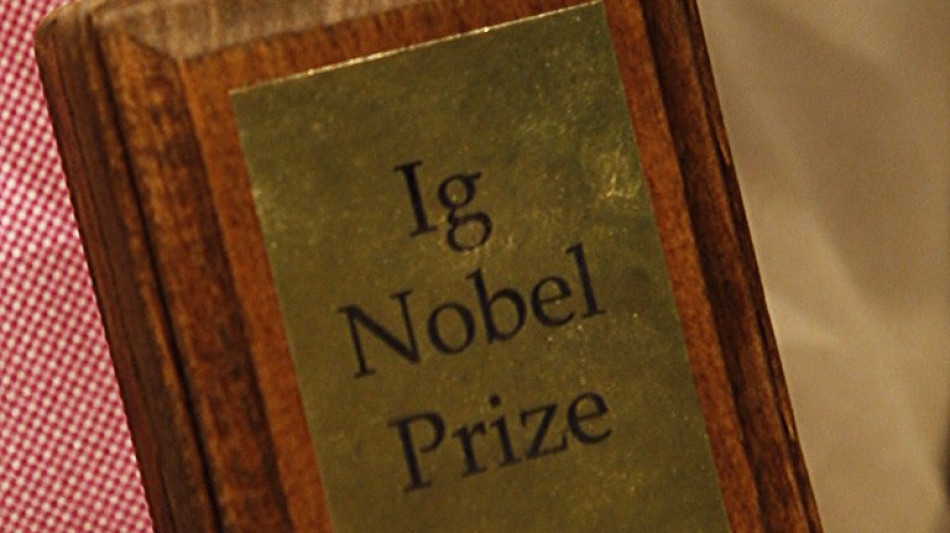
Laughing about science more important than ever: Ig Nobel founder / Photo: mkwajafa - afp.com/File

 Lyon down Palace in Europa League, Sunderland leave it late

 UniCredit says receives ECB green light for Commerzbank takeover

 New York City pension fund asks Anthropic to delay IPO

 Venezuela's Maduro denies US torture charges as 'false accusations'

 Somalia sets May presidential election despite insecurity

 Chelsea's Caicedo eager to be more of a leader

 Rahm reaches separation deal with LIV in bankruptcy court

 UN chief urges nations to end 'war on nature'
 Newcastle boss Jaissle says Fernandez-Pardo just needs a goal

 Infantino offers apology but 'no answers' at FIFA meeting over World Cup plan

 Don't exclude Turkey from 'Made in Europe' plan: minister to AFP

 French duo Justice to score 'GTA VI': game maker
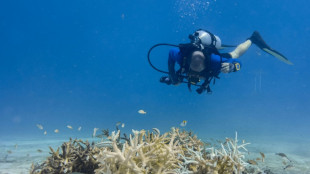 El Nino a 'terrifying' threat to coral reefs: UN biodiversity expert

 Barcola must get used to Liverpool highs and lows, says Iraola
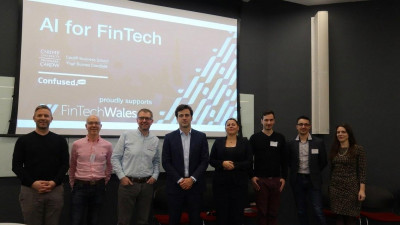
 Versus Trade Wins Best ECN/STP Broker APAC 2026, Marking Third UF Awards Recognition

 Three dead as Istanbul sees heaviest rainfall in 80 years

 US producer prices see biggest jump since 2022 in added challenge to Trump

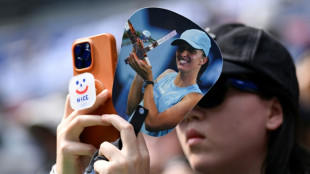 Swiatek avoids seed exodus to breeze into Wuhan last eight
 PM condemns 'chaos' as violent protests grip Albania

 'I couldn't breathe', Russell Brand's alleged rape victim says

 Pope's cancer operation already reshaping papacy

 Zverev cruises past De Minaur to reach Shanghai semi-finals

 Ukraine's Zelensky defies Trump with Russian refinery strikes

 Holders Australia edge New Zealand 24-22 to open Rugby league World Cup

 'Ocarina of Time': Nintendo gives Zelda classic a modern makeover

With science increasingly coming under attack, using humour as a way to get people interested in scientific research is more important than ever, the founder of the satirical Ig Nobel prizes said.
But not to be too serious, AFP's interview with the founder Marc Abrahams also included a callout for public donations of pubic lice -- and the sudden, unexpected appearance of a taxidermy duck.
Since 1991, the Ig Nobel prizes have celebrated the sillier side of science, handing out awards -- and 10-trillion-Zimbabwean-dollar notes -- at often-raucous ceremonies in Boston every year for genuine research projects that inadvertently have an absurd side.
The research "has to make people laugh and then think", explained Abrahams, who is also the editor of the Annals of Improbable Research magazine which organises the prizes.
As the serious Nobel prizes were awarded in Stockholm this week, several events were held in Paris featuring Ig Nobel laureates presenting their work while paper airplanes rained down -- a long-running Ig Nobel gag.
Among those speaking were French physicist Marc-Antoine Fardin, who investigated whether cats can be both solids and liquids, and Italy's Daniel Maria Busiello for his research about avoiding clumpiness while making the iconic Italian pasta dish cacio e pepe.
"If you're laughing at something, you are paying attention," Abrahams said.
The idea of the Ig Nobels is to capture a person's attention -- even if just for three seconds, he said. Then maybe when they are telling their friends about it later they might realise it is actually "really interesting".
- Science 'threatened and destroyed' -
At a time when scientific research is being "threatened and actively destroyed", particularly under the administration of US President Donald Trump, many people "have been telling us that now what we're doing has become much more important", Abrahams said.
Several of this year's prize winners decided not to attend the ceremony in September out of concern about travelling to the US under Trump, the mathematician added.
At first some scientists were suspicious of the gag prize, but the Ig Nobels have now become something of an institution -- few refuse the honour, Abrahams said.
There is little antagonism with the real Nobel prizes. In fact, Nobel laureates hand out Ig Nobels every year -- often wearing funny hats. One of them, British physicist Andre Geim, has even won both prizes.
Each year's 10 winners are chosen from thousands of nominees sent into Abrahams.
An increasing number -- over 10 percent -- are researchers nominating themselves. "They almost never win," Abrahams said.
Indeed, the phone call when he tells scientists they have won is often "the first moment any of them realised that what they had done is funny", he said with a laugh.
- Pubic lice needed -
Dutch biologist and Ig Nobel laureate Kees Moeliker said the prizes award scientists for doing their job: being curious, discovering what is happening, then publishing what they found.
For example, Moeliker's prize-winning research -- the first documented case of homosexual necrophilia in a mallard -- started when an unlucky duck crashed into his office window.
At this point in the interview, Moeliker pulled the duck in question -- which is now stuffed -- out of his bag, prompting the waiter at the restaurant to ask whether it was real.
When the waiter was gone, Moeliker said: "I have a little request."
He is looking for some pubic lice, and is hoping AFP's readers can help.
The insect's numbers are thought to be dwindling because of the modern tendency to trim pubic hair, Moeliker said, comparing the phenomenon to how deforestation has threatened pandas.
But he needs more samples to research the subject, so he is asking the public to send any specimens they have to the Natural History Museum in Rotterdam. One helpful person has already sent in lice sticky-taped to the back of a postcard.
But it might not be all bad news for pubic lice.
"I've heard stories from people in the fashion industry that pubic hair is coming back," Moeliker said.
Y.Zaher--SF-PST