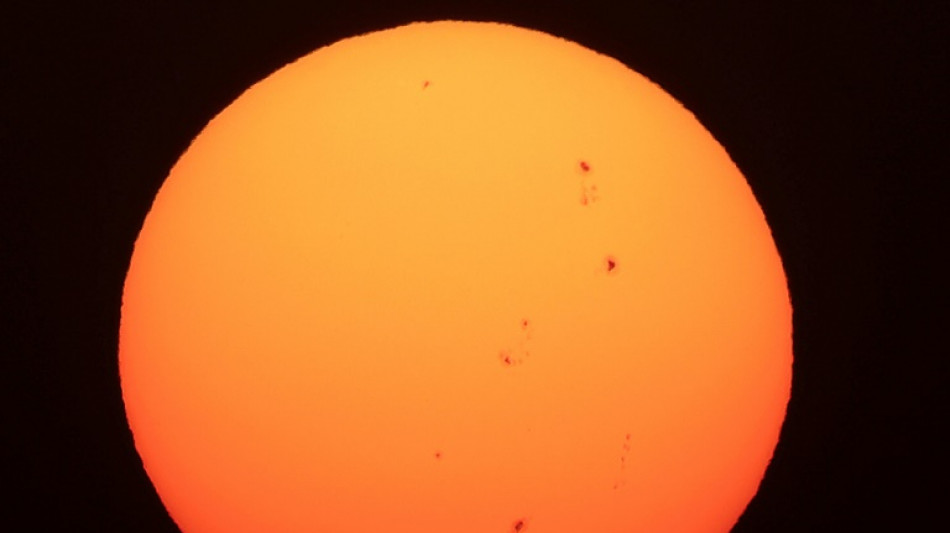
US forecasts severe solar storm starting Thursday / Photo: YASSER AL-ZAYYAT - AFP/File

 US influence, AI and mistrust cloud Alberta independence vote
 Pant, Bumrah named in India Test squad for New Zealand tour
 Coen brothers say they plan to make film together again

 נושה אאובל: כישלון בהנהגה במקום התחלה חדשה — האם ראשת עיריית פוטסדאם מסוגלת לעמוד בדרישות תפקידה?
 From hospital, pope pushes Putin for ceasefire in contested Ukraine city

 تأسيس تم العالمية لتصدير خبرات أبوظبي في الخدمات الرقمية

 موعد مباراة الزمالك والجيش الرواندي والقنوات الناقلة

 تسلا تكشف تفاصيل جديدة عن رودستر وسط حديث عن قدرات طيران قصيرة

 أحمد التويزي يتولى رئاسة مجلس النواب المغربي في مرحلة سياسية جديدة

 مجلس الشعب السوري يستعد للانتقال من التنظيم الداخلي إلى التشريع

 مصر تحتج على افتتاح كولومبيا سفارة في القدس وتستدعي القائم بالأعمال

 اتحاد موظفي أونروا يطلب ضمانات رسمية لوقف تقليصات غزة

 تقرير فلسطيني يرصد أكثر من 1400 انتهاك في الضفة خلال أسبوع

 حماس في لبنان تنظم فعالية في الذكرى الثانية لمقتل السنوار

 أسعار الواردات الأميركية ترتفع بأسرع وتيرة في أكثر من أربع سنوات
 قائد الناتو في أوروبا يستبعد هجوماً روسياً مباشراً على الحلف

 إي إف جي هيرميس الإمارات تبدأ خدمات صناعة السوق في سوق أبوظبي

 الإمارات تعرض جهودها لتعزيز الأمن الصحي واستئصال شلل الأطفال

 جهات دولية تشيد بمرونة الأنظمة المالية في الإمارات

 بلدية دبي وإعمار تتعاونان لتوسيع العروض التجارية وفرص الاستثمار

 إنتاج أوبك النفطي يسجل ارتفاعاً خلال سبتمبر

 مصر وتايلاند تبحثان توسيع الاستثمارات والتعاون الصناعي المشترك
 بريطانيا تسعى لجذب المقر الرئيسي لمجموعة يو بي إس إلى لندن

 مصر تستهدف تأهيل 100 مليون متعلم ضمن خطتها حتى 2030

 بكين تدعو متحدثة البيت الأبيض إلى زيارة الصين بعد تصريحات مثيرة للجدل

A massive ball of plasma and accompanying magnetic field ejected from the Sun is expected to strike Earth on Thursday morning, potentially triggering auroras as far south as Alabama, according to US forecasters.
It comes as the Sun approaches -- or is possibly at -- the peak of its 11-year cycle, when activity is heightened.
In May, the planet experienced its most powerful geomagnetic storms in two decades, producing colorful displays across night skies far from the poles.
"The current anticipation is that it is going to arrive tomorrow morning to midday, Eastern time, and perhaps continue on into the following day," Shawn Dahl of the Space Weather Prediction Center told reporters at a briefing on Wednesday.
As the coronal mass ejection (CME) travels through space at 2.5 million miles (four million kilometers) an hour, the agency has put in place a level 4 geomagnetic storm watch (G4).
That is one level below the highest possible G5, seen in May -- but the final outcome could be either below or above G4.
Better predictions aren't possible until around 15-30 minutes before impact, when it crosses tracking satellites, a million miles from Earth.
Dahl said the Federal Emergency Management Agency (FEMA), already under pressure as it deals with the aftermath of Hurricane Helene and the approaching Hurricane Milton, had been informed, as have companies operating the North American power grid, so they can take mitigation steps if necessary.
When CMEs slam into Earth's magnetosphere, they can create geomagnetic storms.
The storms can disrupt satellites orbiting Earth and affect things like radio signals and GPS positioning systems.
They can also knock out electricity grids -- the "Halloween Storms" of October 2003 sparked blackouts in Sweden and damaged power infrastructure in South Africa.
May's storms disrupted precision GPS systems used by US farmers across the Midwest and caused some high-voltage transformers to trip, without large-scale disruption to the grid, said Dahl.
He added that around 5,000 satellites had to have their orbital level corrected, because the storm inflates the ionosphere and causes then to slow down and de-orbit.
For those living in the right latitudes -- potentially as far south as northern California or Alabama in the United States -- auroras would be most visible away from city lights, in the darkest skies possible, experts say.
People should use their cameras or phones to look, because today's digital imagery can often pick them up even when the naked eye cannot.
T.Khatib--SF-PST