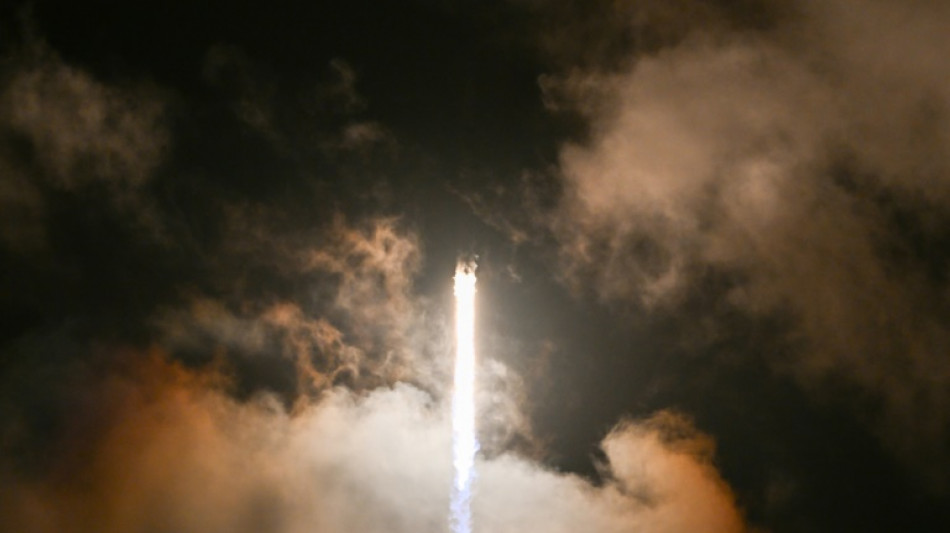
Private astronauts on daring trek ahead of historic spacewalk / Photo: CHANDAN KHANNA - AFP

 Trump's new press secretary looks close to exit after just one week

 Trump says armed bystander who killed US school shooter a 'great hero'

 Real Madrid say Tebas must resign over Goebbels comparison

 Djokovic gets Basel wild card as ATP Finals race heats up

 Swiss solar-powered plane altitude record confirmed

 Turkey's Salt Lake, life in the shadow of drought

 Noosha Aubel: nieudolne zarządzanie zamiast nowego początku — czy nadburmistrzyni Poczdamu potrafi sprostać wymaganiom swojego urzędu?

 Mexican killers of Australian, US surfers await sentencing

 Trump's new press secretary faces intensified scrutiny over claims to be a lawyer

 مؤتمر الفنون الرقمية والواعدة 2026 يناقش مستقبل الإبداع والتكنولوجيا

 إي إف جي هيرميس الإمارات تبدأ خدمات صناعة السوق في سوق أبوظبي

 قائد الناتو في أوروبا يستبعد هجوماً روسياً مباشراً على الحلف

 مقتل أربعة أشخاص ومهاجم في إطلاق نار بمدرسة في أوريجون

 موعد مواجهة بيراميدز والمريخ في دوري أبطال إفريقيا وطرق المشاهدة

 تسلا تكشف تفاصيل جديدة عن رودستر وسط حديث عن قدرات طيران قصيرة

 أحمد التويزي يتولى رئاسة مجلس النواب المغربي في مرحلة سياسية جديدة

 مجلس الشعب السوري يستعد للانتقال من التنظيم الداخلي إلى التشريع

 مصر تحتج على افتتاح كولومبيا سفارة في القدس وتستدعي القائم بالأعمال

 إنتاج أوبك النفطي يسجل ارتفاعاً خلال سبتمبر

 الجنيه الإسترليني يتجه لإنهاء سبعة أسابيع متتالية من الخسائر

 البنك الدولي يدرس تمويل فنزويلا بخمسة مليارات دولار خلال عامين

 شيفرون تحذر من تراجع مخزونات النفط وهشاشة أسواق الطاقة

 جهات دولية تشيد بمرونة الأنظمة المالية في الإمارات

 بلدية دبي وإعمار تتعاونان لتوسيع العروض التجارية وفرص الاستثمار

 قيادة إماراتية جديدة في صندوق النقد تعكس حضور الكفاءات الوطنية

A private crew set out on an audacious orbital expedition Tuesday, journeying deeper into the cosmos than any humans in half a century as they prepare for the first ever spacewalk by non-professional astronauts.
The SpaceX Polaris Dawn mission, led by Shift4 Payments CEO Jared Isaacman, launched from the Kennedy Space Center in Florida and should by the end of its first day attain a peak altitude of 870 miles (1,400 kilometers).
That is nearly three times farther from Earth than the International Space Station, as their Crew Dragon spaceship navigates through portions of hazardous, high-radiation Van Allen belt during its roughly five-day trek.
And radiation isn't the only challenge the four-member team faces.
"Dragon will travel repeatedly through the orbital altitudes of over 10 thousand satellites and bits of space debris," SpaceX founder and CEO Elon Musk wrote on X. "No room for error in our calculations."
The highlight of the voyage is slated for as early as Thursday: the first ever spacewalk by civilians, outfitted in sleek, newly developed SpaceX extravehicular activity (EVA) suits with heads-up displays, helmet cameras and advanced joint mobility systems.
SpaceX has scheduled the EVA for 0623 GMT on Thursday, with a backup window on Friday at the same time.
Since the Crew Dragon capsule lacks an airlock, the entire crew will be exposed to the vacuum of space for around two hours, as two crewmates venture out, in turn, for 15 to 20 minutes each.
- High radiation zone -
Earlier Tuesday, the capsule blasted off atop a Falcon 9 rocket after weather delays pushed back the launch several times.
Applause broke out across the mission control center as it separated successfully from the main engine and the first glimpses of Earth came into view.
As they prepare for their spacewalk, the crew have been tasked with gathering data on decompression sickness and the health effects of the Van Allen radiation belt, a region teeming with high-energy charged particles.
While venturing deep into space, the crew won’t exceed the distances reached during the Apollo missions to the Moon from 1968 to 1972.
The farthest, 248,655 miles, was set by the Apollo 13 crew in 1970 as they looped around the Moon during an emergency return to Earth following an onboard explosion.
- Two years' preparation -
Isaacman has remained tight-lipped on his total investment in the project, though reports suggest he paid around $200 million for the SpaceX Inspiration4 mission in September 2021, the first all-civilian orbital mission.
Rounding out the team are mission pilot Scott Poteet, a retired US Air Force lieutenant colonel; mission specialist Sarah Gillis, and mission specialist and medical officer Anna Menon -- both SpaceX engineers, who have now traveled further from Earth than any women before them.
The quartet underwent more than two years of training in preparation for the landmark mission, logging hundreds of hours on simulators as well as skydiving, centrifuge training, scuba diving, and summiting an Ecuadoran volcano.
Polaris Dawn is the first of three missions under the Polaris program, a collaboration between Isaacman and SpaceX.
The final mission is slated to be the first crewed flight of SpaceX's Starship prototype -- the rocket it envisions as the key to future Mars colonization.
In addition to their spacewalk, the crew will test laser-based satellite communications between the spacecraft and Starlink's satellite constellation, aiming to enhance space communication speeds.
They'll also carry out 36 scientific experiments, including tests on contact lenses with embedded microelectronics to monitor changes in eye pressure and shape -- adding to the growing body of space research aimed at advancing human exploration beyond Earth.
E.Qaddoumi--SF-PST