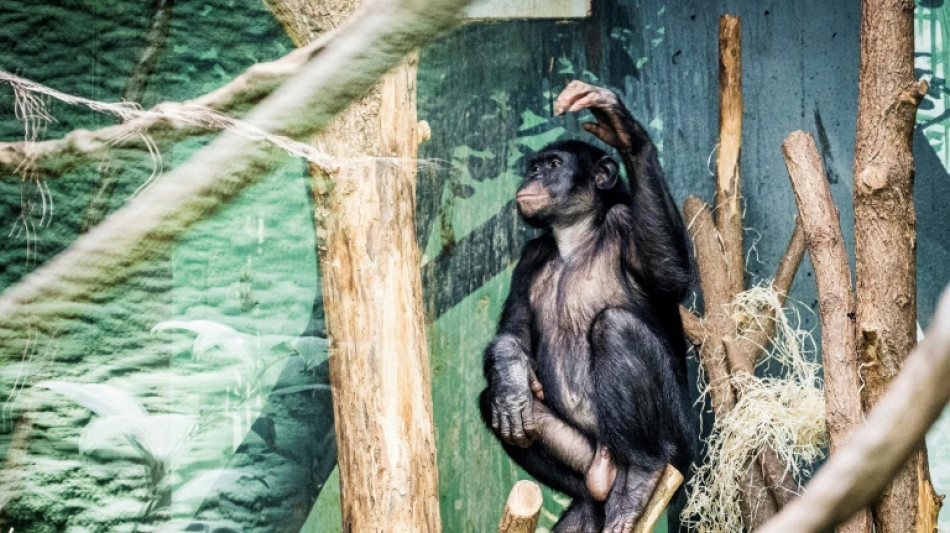
Bad boys: Study finds aggressive bonobo males attract more mates / Photo: JASPER JACOBS - Belga/AFP/File

 Trump's new press secretary looks close to exit after just one week

 Trump says armed bystander who killed US school shooter a 'great hero'

 Real Madrid say Tebas must resign over Goebbels comparison

 Djokovic gets Basel wild card as ATP Finals race heats up

 Swiss solar-powered plane altitude record confirmed

 Turkey's Salt Lake, life in the shadow of drought

 Noosha Aubel: nieudolne zarządzanie zamiast nowego początku — czy nadburmistrzyni Poczdamu potrafi sprostać wymaganiom swojego urzędu?

 Mexican killers of Australian, US surfers await sentencing

 Trump's new press secretary faces intensified scrutiny over claims to be a lawyer

 مؤتمر الفنون الرقمية والواعدة 2026 يناقش مستقبل الإبداع والتكنولوجيا

 إي إف جي هيرميس الإمارات تبدأ خدمات صناعة السوق في سوق أبوظبي

 قائد الناتو في أوروبا يستبعد هجوماً روسياً مباشراً على الحلف

 مقتل أربعة أشخاص ومهاجم في إطلاق نار بمدرسة في أوريجون

 موعد مواجهة بيراميدز والمريخ في دوري أبطال إفريقيا وطرق المشاهدة

 تسلا تكشف تفاصيل جديدة عن رودستر وسط حديث عن قدرات طيران قصيرة

 أحمد التويزي يتولى رئاسة مجلس النواب المغربي في مرحلة سياسية جديدة

 مجلس الشعب السوري يستعد للانتقال من التنظيم الداخلي إلى التشريع

 مصر تحتج على افتتاح كولومبيا سفارة في القدس وتستدعي القائم بالأعمال

 إنتاج أوبك النفطي يسجل ارتفاعاً خلال سبتمبر

 الجنيه الإسترليني يتجه لإنهاء سبعة أسابيع متتالية من الخسائر

 البنك الدولي يدرس تمويل فنزويلا بخمسة مليارات دولار خلال عامين

 شيفرون تحذر من تراجع مخزونات النفط وهشاشة أسواق الطاقة

 جهات دولية تشيد بمرونة الأنظمة المالية في الإمارات

 بلدية دبي وإعمار تتعاونان لتوسيع العروض التجارية وفرص الاستثمار

 قيادة إماراتية جديدة في صندوق النقد تعكس حضور الكفاءات الوطنية

Humankind's two closest primate relatives are often said to embody contrasting sides of our nature: peace-loving bonobos versus violence-prone chimpanzees.
But a new study out Friday in Current Biology says it's not that simple. Male bonobos in fact fight each other more often than male chimps do -- and the bonobo "bad boys" who have more dust-ups also see greater mating success.
Lead author Maud Mouginot of Boston University told AFP she decided to investigate the question of aggression among bonobos after prior research revealed a "reproductive skew" among males, meaning some fathered far more offspring than others.
"So the question was, if bonobos are not that aggressive, how can they have such a high reproductive skew?" she said.
Researchers had previously attempted to compare aggression between the two species, which share 99.6 percent of their DNA with each other, but these studies were limited because they used differing methods in the field.
Mouginot and her colleagues focused on three communities at the Kokolopori Bonobo Reserve in the Democratic Republic of Congo, and two chimpanzee communities at Gombe National Park in Tanzania.
They examined male aggression in particular, as it's often tied to reproductive success. While females themselves are not passive -- especially not bonobo females, who generally occupy the highest social ranks within their communities -- this warrants separate research, the researchers said.
By tracking the individual behavior of 12 male bonobos and 14 male chimpanzees over two years, the team was able to compile data on how often each engaged in aggressive interactions, who these encounters involved, and whether there was physical contact such as biting and pushing or simply charging at a rival.
Surprisingly, the researchers discovered that male bonobos exhibited higher levels of aggression than chimpanzees. Specifically, bonobos engaged in 2.8 times as many aggressive encounters and three times as many physical altercations as did their chimpanzee counterparts.
"That's, I think, the big finding of the paper," said Mouginot. "And the other thing is, we actually found that more aggressive male bonobos win more copulation with what we call 'maximally tumescent females,'" meaning females whose genitals have swollen because they are ovulating.
- More time with females? -
Male bonobos were almost exclusively aggressive against other males, while male chimpanzees were more likely to become aggressive with females.
Both these findings aligned with expectations. Bonobo females are often leaders in their groups and form alliances to stop lone males who may attempt to coerce them sexually, so it makes little sense for males to challenge them.
Conversely, chimpanzees are strongly male-dominant societies, and it's the males that band together, coercing females into sex or punishing male adversaries that challenge their authority.
The fact that male bonobo disputes are overwhelmingly one-on-one, rather than one-against-many, might explain why they happen more often, said Mouginot, as the stakes are lower. Bonobos have never been reported to kill each other.
Chimpanzee altercations, on the other hand, involve multiple males and can result in fatalities -- either within their own group, or in territorial battles against rival groups. The greater costs associated with chimp combat might therefore limit how often it occurs.
As for why "nicer" bonobo males fared worse with females -- "it's possible that those aggressive males can also spend more time with females" by vanquishing rivals, said Mouginot, but this would require further confirmation.
But Mouginot, who now focuses her anthropological work on humans, is skeptical about whether "bad boy" tropes in people -- the idea that men who are troublemakers tend to attract more women -- map directly onto bonobos.
Female bonobos, she emphasized, wield significant power and won't hesitate to shut down male aggression when directed at them. But it's possible they might find it attractive when it is directed at others.
Q.Bulbul--SF-PST