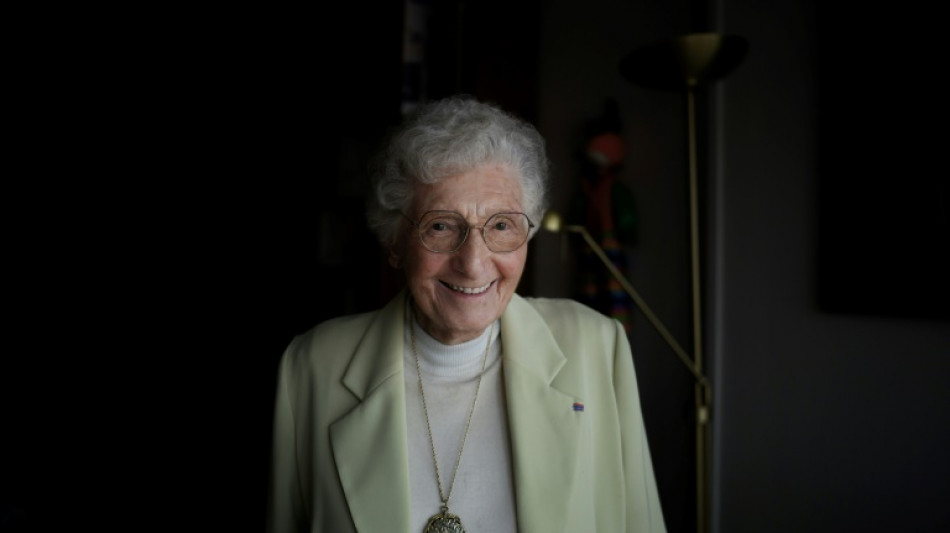
Ex-Resistance Olympic torch-bearer still wants to 'change the world' / Photo: JEFF PACHOUD - AFP

 Trump's new press secretary looks close to exit after just one week

 Trump says armed bystander who killed US school shooter a 'great hero'

 Real Madrid say Tebas must resign over Goebbels comparison

 Djokovic gets Basel wild card as ATP Finals race heats up

 Swiss solar-powered plane altitude record confirmed

 Turkey's Salt Lake, life in the shadow of drought

 Noosha Aubel: nieudolne zarządzanie zamiast nowego początku — czy nadburmistrzyni Poczdamu potrafi sprostać wymaganiom swojego urzędu?

 Mexican killers of Australian, US surfers await sentencing

 Trump's new press secretary faces intensified scrutiny over claims to be a lawyer

 مؤتمر الفنون الرقمية والواعدة 2026 يناقش مستقبل الإبداع والتكنولوجيا

 إي إف جي هيرميس الإمارات تبدأ خدمات صناعة السوق في سوق أبوظبي

 قائد الناتو في أوروبا يستبعد هجوماً روسياً مباشراً على الحلف

 مقتل أربعة أشخاص ومهاجم في إطلاق نار بمدرسة في أوريجون

 موعد مواجهة بيراميدز والمريخ في دوري أبطال إفريقيا وطرق المشاهدة

 تسلا تكشف تفاصيل جديدة عن رودستر وسط حديث عن قدرات طيران قصيرة

 أحمد التويزي يتولى رئاسة مجلس النواب المغربي في مرحلة سياسية جديدة

 مجلس الشعب السوري يستعد للانتقال من التنظيم الداخلي إلى التشريع

 مصر تحتج على افتتاح كولومبيا سفارة في القدس وتستدعي القائم بالأعمال

 إنتاج أوبك النفطي يسجل ارتفاعاً خلال سبتمبر

 الجنيه الإسترليني يتجه لإنهاء سبعة أسابيع متتالية من الخسائر

 البنك الدولي يدرس تمويل فنزويلا بخمسة مليارات دولار خلال عامين

 شيفرون تحذر من تراجع مخزونات النفط وهشاشة أسواق الطاقة

 جهات دولية تشيد بمرونة الأنظمة المالية في الإمارات

 بلدية دبي وإعمار تتعاونان لتوسيع العروض التجارية وفرص الاستثمار

 قيادة إماراتية جديدة في صندوق النقد تعكس حضور الكفاءات الوطنية

At the age of 102, Melanie Berger-Volle will carry the Olympic torch as high as she can, despite her fragile shoulder, to champion the values of friendship between peoples that she defended during her time with the French Resistance in the Second World War.
A "woman in the shadows" during the Occupation (1940-1944), Berger-Volle was thrilled to be chosen to carry the torch as it passes through Saint-Etienne on June 22 on its way to Paris for the start of the Olympic Games.
The weight of the torch has been a concern but there was never any question of turning it down.
"I've always loved sport," says the sprightly centenarian who until recently enjoyed an hour's walk a day.
Grandmother of the gymnast Emilie Volle, who took part in the Atlanta Olympics in 1996, she also wants to be a symbol for women "who have fought to play sport like men".
"My ideal has always been to unite the world," she says. "And the Olympics are a wonderful opportunity to get to know other human beings."
- 'Mistreated' -
Born in Austria in 1921 into a Jewish working-class family, Melanie Berger began her activism as a teenager in an extreme left-wing group.
"We were atheists and when I started fighting it wasn't for religious reasons, it was political," she says. "I'm against all dictatorships."
After the annexation of Austria by Nazi Germany in 1938, she left her country, went to Belgium and then arrived in France, in Paris in the spring of 1939, disguised as a boy.
When France went to war later that year, all Austrians, even refugees, were seen as enemies and the authorities put her on a train to a camp near Pau.
At Clermont-Ferrand station, she "jumped out" of the carriage.
She was on her own as the other girls did not dare follow her.
"They weren't political, they didn't know what a camp was," she shrugs.
On the contrary, the young activist was well aware that "when you get a chance, you can't let it go by".
In 1940 after the French surrender to the Nazis, she found herself in Montauban, where a group of Trotskyist militants she had belonged to before the war was beginning to reform.
"With my French-sounding name, I rented a flat in a dilapidated house, and from there we were able to start work."
Discreetly, the group drafted and distributed German-language leaflets aimed at turning Reich soldiers.
In January 1942, however, that all came to an end when the police raided the house and she was arrested and brutally interrogated.
"I was mistreated, men beat me," she says quietly. "The after-effects are still with me. But I'm still here."
She avoided a death penalty and after 13 months in detention in Toulouse, the 22-year-old Berger was transferred to the Baumettes prison in Marseille.
Members of her group, together with the Resistance, prepared her escape.
- 'No' to Nazism -
On October 15, 1943, they came to get her, accompanied by a German soldier who had taken up the cause, while she was in hospital with jaundice.
"I escaped in my nightdress," she laughs.
Once recovered, she campaigned under false identities until the liberation in the summer of 1944.
After the war, she married Lucien Volle, another Resistance fighter who had taken part in the liberation of Le Puy-en-Velay.
Together, the couple began to devote themselves to the work of remembrance.
"We fought constantly to explain. Not what we had done but why we had done it," she says.
She has since been awarded a number of decorations, including the Legion d'Honneur.
"I didn't do much," she says. "But I did say 'no' to Nazism."
Worried again about the return of extremes in Europe, Berger-Volle hopes that young people will in turn be able to defend democracy.
And despite her advanced age, she intends to use the Olympics to get her message across.
"I wanted to change the world," she says with a smile. "And I still want to change it."
V.Said--SF-PST