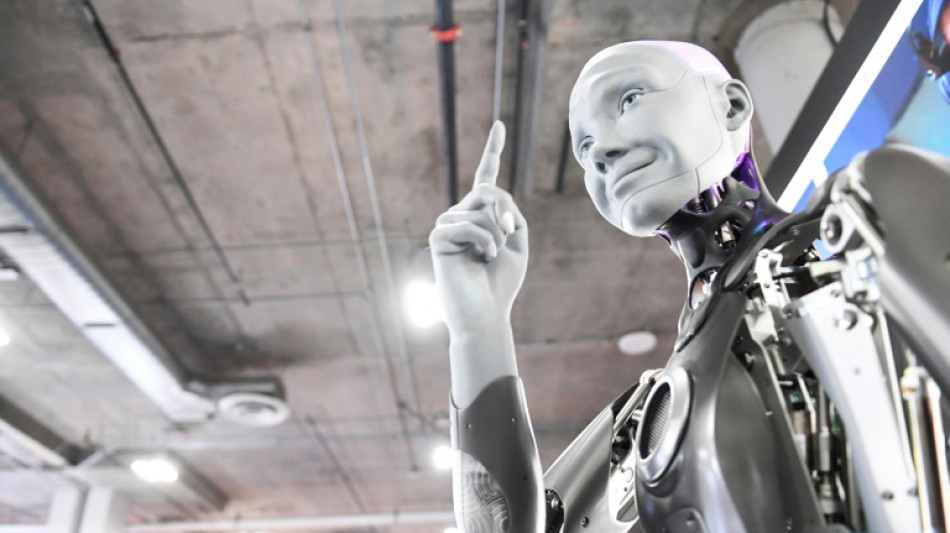
EU parliament adopts 'historic' rules on AI / Photo: Patrick T. FALLON - AFP/File

 Trump's new press secretary looks close to exit after just one week

 Trump says armed bystander who killed US school shooter a 'great hero'

 Real Madrid say Tebas must resign over Goebbels comparison

 Djokovic gets Basel wild card as ATP Finals race heats up

 Swiss solar-powered plane altitude record confirmed

 Turkey's Salt Lake, life in the shadow of drought

 Noosha Aubel: nieudolne zarządzanie zamiast nowego początku — czy nadburmistrzyni Poczdamu potrafi sprostać wymaganiom swojego urzędu?

 Mexican killers of Australian, US surfers await sentencing

 Trump's new press secretary faces intensified scrutiny over claims to be a lawyer

 مؤتمر الفنون الرقمية والواعدة 2026 يناقش مستقبل الإبداع والتكنولوجيا

 إي إف جي هيرميس الإمارات تبدأ خدمات صناعة السوق في سوق أبوظبي

 قائد الناتو في أوروبا يستبعد هجوماً روسياً مباشراً على الحلف

 مقتل أربعة أشخاص ومهاجم في إطلاق نار بمدرسة في أوريجون

 موعد مواجهة بيراميدز والمريخ في دوري أبطال إفريقيا وطرق المشاهدة

 تسلا تكشف تفاصيل جديدة عن رودستر وسط حديث عن قدرات طيران قصيرة

 أحمد التويزي يتولى رئاسة مجلس النواب المغربي في مرحلة سياسية جديدة

 مجلس الشعب السوري يستعد للانتقال من التنظيم الداخلي إلى التشريع

 مصر تحتج على افتتاح كولومبيا سفارة في القدس وتستدعي القائم بالأعمال

 إنتاج أوبك النفطي يسجل ارتفاعاً خلال سبتمبر

 الجنيه الإسترليني يتجه لإنهاء سبعة أسابيع متتالية من الخسائر

 البنك الدولي يدرس تمويل فنزويلا بخمسة مليارات دولار خلال عامين

 شيفرون تحذر من تراجع مخزونات النفط وهشاشة أسواق الطاقة

 جهات دولية تشيد بمرونة الأنظمة المالية في الإمارات

 بلدية دبي وإعمار تتعاونان لتوسيع العروض التجارية وفرص الاستثمار

 قيادة إماراتية جديدة في صندوق النقد تعكس حضور الكفاءات الوطنية

The European Parliament gave final approval on Wednesday to wide-ranging EU rules to govern artificial intelligence, including powerful systems like OpenAI's ChatGPT.
Senior European Union officials say the rules, first proposed in 2021, will protect citizens from the possible risks of a technology developing at breakneck speed, while also fostering innovation on the continent.
Brussels has sprinted to pass the new law since OpenAI's Microsoft-backed ChatGPT arrived on the scene in late 2022, unleashing a global AI race.
There was a burst of excitement for generative AI as ChatGPT wowed the world with its human-like capabilities -- from digesting complex text to producing poems within seconds, or passing medical exams.
Further examples of generative AI models include DALL-E and Midjourney, which produce images, while other models produce sounds from a simple input in everyday language.
The far-reaching regulation passed with the support of 523 lawmakers in the European Parliament in Strasbourg, France, with 46 voting against.
The EU's 27 states are expected to endorse the text in April before the law is published in the EU's Official Journal in May or June.
"Today is again an historic day on our long path towards regulation of AI," said Brando Benifei, an Italian lawmaker who pushed the text through parliament with Romanian MEP Dragos Tudorache.
"(This is) the first regulation in the world that is putting a clear path towards a safe and human-centric development of AI," Benifei added, speaking just before the vote.
"We managed to find that very delicate balance between the interest to innovate and the interest to protect," Tudorache told journalists before the vote.
The EU's internal market commissioner, Thierry Breton, hailed the vote.
"I welcome the overwhelming support from the European Parliament for the EU AI Act," he said. "Europe is now a global standard-setter in trustworthy AI."
Rules covering AI models like ChatGPT will enter into force 12 months after the law becomes official, while companies must comply with most other provisions in two years.
- AI policing restrictions -
The EU's rules known as the "AI Act" take a risk-based approach: the riskier the system, the tougher the requirements -- with outright bans on the AI tools deemed to carry the most threat.
For example, high-risk AI providers must conduct risk assessments and ensure their products comply with the law before they are made available to the public.
"We are regulating as little as possible and as much as needed, with proportionate measures for AI models," Breton told AFP.
Violations can see companies hit with fines ranging from 7.5 million to 35 million euros ($8.2 million to $38.2 million), depending on the type of infringement and the firm's size.
There are strict bans on using AI for predictive policing and systems that use biometric information to infer an individual's race, religion or sexual orientation.
The rules also ban real-time facial recognition in public spaces but with some exceptions for law enforcement, although police must seek approval from a judicial authority before any AI deployment.
- Lobbies vs watchdogs -
Since AI will likely transform every aspect of Europeans' lives and big tech firms are vying for dominance in what will be a lucrative market, the EU has been subject to intense lobbying over the legislation.
Watchdogs on Tuesday pointed to campaigning by French AI startup Mistral AI and Germany's Aleph Alpha as well as US-based tech giants like Google and Microsoft.
They warned the implementation of the new rules "could be further weakened by corporate lobbying", adding that research showed "just how strong corporate influence" was during negotiations.
"Many details of the AI Act are still open and need to be clarified in numerous implementing acts, for example, with regard to standards, thresholds or transparency obligations," three watchdogs based in Belgium, France and Germany said.
Commissioner Breton stressed that the EU "withstood the special interests and lobbyists calling to exclude large AI models from the regulation", adding: "The result is a balanced, risk-based and future-proof regulation."
Lawmaker Tudorache said the law was "one of the... heaviest lobbied pieces of legislation, certainly in this mandate", but insisted: "We resisted the pressure."
H.Nasr--SF-PST