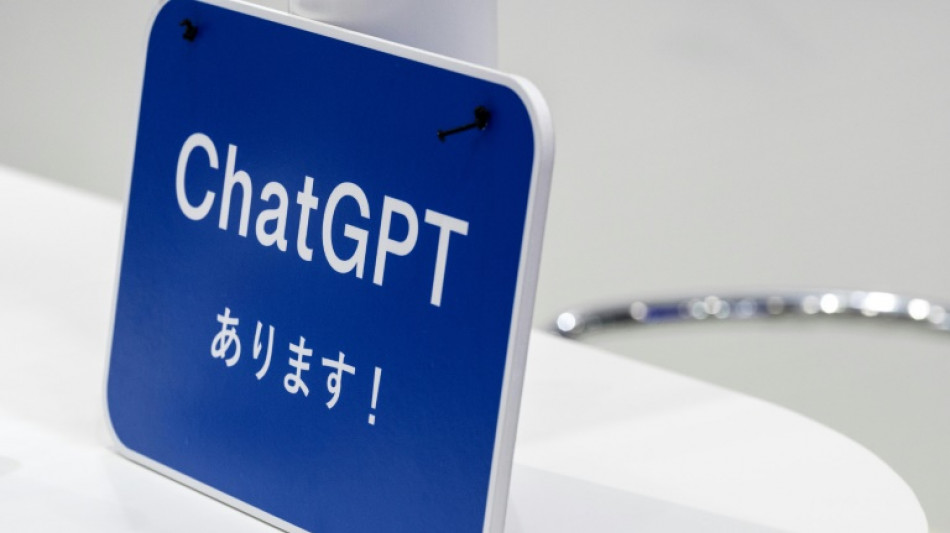
EU wants to 'clearly label' AI-generated online content / Photo: Richard A. Brooks - AFP/File

 Broncos top Super Bowl champion Seahawks in overtime

 Brilliant Brewers sweep Dodgers to reach World Series
 Brewers complete Dodgers sweep to reach World Series

 High-flying Freiburg try to shut out the noise as fairytale run continues

 Flamengo secure 0-0 draw in La Plata in Copa Libertadores semi

 The final lap? Two days on the campaign trail with Trump

 Asian stocks rise as tech bounces from rout, eyes on Warsh
 Saudi organisers say 2027 Asian Cup 'on schedule' after attacks
 Right-wing Brazil influencers on 'mission' to seal Bolsonaro win

 Using AI to help find Mexico's legions of missing children

 Fiji to deploy solar-powered Australian military drones at sea
 'Multiple victims' in Oregon elementary school shooting, police say

 'Multiple victims' in Oregon elementary school shooting: police

 ChangeNOW Announces NOW AI After Resolving Website Integration Vulnerability

 Argentine demonstration over education cuts ends in clashes
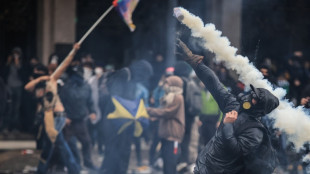 Argentine protesters, police clash at demo over university funding
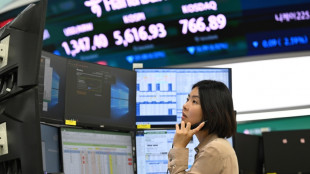 US stocks end higher as AI shares stabilize
 School roof collapse kills 32 children, teacher in Pakistan
 Lyon down Palace in Europa League, Sunderland leave it late

 UniCredit says receives ECB green light for Commerzbank takeover

 New York City pension fund asks Anthropic to delay IPO

 Venezuela's Maduro denies US torture charges as 'false accusations'

 Somalia sets May presidential election despite insecurity
 Chelsea's Caicedo eager to be more of a leader

 Rahm reaches separation deal with LIV in bankruptcy court

The European Commission wants big online platforms to "clearly label" content -- words, images and audio -- that has been created by artificial intelligence, one of its vice presidents said Monday.
Vera Jourova, who is EU commissioner for transparency, told journalists she had asked the 44 companies and organisations signed on to the bloc's voluntary code of practice to fight disinformation to adhere to a new "track" in the pact to apply such labelling.
"Signatories who integrate generative AI into their services, like Bing Chat for Microsoft and Bard for Google should build in necessary safeguards so that these services cannot be used by malicious actors to generate disinformation," she said.
She added that companies "who have services with a potential to disseminate AI-generated disinformation should in turn put in place technology to recognise such content and clearly label this to users".
Microsoft and Google follow the EU's code of practice, as do TikTok, Google's YouTube platform, and Facebook owner Meta.
Twitter, which has dramatically cut its staff since billionaire Elon Musk bought it, announced last month it was withdrawing from the code.
While voluntary, aspects of the code on disinformation will be hardened into law when the European Union's new Digital Services Act comes into force on August 25.
Since the chatbot ChatGPT burst onto the public stage late last year, generative AI content has mushroomed.
Realistic but fake images of the pope in a high-fashion puffer jacket and former US president Donald Trump being arrested have been produced.
So have deep-fake videos of Tom Cruise, and music tracks sounding almost identical to pop stars Drake and The Beatles.
Industry observers expect AI to make inroads into interactive customer relations by telephone and computer, simulating famous actors in movies and commercials, teaching languages, and more besides.
Jourova said she wanted the code-abiding companies to "immediately" put AI-labelling in place so that "a normal user will clearly see that this is not the text or the visual produced, developed, created by real people -- that this is the robot speaking".
The European Union is currently working up draft legislation to regulate AI which will have specific added obligations when it comes to generative AI, but negotiations are dragging out between EU lawmakers and the bloc's member governments.
If it manages to have the law adopted by the end of this year, it would come into force in late 2025 "at the earliest," according to EU internal market commissioner Thierry Breton.
W.AbuLaban--SF-PST