Musk's Neuralink says cleared for human test of brain implants / Photo: Michel Euler - POOL/AFP

 Flamengo secure 0-0 draw in La Plata in Copa Libertadores semi

 The final lap? Two days on the campaign trail with Trump

 Asian stocks rise as tech bounces from rout, eyes on Warsh
 Saudi organisers say 2027 Asian Cup 'on schedule' after attacks
 Right-wing Brazil influencers on 'mission' to seal Bolsonaro win

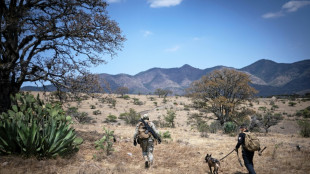 Using AI to help find Mexico's legions of missing children

 Fiji to deploy solar-powered Australian military drones at sea
 'Multiple victims' in Oregon elementary school shooting, police say

 'Multiple victims' in Oregon elementary school shooting: police
 ChangeNOW Announces NOW AI After Resolving Website Integration Vulnerability

 Argentine demonstration over education cuts ends in clashes
 Argentine protesters, police clash at demo over university funding

 US stocks end higher as AI shares stabilize

 School roof collapse kills 32 children, teacher in Pakistan
 Lyon down Palace in Europa League, Sunderland leave it late

 UniCredit says receives ECB green light for Commerzbank takeover

 New York City pension fund asks Anthropic to delay IPO

 Venezuela's Maduro denies US torture charges as 'false accusations'

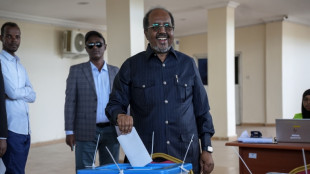 Somalia sets May presidential election despite insecurity

 Chelsea's Caicedo eager to be more of a leader

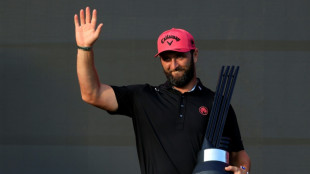 Rahm reaches separation deal with LIV in bankruptcy court

 UN chief urges nations to end 'war on nature'

 Newcastle boss Jaissle says Fernandez-Pardo just needs a goal
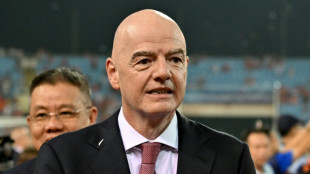 Infantino offers apology but 'no answers' at FIFA meeting over World Cup plan

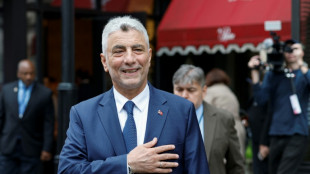 Don't exclude Turkey from 'Made in Europe' plan: minister to AFP

Elon Musk's start-up Neuralink on Thursday said it has gotten approval from US regulators to test its brain implants in people.
Neuralink said clearance from the US Food and Drug Administration (FDA) for its first in-human clinical study is "an important first step" for its technology, which is intended to let brains interface directly with computers.
"We are excited to share that we have received the FDA's approval to launch our first-in-human clinical study," Neuralink said in a post on Musk-run Twitter.
"This is the result of incredible work by the Neuralink team in close collaboration with the FDA."
Recruitment for a clinical trial is not yet open, according to Neuralink.
The aim of Neuralink implants is to enable human brains to communicate directly with computers, Musk said during a presentation by the start-up in December.
"We've been working hard to be ready for our first human (implant), and obviously we want to be extremely careful and certain that it will work well before putting a device in a human," he said at the time.
Musk -- who bought Twitter late last year and also owns SpaceX, Tesla and several other companies -- has been known to make ambitious predictions about his companies, with several such forecasts ultimately failing to pan out.
In July 2019, he vowed that Neuralink would be able to perform its first tests on humans in 2020.
Product prototypes, which are the size of a coin, have been implanted in the skulls of monkeys, demonstrations by the startup showed.
At the Neuralink presentation, the company showed several monkeys "playing" basic video games or moving a cursor on a screen through their Neuralink implant.
Musk said the company would try to use the implants to restore vision and mobility in humans who had lost such abilities.
"We would initially enable someone who has almost no ability to operate their muscles... and enable them to operate their phone faster than someone who has working hands," he said.
"As miraculous as it may sound, we are confident that it is possible to restore full body functionality to someone who has a severed spinal cord," he said.
Beyond the potential to treat neurological diseases, Musk's ultimate goal is to ensure that humans are not intellectually overwhelmed by artificial intelligence, he said.
Other companies working on similar systems include Synchron, which announced in July that it had implanted the first brain-machine interface in the United States.
Y.AlMasri--SF-PST