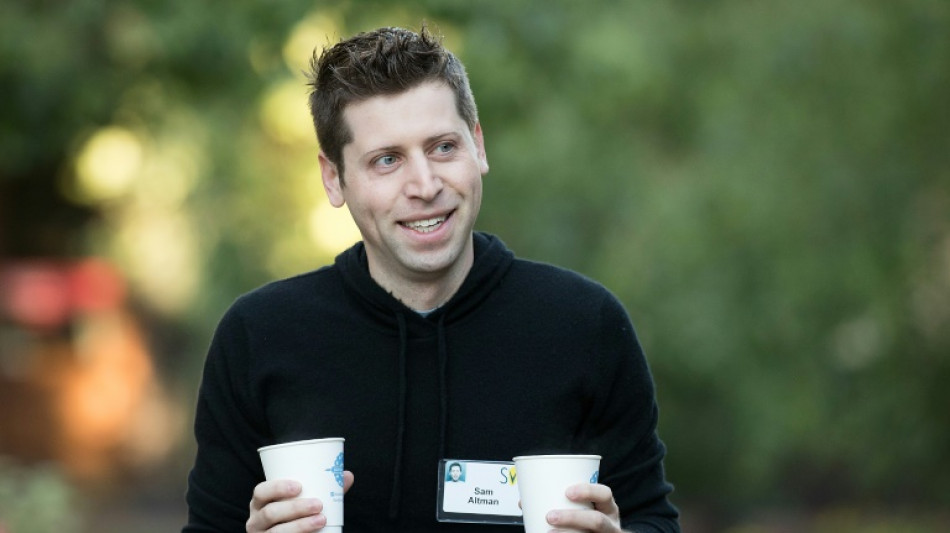
Sam Altman: the quick, deep thinker leading OpenAI / Photo: Drew Angerer - GETTY IMAGES NORTH AMERICA/AFP

 Flamengo secure 0-0 draw in La Plata in Copa Libertadores semi

 The final lap? Two days on the campaign trail with Trump

 Asian stocks rise as tech bounces from rout, eyes on Warsh

 Saudi organisers say 2027 Asian Cup 'on schedule' after attacks
 Right-wing Brazil influencers on 'mission' to seal Bolsonaro win

 Using AI to help find Mexico's legions of missing children

 Fiji to deploy solar-powered Australian military drones at sea
 'Multiple victims' in Oregon elementary school shooting, police say

 'Multiple victims' in Oregon elementary school shooting: police
 ChangeNOW Announces NOW AI After Resolving Website Integration Vulnerability

 Argentine demonstration over education cuts ends in clashes
 Argentine protesters, police clash at demo over university funding
 US stocks end higher as AI shares stabilize

 School roof collapse kills 32 children, teacher in Pakistan
 Lyon down Palace in Europa League, Sunderland leave it late

 UniCredit says receives ECB green light for Commerzbank takeover

 New York City pension fund asks Anthropic to delay IPO

 Venezuela's Maduro denies US torture charges as 'false accusations'

 Somalia sets May presidential election despite insecurity

 Chelsea's Caicedo eager to be more of a leader

 Rahm reaches separation deal with LIV in bankruptcy court
 UN chief urges nations to end 'war on nature'
 Newcastle boss Jaissle says Fernandez-Pardo just needs a goal
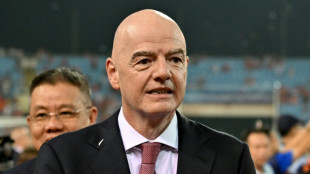 Infantino offers apology but 'no answers' at FIFA meeting over World Cup plan

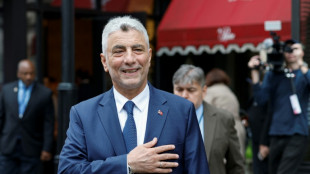 Don't exclude Turkey from 'Made in Europe' plan: minister to AFP

An influential Silicon Valley presence for more than a decade, OpenAI CEO Sam Altman is emerging as the tech titan of the AI age, riding the wave of ChatGPT, the bot his company unleashed on the world.
Altman testified Tuesday to a US Senate Judiciary Committee panel and said artificial intelligence could be at a "printing press" moment, which would make him one of its main pioneers.
In 2015, Altman joined Tesla chief Elon Musk and others in starting OpenAI, a research company with a stated goal of building generative AI that benefits humanity.
"The technological progress we make in the next 100 years will be far larger than all we've made since we first controlled fire and invented the wheel," Altman said in a 2021 blog post.
- Startup guru -
Born in 1985 into a Jewish family, Altman grew up in a St. Louis suburb, where he got his first computer at the age of eight, according to a long profile in the New Yorker from 2016.
Computers and the access to online community they enable helped him navigate being gay in a conservative part of the country, Altman said in an interview with Esquire.
Like so many tech figures before him, Altman dropped out of Stanford University to start a company, Loopt, which let smartphone users selectively share their whereabouts.
Loopt was acquired in 2012 in a deal valued at $43.4 million -- and Altman's place in Silicon Valley was secured.
Altman took a year off during which he "read many dozens of textbooks; I learned about the fields that I had been interested in," the San Francisco resident wrote in a post.
He told of learning about nuclear engineering, synthetic biology, investing, and AI.
"The seeds were planted for things that worked in deep ways later," he said.
- T-shirt and shorts -
In 2014, Altman became president of Y Combinator, an "accelerator" that provides startups with guidance and funding in exchange for stakes in the young companies.
Altman expanded Y Combinator's strategy for investing beyond software startups to biotech, energy, and other fields.
"He thinks quickly and talks quickly; intense, but in a good way," said Industrial Microbes founder Derek Greenfield, who met Altman while his biotech startup was getting backing from Y Combinator.
Greenfield recalled Altman always dressing casually, sometimes in a T-shirt and shorts.
"He was very down to earth," Greenfield said.
Altman left Y Combinator, putting his energy into artificial intelligence despite feared risks.
"He's a very deep thinker who is incredibly focused on getting things right," Insider Intelligence senior director of marketing and commerce Jeremy Goldman said.
Altman backed a "United Slate" political project in 2018 aimed at improving housing and healthcare policy.
He also held a fundraising event for 2020 US presidential candidate Andrew Yang, who advocated for universal basic income.
Yang "had some ideas about universal basic income that (he said) everybody needed, in part because AI was going to take the people's jobs," Goldman said.
Altman has proposed that combining artificial intelligence, robotics, and cost-free energy could essentially enable machines to do all the work and provide a "basic income" to adults across society.
"A great future isn't complicated: we need technology to create more wealth, and policy to fairly distribute it," Altman wrote in a blog post.
"Everything necessary will be cheap, and everyone will have enough money to be able to afford it."
'Fast cars and survival'
In the New Yorker article, Altman said he was a "prepper," someone who has preparations and supplies in place to survive an apocalyptic disaster.
He has spoken of owning high-performance sports cars and renting planes to fly around California.
Altman said in a blog post that the last day of each December he writes a list of things he wants to accomplish in the year ahead.
His personal investments include startups working on fusion energy and human life extension.
"I'm super optimistic," he said in a podcast with TED curator Chris Anderson.
"It's always easy to doom scroll and think about how bad things are," Altman added, "but the good things are really good and getting much better."
F.AbuZaid--SF-PST