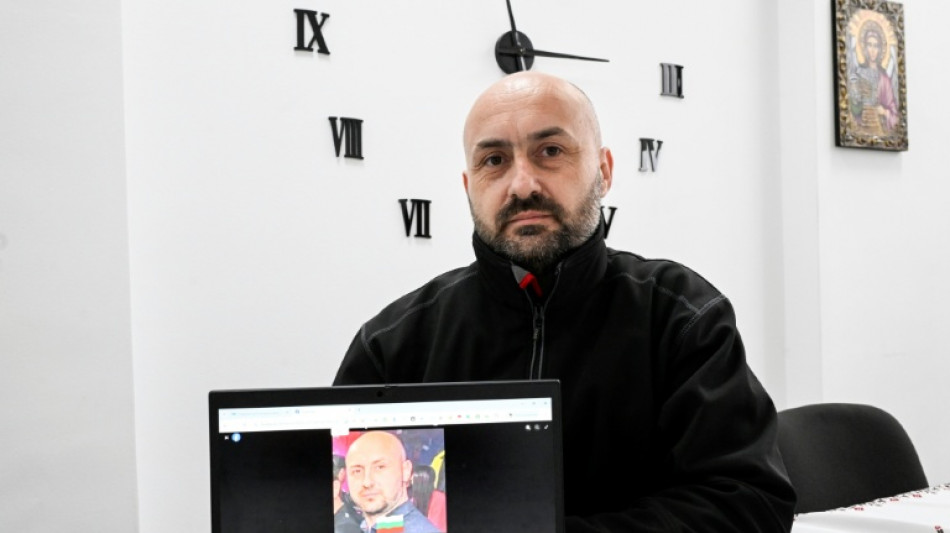
The Bulgarian mechanic Kremlin propaganda keeps killing / Photo: Nikolay DOYCHINOV - AFP

 The British historian helping the French rediscover de Gaulle
 Dodgers beat Braves to advance, Guardians survive in MLB playoffs
 Latin American, Caribbean women top Nobel literature buzz
 US says Fiji-based Chinese official paid bribes for Beijing
 After botched US execution, Christa Pike was nearly taken off life support

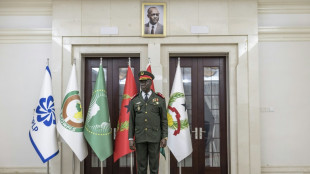 Guinea-Bissau junta urges military unit loyal to ex-president to disarm
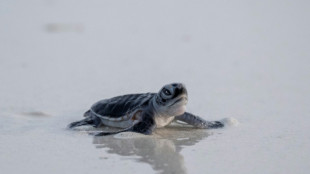 As species decline, green turtles offer glimmer of hope
 Brothers Scott and Beauden Barrett named to start for All Blacks
 EU trade chief seeks to dial down China tensions
 'Never again Bolsonaro': thousands march ahead of Brazil election runoff

 After botched execution, US woman was nearly taken off life support before revival
 Searing AIDS drama 'Elsinore' opens London film festival

 Evicted pensioner who sparked Spain housing protests dies: tenant union
 Golf star Rahm quitting LIV tour over 'unacceptable' terms
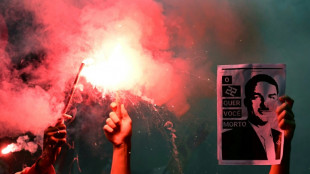 Thousands march fearing return of a Bolsonaro presidency in Brazil
 French PM denies police ordered to confront student protesters
 Rubio touts US power, calls on Europe to emerge from 'slumber'

 Trump says 'we don't think' Russian plague is bio-weapon
 Five children among 26 killed in Ukraine after Russian strikes
 Man City should 'accept' punishment for rule breaches, says Lineker
 US woman who survived botched execution is awake and speaking
 From 1800s to modern pharma: a Nobel-winning chemistry quest
 Southampton boss Eckert given suspended ban over 'Spygate'
 Russia warns of 'false' information as second plague case reported
 IEA ready to release more oil reserves if necessary
For almost a decade, Nikolay Gentchev has faced a strange question: "You're not dead, are you?"
A photo of the Bulgarian mechanic has been regularly published on pro-Russian sites claiming he was burned alive by a Ukrainian mob in Odesa in the aftermath of the protests that drove the country's last pro-Kremlin ruler from power in 2014.
"When they published my photo for the first time, my friends called me to ask if I was alive," he said.
But "I've never been to Odesa or Ukraine", Gentchev told AFP.
His picture has since been used as proof that Ukrainians hate or are hostile to Bulgaria and Bulgarians.
Despite Gentchev's repeated attempts since 2017 to put the record straight, the story and his photo continue to circulate on social media and in parts of the Bulgarian press.
It resurfaced again in a Facebook post shared by thousands in late November. "Do you remember the Bulgarian burned alive in Odesa on May 2, 2014 by people from Euromaidan and the Banderites?" the post said, referring to Ukraine's 2014 protest movement and admirers of Stepan Bandera, an Ukrainian nationalist leader who collaborated with the Nazis against the Soviets during World War II and has since become a figure symbolising the fight for independence in parts of Ukraine.
The disinformation has its roots in real deadly clashes between pro-Russian and pro-Ukrainian activists in the Black Sea port city in May 2014.
More than 40 people were killed in the violence, the vast majority in a fire at the Trade Unions House. Most of the dead were pro-Russians barricaded inside the building.
"The Odesa fire story is often used to portray Ukrainians as enemies of Bulgarians," said Nikola Tulechki, a disinformation expert at data analysis company Data for Good, as a part of the Kremlin's ongoing attempt to paint Ukrainians as Nazis.
"It fits into Russia's broader narrative about the 'liberation' of Ukraine from a fascist regime," he added. Indeed that was one of the arguments used by Vladimir Putin to justify his "special military operation" the night the invasion began in 2022.
- Russia's enduring influence -
Tulechki said Russian propaganda is everywhere in Bulgaria, repeated by politicians and influencers, and even in school history classes, playing on "extremely low levels of trust in Bulgarian society, a shared past and geographic and cultural proximity to Russia."
Once the staunchest of Soviet satellites where nostalgia for the good old days of communist rule is rife, the country is fertile ground for anti-Western narratives despite now being a member of NATO and the EU.
Indeed, being the victim of Russian disinformation has not stopped Gentchev sharing lots of pro-Kremlin talking points himself on social media, even blaming Ukraine for the invasion.
Nor is he particularly angry with Russian propagandists.
"Let's say they made a mistake, that the algorithm confused people," said the 42-year-old from the central town of Kazanlak, known for its arms factories and rose oil.
"I have recovered (though) it was really tough."
On Facebook, where he has 5,000 followers, Gentchev regularly shares anti-European and pro-Kremlin posts, often railing at "corrupt politicians".
Nor was he happy about Bulgaria finally joining the euro on January 1. It "was really absurd", he said. "In reality, we don't benefit from the EU."
Asked about the terrible human toll in Ukraine, Gentchev said: "I don't know, I wasn't there, I didn't see anything. You can't trust journalists."
His hometown of Kazanlak is kept afloat by Bulgaria's largest arms factory, which churns out ammunition largely for the Ukrainian army.
"If it's not us producing these weapons, someone else will," he said.
Y.Zaher--SF-PST