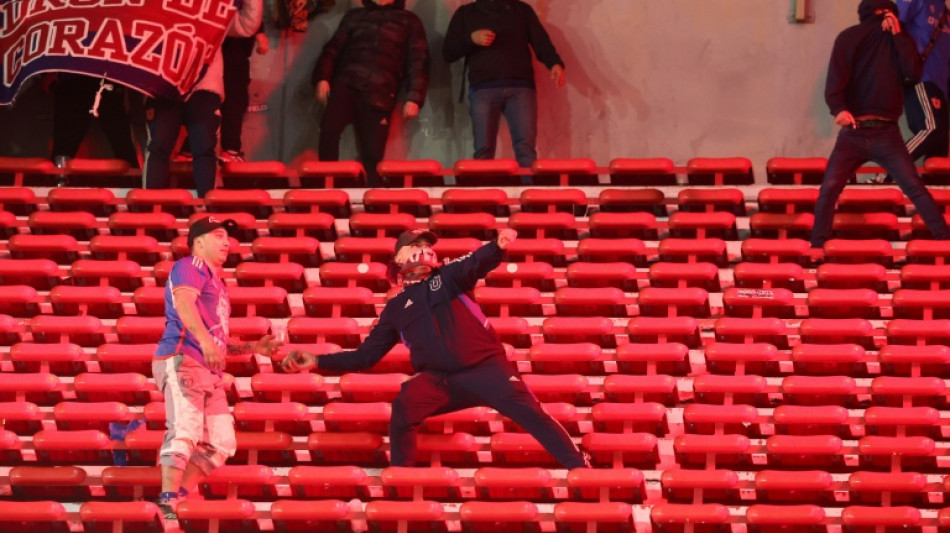
Why fan violence still sullies Latin American football / Photo: Alejandro PAGNI - AFP

 Nigeria widens hunt for possible Ebola cases
 Liverpool star Isak back to his best says Iraola

 Lula supporters cross fingers in Rio, a Bolsonaro bastion

 Flights resume at Riyadh airport as Houthis attack Saudi Arabia

 High-flying Betis held at Celta Vigo
 Shadab ton stuns England as Pakistan reach tri-series final

 'With you': Opposition leader Machado returns to Venezuela

 Carrick on the brink as Man Utd misery mounts, Isak stars for Liverpool

 Monaco hold Lille as both move to top of Ligue 1

 Isak extends hot streak as Liverpool sink Brighton

 Brazil chooses between Lula and Bolsonaro in nail-biter vote

 Doha opens ninth World Investment Forum focused on future investment

 Kuwait public works minister and UK ambassador discuss closer cooperation

 Historic Ramallah olive press joins modern production with local tradition

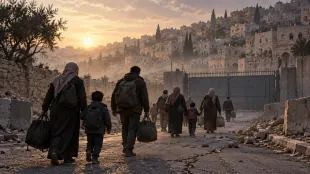 Hebron operation forces 373 Palestinian families from their homes

 Kuwait legal department reviews new commercial concealment law

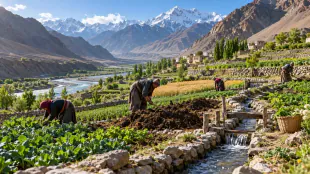 Ladakh declared India’s first fully organic union territory

 IRDAI gives stakeholders until October 31 to comment on distribution reforms

 Bay cyclone forecast to strike Andhra-Yanam coast at very severe strength

 Technical outlook diverges for Bharti Airtel, PFC, REC and Alkyl Amines
 J&K Bank raises accident cover for government employees to ₹1 crore

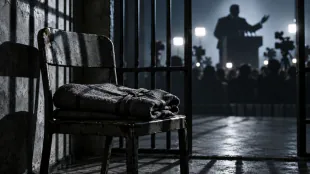 فيديو انتخابي لبن غفير من سجن عوفر يثير انتقادات

 الأمير علي ينتقد دعم الاتحاد الآسيوي لإنفانتينو ويطالب بالشفافية

 هيئة حقوقية تحذر من تهجير وهدم واسع في الخليل

 نازحو مخيم الإسراء في غزة يواجهون نقص الغذاء وتراجع المساعدات

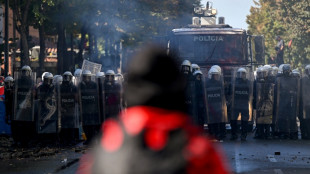
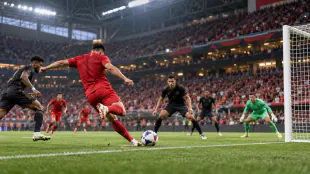
Images of a fan jumping from the stands to escape a beating as bottles, rocks and seats fly through the air at a game between Chilean and Argentine clubs in Buenos Aires on Wednesday highlight the enduring problem of violence in Latin American football.
Over 100 people were arrested over the bloody battles between supporters of Universidad de Chile and Argentina's Independiente, which left 19 people injured, three seriously.
From Mexico to Argentina, Brazil, Colombia, Chile and Ecuador, stadium violence continues to mar the beautiful game in football-mad Latin America.
Here is a quick overview of the situation:
- What causes the violence? -
Argentina, Brazil, Chile, Colombia, Honduras, Ecuador, Peru and Uruguay have all enacted laws over the past two decades to tackle hooliganism, including, in some cases, with prison sentences.
But the violence continues unabated.
So far this year in Chile, twelve matches were suspended due to violence, according to the players' union.
In April, two fans died during a stampede outside a Santiago stadium before a Copa Libertadores match between local side Colo Colo and Brazil's Fortaleza.
In Argentina, more than 100 people have died in the last 20 years, 157 in Brazil between 2009 and 2019, and 170 died in Colombia between 2001 and 2019, according to academic and NGO studies.
There's an idea "that stadiums are spaces where it's legitimate to commit acts of violence, not just physical violence, but also racism and homophobia," Argentine sociologist Diego Murze, author of the book "Football, Violence, and the State," told AFP.
According to Murze, there's a "tribal logic that has always prevailed in football," including a culture of provocation between fans that has "re-emerged in recent years."
For many fans, "football is a channel for frustration," says Colombian sociologist German Gomez, author of the book "Football and Hooligans, an Urban Phenomenon."
Gomez attributed it to "a poeticization of what a team's victory means in the lives of these fans, which leads to that loss of emotional control when a match is won, and even when it is lost."
- Has tighter scrutiny worked?
Security has been stepped up at stadiums around the continent, with some requiring biometric identification for entry and installing video surveillance of the stands.
"In Argentina, they monitor you more in a soccer stadium than at the airport," Murze said,
But the technology, while useful to identify banned offenders, is often powerless to prevent violence by hitherto unknown individuals with masked faces.
The Colombian sociologist accused Conmebol, South America's football governing body, of being lax on violence, saying it doesn't "issue exemplary sanctions against soccer clubs because... closing a soccer club can mean significant financial losses."
- What more can be done? -
In Argentina, visiting fans are not allowed at local first division games.
Several clubs in the World Cup title holder, as well as in Chile and Uruguay, were forced to play behind closed doors last year as punishment for fan violence.
Murze argued that clubs need to professionalize their security apparatus, as they currently "rely entirely on what the state and the police can do."
Following the deaths of the two fans in Chile in April, the Chilean government ended the "Safe Stadium" program, an initiative created in 2011 to combat football violence, without success.
The program prohibited drums and banners from stadiums and left stadium security in the hands of private individuals.
The government has pledged to replace it with new rules for all mass events.
"Mitigating football violence in South America must be driven by actions that promote education and football culture," said Gomez.
H.Nasr--SF-PST