Skiing into the unknown: Beijing's man-made Olympic pistes

 West must embrace 'national power' or face decline: Rubio
 Shell refining margins reach record highs as wars hit supply

 Former Spain, Barca winger Pedro retires from football
 Arteta signs new Arsenal deal until 2030

 Stocks decline as oil climbs on Mideast flareup
 Gauff says online abuse was 'draining' after China Open exit

 As sector struggles, Porsche puts luxury ahead of volume

 'It's personal': Fiji minister pushes better climate finance at pre-COP
 Russia glosses over dark Soviet past in reinvented museum

 UK tax body opened probe into Man City in 2018: FT
 Yemen's Houthis claim new attacks on Saudi airports as conflict deepens
 Germany factory production at highest level for 18 months
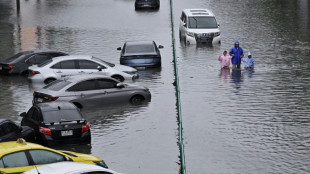 Thailand floods death toll rises to 60 since mid-September

 US pushes Russia for information on plague reports

 Myanmar leader lands in Malaysia for migrant return talks
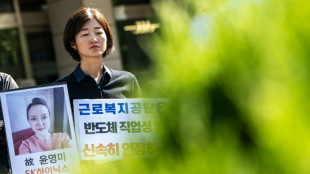
 Indian central bank hikes rates for first time since 2023
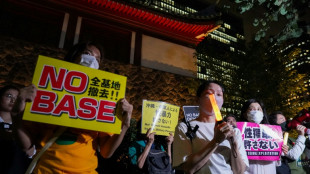 US military on Okinawa face curfew, alcohol ban after murder case

 Fierce lobbying in EU over 'forever chemicals'
 Dodgers beat Braves and Padres avoid sweep in MLB playoffs

 Mourning, war and elections as Israel marks October 7

 Messi says Argentina retirement is 'saddest day of my career'
 Oil rises and stocks fall as Hormuz worries flare

 Pacific presses world for help 'surviving' climate change at pre-COP summit

 Verstappen revival to be put to the test in steamy Singapore
 US woman who survived botched execution is conscious, speaking: lawyers

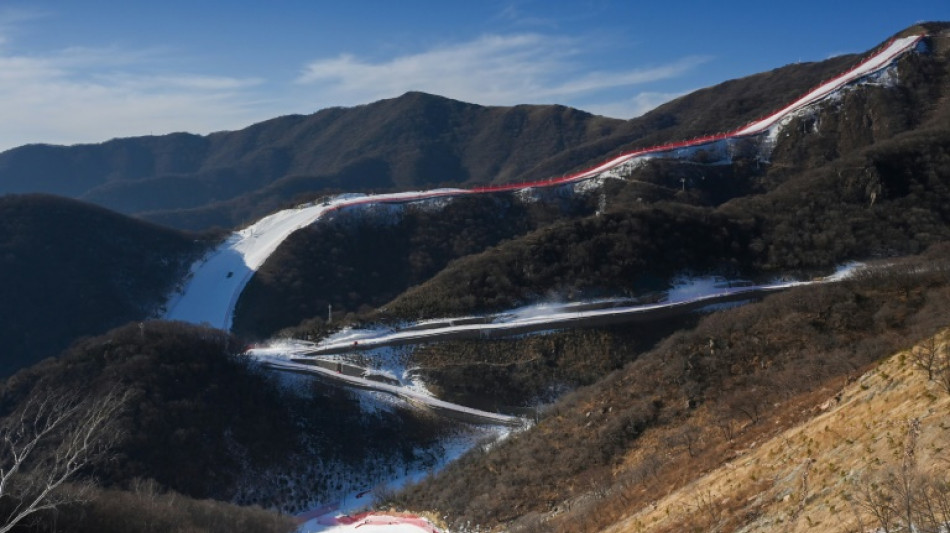
When the alpine skiers take to the piste at the Beijing Olympics this week, they will do so on artificial snow in an often drought-ridden region.
To the outsider, the idea of hosting ski events in Yanqing, in a largely uninhabited area north of the Chinese capital that is often parched, might seem alien.
The National Alpine Skiing Centre has been man-made, tucked away up an anonymous valley.
Streaks of white are etched into a barren-looking series of steep rocky hills -- sparsely forested and in places covered by huge sheets of wire netting.
The hills were once part of the Songshan National Nature Reserve.
Thousands of gallons of water have been used to create the snow on the course. There is no outlying snow to speak of.
The venue is linked to downtown Yanqing district by a brand-new motorway that shoots through a series of long tunnels and culminates in a raised jumble of roads.
A string of red bubble-cars quickly transports skiers up to the slopes past the sliding centre on the left that will be used for luge, skeleton and bobsleigh events, while the Olympic Village for the mountain competitors is on the right.
Soldiers man the mid-station of the lift, decked out in green greatcoats and oversized caps.
A road used for bus transport for the final ascent winds circuituously below the bubble-cars, marked with the venue's logo and sporting Olympic stickers.
Passengers enjoy the luxury of heated seats -- and warmed salopettes are welcome with temperatures falling to minus 15 degrees Celsius (five degrees Fahrenheit) and made even colder higher up the course with the significant chill from a strong wind that constantly snaps the national flags.
The approach to the two pistes that will be used for the speed events -- the downhill and super-G -- and technical events (slalom and giant slalom) is nothing short of startling.
As hard as it is to believe for the onlooking layman, the concept of constructing pistes and using artificial snow is nothing new.
Four years ago, skiing at the Pyeongchang Olympics was held in a location with a strikingly similar topographical feel to that of Yanqing.
There too, an army of workers were brought in to construct not only the course layouts but also, importantly, manufacture the artificial snow employed for racing.
Racers in China, however, have not had the opportunity to try out the new pistes after World Cup races scheduled in 2020 and 2021 were cancelled because of Covid-19 restrictions.
From the little feedback there has been, the course is deemed steep, with a maximum gradient of 68 percent, and is sure to be testing given its icy surface on terrain that pitches and rolls and features four of five jumps.
"This might be one of the best racing mountains in the world," boasted Bernhard Russi, the "piste architect" who has been creating courses for the International Ski Federation since 1980, having won gold and silver for Switzerland in the Olympic downhills in 1972 and 1976.
"It's going to be a very challenging course."
Fabien Munier, coach of French medal hope Alexis Pinturault, said the course was also "undulating".
"We received a few videos this summer, there are some Chinese who train and exchanged details with the Austrians, but there's really very little information," he said.
"Snow conditions should be very cold and that changes a lot of things in relation to kit set-up, skis and boots. The snow will be aggressive, grippy."
Italian veteran Christof Innerhofer said on a scale from one to 10, "I would say that the difficulty of the downhill is seven".
"You can see that it is a track designed by Bernhard Russi," Innerhofer told Gazzetta dello Sport newspaper.
"There are no jumps, but several bumps and a traverse in the upper part, as in South Korea, even if overall it seems a bit more difficult to me."
Alberto Ghidoni, head of the Italian speed team, said the slopes were not for the faint-hearted, "not easy, very steep", and even went as far as questioning their future use.
"They're not for tourists in my opinion, even if here they would like to teach people to ski."
I.Saadi--SF-PST