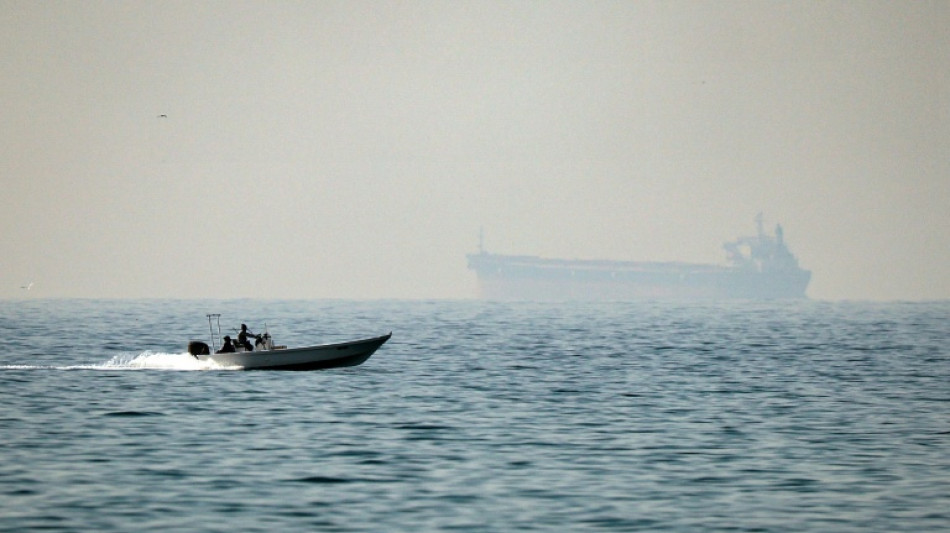
UN Security Council to vote on authorizing force to protect Hormuz / Photo: FADEL SENNA - AFP/File

 Vietnam signs free trade deal with four European nations

 One million migrating raptors dodge illegal hunters above Georgia's Black Sea coast

 Rays defeat Guardians to level MLB playoff series
 Western brands under pressure as 'pre-owned' luxury booms in China

 'Never seen anything like it': mass looting grips Paris

 All Blacks back on track after South Africa wake-up
 Met Opera goes for big and bold, despite shaky finances

 Hollywood's fresh take on tech titans: from heroes to villains

 St. Louis City's unbeaten MLS run ends at 19, Union's reaches 15

 NFL Eagles bench Hurts at least a month with blood clot

 Across US, 'No Kings' events seek to boost early voting

 Tents spring up in Lisbon as Portugal housing protests spread
 'Best in world' Yamal powers Barca to Betis rout, Atletico strike late
 El Salvador's Bukele puts conditions on early release of gang prisoners
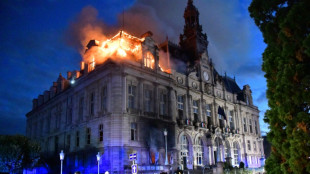
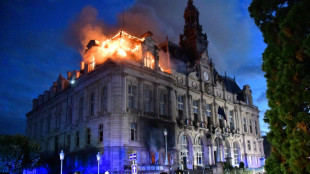 Fire rages at town hall in France's Limoges after protests: authorities

 Unstoppable Barca thrash Betis to extend perfect start

 Maresca faces anxious wait over Haaland injury scare

 PSG fight back to beat Strasbourg after Dembele penalty miss

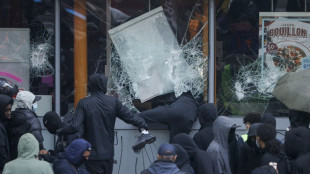
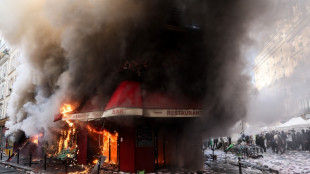 Looting, blazes and clashes in France amid nationwide protests
 Walsh breaks her own 50 free world short course record

 Haaland brace extends Man City's winning start in Premier League

 'Special' Ombudsman storms to victory in Champion Stakes

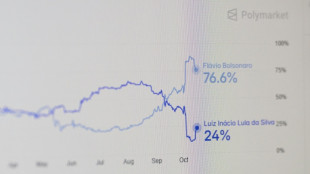 Brazil's right embraces election betting odds amid polls skepticism
 Four more Ebola cases detected in Kenya, bringing total to seven
 Clashes erupt in France as protesters vow to make government 'tremble'

The UN Security Council will vote Friday on a draft resolution brought by Bahrain to authorize the use of "defensive" force to protect shipping in the Strait of Hormuz from Iranian attacks.
Iran has placed a stranglehold on the key shipping lane -- threatening fuel supplies and roiling the global economy -- in retaliation for US-Israeli strikes that triggered the month-old Middle East war.
"We cannot accept economic terrorism affecting our region and the world, the whole world is being affected by the developments," Bahrain's United Nations ambassador Jamal Alrowaiei said this week.
He said the text, which has gone through several amendments and is supported by the United States, "comes at a critical juncture."
President Donald Trump on Wednesday called for countries struggling with fuel shortages to "go get your own oil" in the Strait of Hormuz, adding that US forces would not help them.
A sixth and final draft, seen by AFP, greenlights member states -- either unilaterally or as "voluntary multinational naval partnerships" -- to use "all defensive means necessary and commensurate with the circumstances."
It applies to the strait and adjacent waters to "secure transit passage and to deter attempts to close, obstruct or otherwise interfere with international navigation through the Strait of Hormuz."
The measure would last for a period of at least six months.
The draft resolution has been molded in a bid to rally several countries that have appeared skeptical, including Russia, China and France.
Revised wording no longer explicitly invokes Chapter 7 of the UN Charter, which allows the Security Council to authorize armed force to restore peace.
The latest version, to be voted on at 11:00 am (1500 GMT) Friday, also emphasizes the defensive nature of any intervention -- a stipulation that seems to have alleviated French concerns.
- 'Tall odds' -
Jerome Bonnafont, France's UN ambassador, said Thursday that "it is up to the Council to quickly devise the necessary defensive response" after members voted in March to condemn Iran's blocking of the Strait of Hormuz.
President Emmanuel Macron earlier said a military operation to free the waterway is "unrealistic."
It is not certain that Russia and China -- who both wield veto powers -- will back the draft resolution.
"Authorizing member states to use force would amount to legitimizing the unlawful and indiscriminate use of force, which would inevitably lead to further escalation of the situation and lead to serious consequences," said Chinese ambassador Fu Cong.
Russia, a long-time ally of Tehran, has denounced what it calls one-sided measures.
Considering the possible Russian and Chinese vetos, the text "faces tall odds to make it through the Security Council," Daniel Forti, an analyst at International Crisis Group, told AFP.
"It is hard to see them supporting a resolution that treats stability in the strait exclusively as a security issue, instead of one that also grapples with the need for a durable political end to the hostilities," he said.
Normally, around a fifth of the world's oil and liquefied natural gas passes through the Strait of Hormuz.
Its near-total closure is impacting global supplies of important commodities including oil, liquefied natural gas and fertilizer and leading to sharp rises in energy prices.
Security Council mandates authorizing member states to use force are relatively rare.
During the Gulf War, a 1990 vote allowed a US-led coalition to intervene in Iraq after the invasion of Kuwait.
And in 2011, a similar vote permitted NATO's intervention in Libya and the eventual fall of dictator Muammar Gaddafi.
D.AbuRida--SF-PST