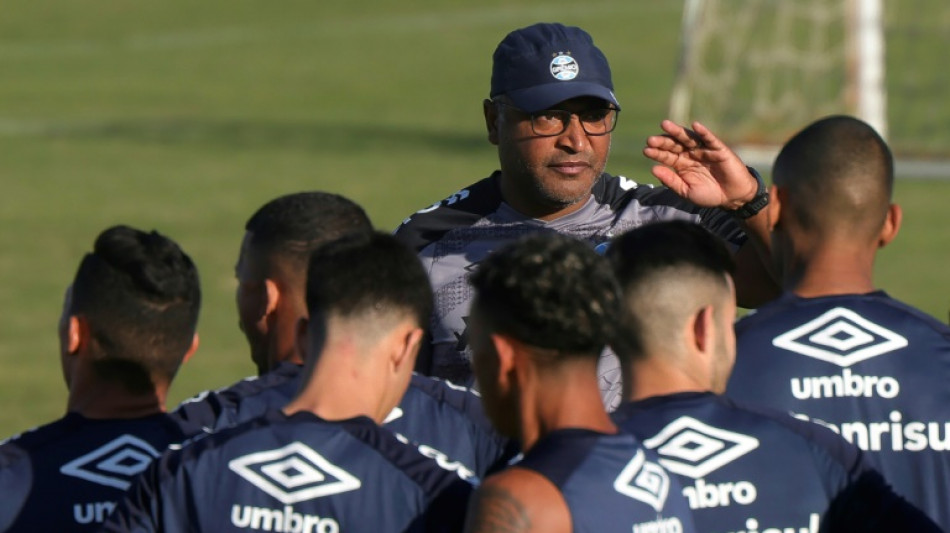
Black coaches all too rare in Brazilian football / Photo: Silvio AVILA - AFP

 Canada's Carney stands up to Trump, despite risks
 Lens hammer Auxerre thanks to Thauvin penalty double
 No singles for Serena, but she joins Alcaraz for US Open
 Joao Pedro extends Chelsea stay with new long-term deal
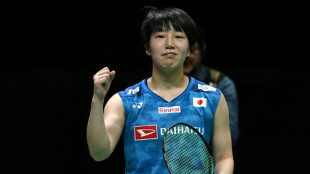 Yamaguchi to face An in hunt for fourth badminton world crown
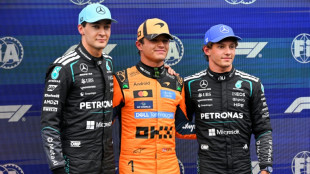 Norris clinches pole for Dutch GP
 Norris clinches pole for Dutch Grand Prix
 Pope Leo calls for courage in Rimini visit after stop in tiny San Marino
 Man Utd must learn from 'frustrating' defeat at Hull: Carrick

 Yamaguchi on course for fourth badminton world crown
 Man Utd humiliated by Hull in dismal start to Premier League season

 Anthropic market debut could break SpaceX IPO record: media
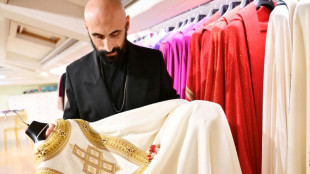 Pope's 'couturier of the sacred' fueled by faith
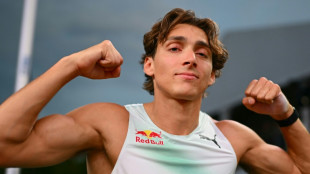 Duplantis locked in on 'grinding' for big bars
 Stokes says decision to leave Headingley off Ashes roster 'shambolic'
 New arrival Rodri to miss Elche opener: Barca's Flick
 Atletico's Alvarez to return against Villarreal: Simeone
 Dozens of civilians killed, kidnapped as jihadists clash in Nigeria
 Former envoys urge joint French, UK action on Palestinian territories
 Australia lead by 101 in 2nd Bangladesh Test as 18 wickets fall on day one
 'Aura' battles leap from social media to Latin America streets
 US, Canada fail to reach trade pact to avert Trump tariffs
 Sudan farms lie barren as El Nino leaves Nile banks dry
 Arctic shipping a daunting prospect in hotly contested region

 In US, rare earths extracted from coal mine wastewater
Pele, Ronaldo, Ronaldinho, Neymar: Brazil has a long list of legendary black and mixed-race football stars. But the coach's bench remains a largely white domain.
More than six decades after Pele led the Selecao to the first of their five World Cup titles, in 1958, prejudice and discrimination still divide Brazilian football, a reflection of structural racism in the last country in the Americas to abolish slavery, experts say.
Of the 20 teams in Brazil's top-flight league, just one, Goias, currently has a black coach: Jair Ventura, son of 1970 World Cup-winning talisman Jairzinho.
Most seasons, there are none.
"The most striking thing about that isn't that there are no black coaches... it's that the debate doesn't even exist in Brazilian football," says Marcelo Carvalho, executive director of the Observatory on Racial Discrimination in Football.
In the United States and Europe, the lack of black coaches in professional sports has long drawn criticism.
In Brazil, the issue has barely registered, Carvalho told AFP.
"It's seen as normal in Brazilian society not to have black people in these spaces. Why? Because in Brazil it's not common to have black people in any positions of power. Football just reflects... our racist society," he says.
Black and mixed-race Brazilians make up 55.8 percent of the country's 213 million people. But they occupy just 24.4 percent of seats in Congress, and 29.9 percent of management positions, according to the national statistics institute, IBGE.
- Painful legacy -
From the Selecao to the domestic league, Brazil's beloved football teams typically reflect the country's racial diversity.
But coaching jobs are another matter.
Just a handful of black men have coached in the first division in recent years: Andrade, Cristovao Borges, Marcao and Roger Machado, in addition to Ventura.
The national team has had two black coaches: Gentil Cardoso (1959) and Vanderlei Luxemburgo (1998-2000) -- though in a sign of how messy the issue of race can be, the relatively light-skinned Luxemburgo, who went on to coach Real Madrid, publicly self-identified as black only later in life.
"There is structural prejudice... against black coaches," the Selecao's current boss, Tite, said in October.
Experts say that is part of the legacy of slavery and the systems that kept black people from positions of power after Brazil abolished it in 1888.
"After slavery ended, Brazil never had a policy of opportunities for black people, so the idea became rooted in society that black people aren't occupying those spaces because they don't want to or are intellectually inferior," says Carvalho.
- 'Authorized' by Bolsonaro -
Roger Machado, the 47-year-old coach of second-division club Gremio, says he has felt the sting of racism and discrimination throughout his life, on the pitch and off.
Machado, who has coached some of Brazil's top teams, including Atletico Mineiro, Palmeiras and Fluminense, says people commonly assume he is a bodyguard when he is out with his mixed-race daughter.
"Football shows what we are as a society," he told AFP.
"When blacks start to scale the social pyramid, the filters start to appear -- the filters created by racism that say blacks are less intelligent, less capable of leadership and management."
He says the problem has only grown more acute under far-right President Jair Bolsonaro, who has faced frequent accusations of racism.
"The (racist) individuals who were in hiding now feel authorized to speak out in line with the stances and viewpoints coming from our nation's leader," he says.
"We have to resist that."
Brazil needs education and public policy to get past the "taboo" around addressing racism in football, says sociologist Danielle Cireno of the Federal University of Minas Gerais.
"We have racial quotas for universities and government jobs. Why can't we at least suggest the idea of introducing them for coaches?" she says.
Brazil is not alone in the absence of black coaches, however.
At the last World Cup, just one of the 32 coaches was black, including of the five teams from Africa: Aliou Cisse of Senegal.
F.AbuShamala--SF-PST