
Mr C on North London’s Pioneering Role in the Global House Music Scene

 Below Deck alumnus João Franco and brother arrested after fatal Turkey fight
 General Hospital actor Randall England dies at 75
 London museum removes Russell Brand hair exhibit after rape conviction

 Yella Beezy sentenced to life for arranging rapper Mo3’s murder
 Toddler Diagnosed With Leukemia After Symptoms Dismissed as Winter Illness
 Davante Adams injury deepens Los Angeles Rams receiver shortage
 João Franco’s earlier post draws attention after arrest over fatal Turkey brawl

 Itlu Arjuna receives U/A certificate ahead of theatrical release

 Kris Jenner Furious Over 'Childhood Trauma' Claim in Kim Kardashian Biography

 Delhi gold loses Rs 800 while silver falls Rs 5,000

 مكتب إعلام الأسرى: القواسمي يعاني آلامًا وضعفًا في العين والأذن اليمنيتين

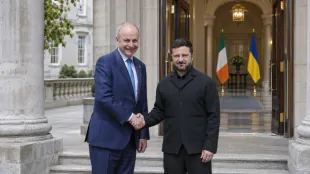 Zelenskyy arrives in Dublin for meetings on Ukraine and peace efforts

 Woman barred from every Greggs outlet after series of offences

 Ketchup packets link suspect to break-in at Eddie Rocket’s restaurant

 China's Trade Surplus Passes $1 Trillion as Technology Exports Surge

 China's Singles' Day Exposes Persistent Consumer Caution

 Energy Costs Push OECD Inflation Up to 4.5%
 US Adds 165,000 Jobs as Unemployment Falls to 4.1%

 Euro-Area Inflation Reaches 4% as Energy Prices Jump
 Irish police prepare for further hoax bomb threats after hundreds of schools targeted

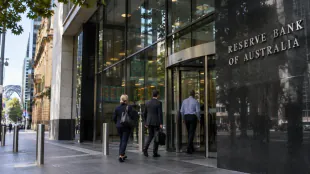 RBA Inflation Target Origins: Why Australia Chose a Range Over Zero

 Sister recounts fatal machete attack as Irish murder trial continues

 Georgia refrigeration company sues EPA after five-year HFC reprieve

 EU proposes broad consumer safeguards for apps, subscriptions and ticketing
Richard West, widely known by his moniker Mr C, asserts that north London’s Camden and Islington districts were the true birthplace of the UK’s house music and rave culture, predating similar movements in Manchester. The DJ and producer reflects on how local youth adapted American electronic sounds to create a distinct, underground phenomenon that eventually captivated the world.
Richard West, known professionally as Mr C, maintains that the foundations of the United Kingdom’s house music and rave culture were laid in north London long before the genre gained international prominence. The DJ and rapper argues that residents of Camden and Islington districts created a distinct underground scene that served as the primary catalyst for what became a global musical movement.
West, who grew up in Tufnell Park, describes the late 1980s not merely as a period of musical adoption but as one of active creation. He contends that while house music originated in American cities such as Detroit, Chicago, and New York, it was north Londoners who adapted the sound to fit local audiences before exporting it worldwide.
"We had a house scene kicking off before anywhere else, and its proprietors were all people from Camden and Islington," West said. "Camden and Islington was the home of house music in the UK and we helped create a rave culture that went on to go all around the world. It was as DIY and underground as it gets."
His perspective challenges the dominant historical narrative that centers Manchester’s Hacienda club as the epicenter of the late-1980s dance music explosion. West, who was part of the group associated with the 1988 "Second Summer of Love," emphasized that his community was already active in the genre prior to Manchester's rise.
"People talk about the Hacienda and Manchester but we were well ahead of them in north London," he noted.
West’s entry into music began in the early 1980s within the electro and hip-hop scenes. Born and raised in Tufnell Park, he started rapping in 1982, inspired by American artists such as The Sugar Hill Gang, The Furious Five, Afrika Bambaata, and Jekyll and Hyde. At the time, there was no established London hip-hop scene; all relevant music was imported from the United States.
He began performing at a CB radio club located in the Ingestre Road community centre near Acland Burghley school. There, he collaborated with his friend Robert Brown, who played records while West acted as the MC. West recalled composing his own rhymes during this period, driven by a desire to keep pace with Brown’s work, which West later discovered was largely copied from American sources.
West possessed natural musical aptitude, particularly on the piano, which he taught himself. His music teacher at school expressed disappointment when West did not select music for his O-levels, recognizing his innate talent. This ability allowed West to translate the melodies and rhythms in his head directly into studio productions upon entering one later in life.
After leaving school, West worked as a motorbike courier and subsequently as a milkman for Express Dairies. The early morning schedule of his dairy job, requiring him to start at 5 a.m. and finish by 10:30 a.m., accommodated his nightlife lifestyle. He would sleep until the evening, attend club events that often closed at 3 a.m., and then begin his milk rounds.
By the summer of 1986, West observed a shift in the local musical landscape. He grew tired of hip-hop’s increasing focus on gangster themes and turned toward house music, which was beginning to appear in London warehouse parties hosted by groups such as Soul II Soul, Family Function, Shake, and Finger Pop. These events initially focused on rare groove but gradually incorporated house tracks.
Imported American records were available at Soho shops like Groove on Wardour Street and Black Market on D’Arblay Street. By 1987 and 1988, early Detroit house music began to influence the scene. West stated that his group took elements from gay scenes in New York and Chicago and transformed them into rave culture.
In 1986, West produced his first house track, titled "Page 67." He recalled his mother’s skepticism regarding the commercial viability of records, noting, "You can’t eat records." However, as he began securing gigs, her attitude shifted. The creation of this music was facilitated by specific technological advancements, including Roland drum machines and bass sequencers such as the 303, 808, and 909, alongside Moog synthesizers.
West identified three key ingredients for the movement’s success: the development of music technology, a group of creative young Londoners, and the popularity of MDMA and LSD within the community. He also noted that the group was willing to use empty spaces for parties by gaining unauthorized access to them.
The growing influence of this scene attracted industry attention. In 1988, Charles Cosh, manager of the Scottish psychedelic rock band The Shamen, contacted West. West subsequently became the front man for the band and produced several hit records with them.
Today, house music is ubiquitous, potentially the most popular genre globally. West reflects on the current state of music production, noting that while anyone with a laptop can create music, he believes 99 percent of it is generic. He asserts that the tracks he produced decades ago remain fresh, stating, "I play tracks I made 30 years ago that people think are new."
West currently operates a red light therapy centre on Brecknock Road and has released a new track titled "Liquid Acid."
J.Saleh--SF-PST