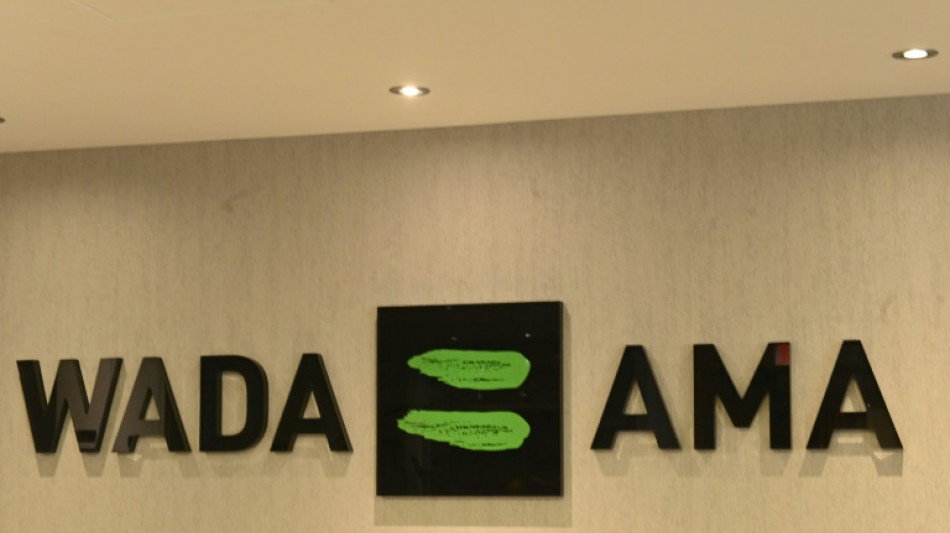
Anti-dopers wrestle with paying informants to break sports' code of silence / Photo: Eric THOMAS - AFP

 Joao Pedro extends Chelsea stay with new long-term deal

 Yamaguchi to face An in hunt for fourth badminton world crown

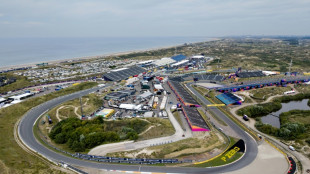
 Norris clinches pole for Dutch GP
 Norris clinches pole for Dutch Grand Prix
 Pope Leo calls for courage in Rimini visit after stop in tiny San Marino

 Man Utd must learn from 'frustrating' defeat at Hull: Carrick
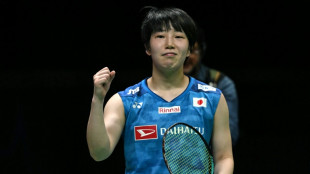 Yamaguchi on course for fourth badminton world crown

 Man Utd humiliated by Hull in dismal start to Premier League season
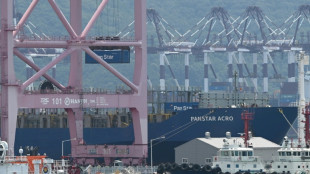
 Anthropic market debut could break SpaceX IPO record: media
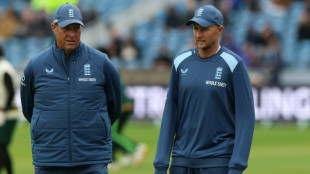
 Pope's 'couturier of the sacred' fueled by faith

 Duplantis locked in on 'grinding' for big bars
 Stokes says decision to leave Headingley off Ashes roster 'shambolic'
 New arrival Rodri to miss Elche opener: Barca's Flick
 Atletico's Alvarez to return against Villarreal: Simeone
 Dozens of civilians killed, kidnapped as jihadists clash in Nigeria

 Former envoys urge joint French, UK action on Palestinian territories

 Australia lead by 101 in 2nd Bangladesh Test as 18 wickets fall on day one
 'Aura' battles leap from social media to Latin America streets
 US, Canada fail to reach trade pact to avert Trump tariffs
 Sudan farms lie barren as El Nino leaves Nile banks dry
 Arctic shipping a daunting prospect in hotly contested region
 In US, rare earths extracted from coal mine wastewater
 Nakashima pounds Fritz, Bejlek beats Keys in Cincinnati upsets
 Canadian negotiator says 'more work to do' on US trade deal
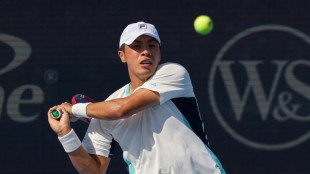
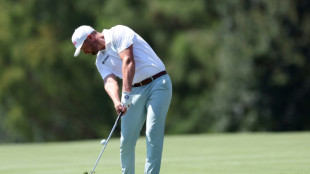 'Solid' Clark takes solo lead at BMW Championship
Anti-doping organisations are torn over a suggestion from the director general of the International Cycling Union (ICU) to pay sports insiders to inform on their rivals or colleagues.
"We need information from the peloton. We need Radio Peloton," Amina Lanaya told a French newspaper earlier this year.
To fight what she called "a form of omerta" in her sport she said the UCI needed to "infiltrate the peloton, infiltrate certain teams, pay for 'grasses'."
Paid criminal informants are a staple of police work in many countries, but Lanaya's suggestion that sport adopts the same approach has led to debate in the anti-doping community, even as they acknowledge that some of the biggest cases in recent years were broken thanks to tip-offs.
One of the biggest scandals in history, the vast system of institutionalised doping in Russia, gained world-wide attention in 2014 when German broadcaster ARD released a series of documentaries based on information from Vitaly Stepanov, a former an employee of Russia's anti-doing agency RUSADA, and his wife, runner Yulia Stepanova.
"It is essential to have informants," said Damien Ressiot, head of the investigation department at the French anti-doping agency (AFLD), who pointed out that of the 11 violations of anti-doping rules, only one involved testing.
"And on the other ten, we only get them by investigating," he explains.
Those categories include the athlete's whereabouts failures, tampering with samples, possession as well as threats or retaliation against informants.
Yet Ressiot is not convinced that paying informants will work.
"I don't see the point," he says.
Guenter Younger, a former German policeman and Interpol officer who is the head of the investigations at the World Anti-Doping Agency (WADA), agreed.
"I'm not a big fan, to be honest," he told AFP.
- 'None asked to be paid' -
While Younger said some informants are driven by idealism and a desire "for clean sport", Ressiot added "but also sometimes by envy, or for other reasons."
The AFLD and WADA have both created dedicated tip web sites.
"We have a lot of information through this channel," said Ressiot, adding that the AFLD received 80 reports in 2021 on its site.
Younger says that WADA's five-year-old 'Speak Up!' web page has also been highly productive.
He said "none of the informants over the past five years has asked to be paid".
WADA can offer financial aid for "substantial assistance" by informants but, said Younger, these are used more as an expense allowance "for whistleblowers, if they have to travel to a place for example."
The aid is also used to protect and escort athletes caught doping who decide to collaborate.
"This has already happened in the past," says Ressiot.
But, he says, the AFLD has never taken on paid informants.
Younger says handing over cash for tips raises practical questions.
"It would be a problem for me to pay for something without knowing what it will be," he said.
"I would probably ask for the information before knowing if I should pay for it, I would evaluate it and then I would ask for the price."
Other observers support Lanaya.
"There is a very strong omerta in the sports world. Anything that can break it is a good thing," said Pim Verschuuren, who works on sports governance at the French Institut de Relations Internationales et Strategiques
But, he warns, "by creating informants, we will place athletes in risky situations, they will be exposed and perhaps in danger. It must be minimal."
V.Said--SF-PST