Paralympians fear for future of winter sports as climate change takes hold

 'Aura' battles leap from social media to Latin America streets

 US, Canada fail to reach trade pact to avert Trump tariffs
 Sudan farms lie barren as El Nino leaves Nile banks dry
 Arctic shipping a daunting prospect in hotly contested region
 In US, rare earths extracted from coal mine wastewater
 Nakashima pounds Fritz, Bejlek beats Keys in Cincinnati upsets
 Canadian negotiator says 'more work to do' on US trade deal
 'Solid' Clark takes solo lead at BMW Championship
 Arteta hails Arsenal's desire after perfect start to title defence

 Betis down Real Sociedad in La Liga opener

 Mexican governor resumes job despite US drug charges

 Arsenal rout Coventry to open Premier League season in style
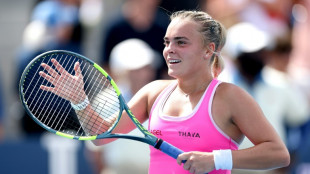 Giant-killer Bejlek overhauls Keys to reach Cincinnati semi-finals

 Man Utd agree deal for Brighton midfielder Baleba: reports
 Werro wins Lausanne 800m, well off world record pace
 China mulls bid to host 2028 UN climate talks: sources
 Jones becomes third Englishman to join Inter this summer
 Mexican governor wanted on US drug charges returns to job

 Bolivia's Paz forced to fire economy minister in mid-crisis

 A-Rod ups T-Wolves stake in $4.5bn ownership change
 UK court orders Prince Harry, others to pay Daily Mail initial £9.5mn
 'Grateful' ex-world champion Alaphilippe retires from cycling
 US, Canada work to wrap up trade deal ahead of looming deadline
 Malaysia's JDT claim unbeaten run world record

 At least 2 teens seriously wounded in sword attack at Swedish school
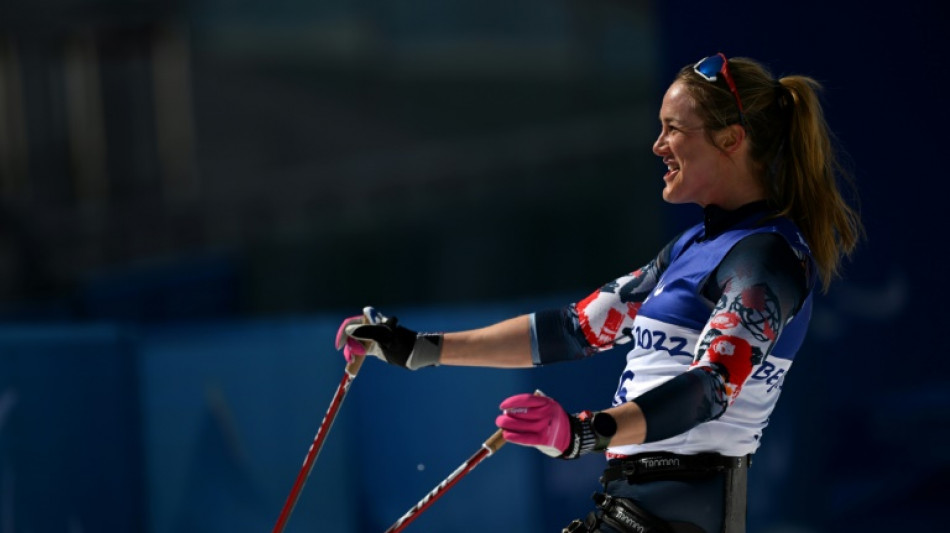
As Winter Paralympians prepare to return home from Beijing, many fear the effects of climate change in their countries and how a lack of snowfall could inhibit training for the Milano-Cortina Games in 2026.
When she should have been skiing during Norway's traditional snow season last winter, Birgit Skarstein was still rowing a scull boat on lakes that usually freeze over.
The Paralympian, who rows at summer games and skis at the winter edition, says she is on the frontline of observing the effects of climate change in Norway.
"This year I wasn't able to ski on really good tracks until the end of January," Skarstein told AFP, adding that normally the natural snowfall comes in November.
"I was hunting mountain tops. Over November, December, January I was moving from mountain top to mountain top to find snow and it was only artificial snow."
With temperatures rising globally, the 33-year-old cautions about the future of snow sports.
"Everybody who loves snow and everybody who loves winter sports should care about climate change," she said.
"We were rowing until New Year's… it was crazy," she says, pointing out that venues for winter-sport training are becoming increasingly scarce.
Both natural snowfall and the amount of water available for artificial snow are diminishing around the world, said Climate Council of Australia research director Dr Martin Rice.
"In fact, of the 21 venues used for the Winter Olympic Games since 1924 and Paralympic Games since 1976, only 10 will have the 'climate suitability' and natural snowfall levels to host an event by 2050," he told AFP.
- Athletes in T-shirts -
At the Beijing Winter Paralympics, Nordic and alpine skiing events have taken place on slopes using only artificial snow.
Some athletes even wore T-shirts as they ploughed through the slushy snow as temperatures reached up to six degrees above freezing at Wednesday's cross-country skiing event at Zhangjiakou.
"You pull and you feel like you're stuck in glue," said Skarstein, who raced in short sleeves.
Paralympians recalled they had endured similar warm conditions at PyeongChang 2018 and Sochi 2014
International Paralympic Committee President Andrew Parsons said organisers were aware of the growing impact of climate change -- particularly increased heat and issues with snow quality.
"How this impacts on the Paralympic Winter Games is something that we have to monitor," he told AFP.
"We need to offer the best conditions for the athletes and the best experience," he said.
The Olympic and Paralympic movements are conscious of their carbon footprints.
The International Olympic Committee announced it will cut its direct and indirect greenhouse gas emissions by 50 per cent by 2030.
It will also require Games to be "climate positive" from 2030.
- Preparation impact -
Canadian Brian McKeever, 42 -- who has been competing in visually impaired cross-country skiing at Paralympic level since Salt Lake City in 2002 -- has noticed the changes in snow patterns.
"We've definitely seen the snow being slightly different. March-April used to be some of our biggest snowfall periods but it doesn't do that as much anymore," McKeever told AFP, adding "roof rattling" winds at Canmore, a town in Alberta's Rocky Mountains have stepped up in the past five years.
Raging wildfires last year also affected training.
"We had to travel because of the forest fires in British Columbia -- lots of smoke. And it's hard on the lungs," McKeever's guide Russell Kennedy told AFP.
Team USA's Kendall Gretsch -- who won gold, silver and bronze in the women's sitting biathlon this week -- said athletes were forced to train for longer in Canada because there was no snow in Montana where they usually have camps.
"Where we typically train in the winter we've had probably the least amount of snow we've ever had," she told AFP.
E.AbuRizq--SF-PST