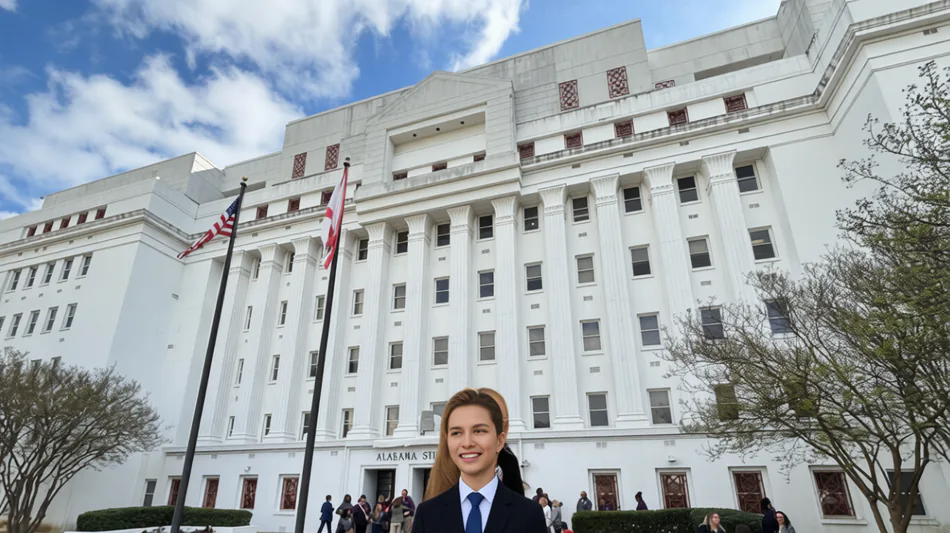
Alabama Legislature Passes Weakened Utility Reform Bill Amid Allegations of Alabama Power Influence

 Iran's economic ties to Dubai hard to break despite war

 iPhone 18預購後出現可疑扣款 四間銀行調查未授權交易
 《浪花男女》辦特別謝票場 馮志強談票房與導演客串拍攝

 Former captain De Villiers hails 'fantastic' Springboks

 Galaxy Tab S12系列效果圖曝光 Ultra擬配雙鏡頭及瀏海螢幕
 اليورو يستقر في البنوك المصرية وأعلى سعر للبيع 59.85 جنيه
 حمزة قورقماز يناقش العلاقة بين وضوح المبادئ واحترام الاختلاف

 Altman tells Fortune OpenAI will not go public in 2026
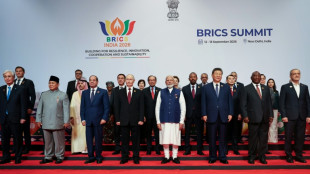 China, Russia, India seek economic cooperation at BRICS

 الأرصاد السعودية تتوقع سيولاً وأمطاراً رعدية في خمس مناطق

 ستاندرد آند بورز تثبت تصنيف السعودية عند A+

 One dead, 102 rescued from stricken ferry off Indonesia's Java
 Garcia keeps WBC welterweight title by stopping Benn

 Lights out in Laos as electricity exports surge

 'This is the test': All eyes on US Fed to tackle high inflation

 Scars of Marawi siege linger as Philippines poll nears

 Trump turns to golf, family business on Irish visit's second day

 Defiant Sabalenka motivated by US Open defeat

 Houthis say hit Saudi base after renewed fighting with Yemeni govt forces

 Queens residents seek renewed enforcement along Roosevelt Avenue

 Roadless Rule repeal proposal raises concerns over Midwest forests and fire risk
 KFF journalists discuss opioid funds, suicide prevention and gaps in care

 Utah hosts Arkansas as both programs begin seasons under new coaches

 United States beats Spain 76-66 to set up World Cup final against France

 Steven Strogatz weighs AI mathematics advances and their consequences for researchers

Alabama lawmakers have passed a significantly altered version of utility reform legislation, stripping away mandatory public rate hearings and profit caps for Alabama Power that had previously won unanimous support in the House. The swift passage of the bill, which reshapes the Public Service Commission’s structure, has drawn sharp criticism from energy watchdogs and some legislators who allege the changes were driven by intense lobbying from the state’s dominant electric utility during a critical window between legislative sessions.
The Alabama Legislature concluded its 2026 session by passing a major utility reform bill that has been stripped of its most contentious provisions, leaving the state’s powerful electric utility largely unregulated regarding rate increases and profit margins. The legislation, designated as HB 475, was approved by both chambers in rapid succession after Senate leaders introduced a substitute version late on March 30, the night before lawmakers returned from their spring break recess. The final bill dramatically alters the composition and authority of the Alabama Public Service Commission (PSC) but abandons the core reforms championed by House Republicans who had initially passed the measure unanimously.
The shift in legislative strategy occurred during a brief period when many legislators were away from Montgomery. Prior to adjourning for a 12-day break on March 19, the House of Representatives had voted 104-0 in favor of HB 475, sponsored by Rep. Mack Butler, R-Rainbow City. That original version of the bill would have required the PSC to hold public rate hearings whenever Alabama Power requested rate increases—a practice that has not occurred in Alabama for 44 years. Most other states conduct such hearings as a standard regulatory procedure, but observers note that Alabama’s utility landscape is distinct due to the immense political influence wielded by Alabama Power, one of the nation’s most profitable utilities.
Rep. Mack Butler, who sponsored the original legislation, stated that he believed he had secured an agreement with Senate leaders during conference committee negotiations. That understanding was that the key provisions regarding public rate making would be incorporated into a separate Senate-passed bill, SB 360. The Senate bill aimed to expand the PSC from three to seven members, with commissioners elected by congressional district rather than statewide. It also proposed creating a new position of secretary of energy, appointed by the governor, who would oversee the commission. However, the Senate version did not include caps on Alabama Power’s profits or mandate rigorous rate case hearings.
When lawmakers returned to Montgomery on March 31, they found that the legislative landscape had shifted dramatically. Sen. Sam Givhan, R-Huntsville, had filed a substitute version of HB 475 just hours before the session resumed. The new bill retained the HB 475 designation but was substantively a modified version of SB 360. It eliminated the provisions requiring public rate hearings, profit caps, and restrictions on Alabama Power’s ability to charge ratepayers for lobbying costs.
Butler expressed frustration upon seeing the substitute bill. "The night before we go into session, we get the bill," Butler recalled. "Of course, I’m highly upset because it doesn’t include the reforms that I had wanted." He noted that he had expected the conference committee to merge the House and Senate versions in a way that preserved the rate-making reforms.
Accounts of the negotiations that took place during the spring break recess are limited and conflicting. Observers in Montgomery indicate that the discussions involved Sen. Clyde Chambliss, Sen. Bobby Singleton, House Speaker Nathaniel Ledbetter, Sen. Garlan Gudger, Rep. Steve Clouse, and Rep. Chip Brown. Brown had previously sponsored an unsuccessful bill aimed at ending the election of PSC commissioners.
Rep. Steve Clouse, a long-time Republican legislator from Ozark, served on the conference committee responsible for reconciling the two bills. He told Inside Climate News that legislators felt pressured to act quickly as the session deadline approached. "It was getting the point of ‘this thing’s fixing to fall apart,’ and we’re going to have to have something," Clouse said. "And I think people really wanted to be able to have something after all the work we put into it." Clouse also cited a provision in the Senate bill that extended Alabama Power’s two-year rate freeze for an additional year as a factor in his support for the compromise.
Inside Climate News requested interviews with Chambliss, Ledbetter, Gudger, and Brown regarding the negotiations. None responded. Alabama Power also did not respond to multiple requests for comment.
The gutting of the original HB 475 drew immediate criticism from energy advocates. Rep. Juandalynn Givan, D-Birmingham, attributed the changes directly to the utility’s influence. "I can tell you what happened," Givan said. "Alabama Power happened." John Dodd, policy director for Energy Alabama, a nonprofit energy watchdog, announced that his organization could no longer support the weakened bill. "At that point we were like, ‘Hey, thank you, but no thank you,’" Dodd said. "We would rather have nothing at this moment than have something like that, because we would just pretty much be handing the power company additional regulatory capture for the future."
Once back in session, the substitute HB 475 moved through the legislative process with unusual speed. Dodd reported that Energy Alabama lobbied intensely to slow the bill’s progress but was unsuccessful. "We were putting in a lot of hours of full-force lobbying, direct lobbying, to members of the Legislature to stop 475, to slow it down," Dodd said. "to have a genuine, real motion to non-concur, send it to conference and either put it to what it once was or to shut it down for this session."
The first public hearing on the substitute bill took place on March 31 in the Senate Fiscal Responsibility and Economic Development Committee, chaired by Sen. Lance Bell, R-Pell City. HB 475 was the sole item on the agenda. During the public comment period, Dodd and four other speakers protested the changes, urging the Senate to reject the bill. Dodd described the substitute as a "Trojan horse," designed to hide the substance of a different measure behind the name of a popular one.
"The language that would have lowered customers’ costs, that’s gone," Dodd told the committee. "The language that would have reined in Alabama Power’s profits, that’s also gone. What survived? The Senate’s provisions, the ones that look a lot like HB 392’s did, the bill Alabama Power themselves wrote." Dodd referenced a phone call he had received months earlier from Alabama Power lobbyist R.B. Walker, who had pitched a bill to make PSC seats governor-appointed rather than elected. That proposal had become HB 392, which died after Dodd released audio of the call.
During the hearing, Sen. Merika Coleman, D-Birmingham, questioned Chambliss on why the new version excluded mandatory rate cases. Chambliss argued that holding mandatory rate hearings every three years would inevitably lead to guaranteed rate increases. "This is my opinion, but a mandatory rate case every three years is the same thing as, it equals mandatory rate hikes, that’s what that does," Chambliss said.
Coleman asked if he had data to support this assertion. He did not provide direct evidence. She ultimately voted no on the bill in committee, citing the dramatic changes made at the last minute and the lack of transparency. "The way this bill is being handled right now is the reason people have a poor perception of the Legislature," Coleman said. She pointed out that the original HB 475 had passed the House unanimously, indicating bipartisan consensus, yet only three legislators—Butler, Brown, and Clouse, all white male Republicans—had effectively decided the final outcome for the state’s 5.1 million residents.
Sen. David Sessions, R-Grand Bay, supported Chambliss, calling Butler’s original bill "dangerous." "I think there’s a balance here we need to try and find," Sessions said. "I don’t know that this is it, but I know the original House bill that we had [was] very, very dangerous."
Dodd later characterized Chambliss’s claim about rate cases as "blatant misinformation." "I would say that Sen. Chambliss when he said that either knowingly lied, or he was given a piece of misinformation by somebody lobbying for the passage of SB 360," Dodd said. "Rate case hearings happen all over the United States all the time. The generalization, or the conclusion that in the end, they will always end in a rate increase, is just blatantly wrong."
Butler also disputed Chambliss’s assertion, arguing that Alabama’s high electric rates put the state at a competitive disadvantage in recruiting industry. "At minimum, all we’re asking is to open the books and let us look over your shoulder," Butler said. "But the power company has refused, and the Public Service Commission has refused. We want all this stuff done in the light of day. And I don’t think, when you’re dealing with a monopoly, I don’t think that’s an unrealistic request."
Butler was notably absent from the Senate committee hearing. Dodd described this as highly unusual, noting that Butler was in his office "unable to speak for himself, unable to defend himself." Butler later explained that he chose not to attend because he was upset about the changes and did not know if he would be allowed to speak, as the committee chair must recognize members. He added that he felt things were moving too fast and expected to return to conference to fix the issues.
Instead of returning to conference, Butler met with Lt. Gov. Will Ainsworth during the hearing. Butler described Ainsworth as a close friend and stated they discussed the bill and his reasons for wanting to send it back to conference for further negotiation.
The full Senate approved the substitute HB 475 without debate and without senators going on record with their votes. Coleman said she would have objected but was out of the room taking photos with a school group from her district. It remains unclear from video footage how many other senators were absent when the bill was called.
That afternoon, Butler made a final effort to rescue his reforms when HB 475 returned to the full House for a vote. He requested that the Senate-passed version be sent back to conference to continue negotiations. The request was denied, largely by members of his own party. Rep. Ivan Smith, R-Clanton, moved to suspend Butler’s motion and proceed to the vote. The motion passed 68-31, with one abstention.
Clouse, who had chaired the House Transportation, Utilities and Infrastructure Committee and praised Butler’s original bill, voted to support the Senate version. He later told Inside Climate News that he felt further negotiations would not be productive. "We finally made the decision, it’s time to, you know, if we’re gonna pass this, let’s do it," Clouse said. "We’d exhausted all measures in the conference committee already."
Butler described the process as "extremely unusual," noting that he had never seen a motion from a bill’s sponsor to go to conference be summarily dismissed. "I’ve never, ever witnessed where they slap it down right there and say, ‘Nope, we’re not going to make it better,’" Butler said. "I thought we deserved a few minutes to make the legislation better, but we were not allowed that process. Why would you not want to make a bill better?"
Moments later, the amended HB 475 passed the House by a vote of 72-26, with two abstentions. Butler voted no, as did 23 other Republicans, including state party chair Scott Stadthagen and Rhett Marques, the GOP nominee for Alabama’s newly redrawn 2nd Congressional District. Democrats nearly all voted in favor, with only Reps. Neil Rafferty and Chris England voting no; Givan abstained.
Rep. Phillip Ensler, the only Jewish member of the Legislature, was absent due to Passover but is listed in state records as having voted in favor of tabling Butler’s motion. Ensler stated that another legislator must have voted on his machine and that he would have voted against the final legislation had he been present. His later votes for the day were recorded as "present."
Gov. Kay Ivey signed the bill the following day. Dodd reported that Energy Alabama made a last-minute push urging Ivey to veto the bill but was unsuccessful. Ivey had just been discharged from the hospital after a surgical procedure.
While the toughest provisions were removed, the new law will dramatically reshape the PSC starting next year. Commissioners will be chosen by voters in each of Alabama’s seven congressional districts rather than elected statewide. This change is expected to ensure a bipartisan PSC for the first time since 2012, as Alabama has one reliably Democratic district and another competitive one. However, a Republican supermajority on the commission remains likely.
Rep. Ensler noted that this provision was enough to entice most House Democrats to support the bill. "There was a sense that the bill would at least guarantee, or almost guarantee, that Democrats would have some influence over who ends up on the commission versus electing statewide, where it’s more difficult to get a Democrat elected," Ensler said.
In June, Ivey announced her appointments of the first two Black commissioners in state history. They will take office in January and serve until district-wide elections are implemented in 2028 and 2030. The PSC, founded as the Alabama Railroad Commission in 1881, has historically had more former Confederate officers than Black members. Notorious figure Bull Connor presided over the commission after his police department’s brutal suppression of civil rights protesters in 1963.
Under the new law, commissioners will have less power to keep utility bills in check. The commission agenda will be set by the secretary of energy, and it will take a vote of five commissioners to overrule the secretary. The secretary will also decide if and when to schedule rate cases for utilities like Alabama Power. This marks the first direct influence the governor’s office will have over the PSC, aside from appointing replacements to vacancies.
Givan questioned whether Democratic support for the bill was the right move, especially given that Republican colleagues had recently forced through a redistricting map that diminished Black and Democratic representation. That redistricting turned a majority-minority district that advantaged Democrats by five points into one that favors Republicans by 7. "Even with that, the bottom line is: They won. Alabama Power won," Givan said. "Alabama Power is the world order in the state of Alabama. It’s undeniable. … There was a lot of pressure from the public, but at the end of the day, the biggest pressure was to remain in the good graces of Alabama Power."
Former Republican lawmaker Steve Flowers added, "When they want to get something done, they get it done." David Hughes, an associate professor of political science at the University of Louisiana at Lafayette, noted that Alabama Power is one of the state’s "big mules" and that its influence is well-known. He explained that in states with part-time legislatures, the influence of lobbyists can be more pronounced because lawmakers rely on industry leaders to understand complex legislation.
Hughes suggested that a "grand bargain" may have been struck behind closed doors. "Regardless of how powerful any given lobbyist is, at the end of the day, members have to go and ask their constituents to reelect them," Hughes said.
Givan emphasized that without real utility regulation reform, Alabamians will continue to suffer from high costs, particularly as the data-center boom for artificial intelligence potentially drives up expenses. "So now the question remains: What about the rates? What about the high costs? And what about these AI data centers?" she asked.
The push for mandatory rate cases or profit caps for Alabama Power appears to be dead for now. Butler said that with such a dramatic overhaul to the PSC, it is unlikely the Legislature will make further changes next year. He stated that it will be up to the reshuffled PSC and the new secretary of energy to address Alabama’s high electricity costs.
"I do think it’s fair that we give them an opportunity to do their job and serve the people, and not serve the utility company," Butler said. Clouse indicated he would be open to revisiting the PSC reforms down the line. "There’s a lot of pieces of legislation we pass that have to be tweaked down the road," Clouse said. "And this is probably one of them that’s going to have to be tweaked once we see if there’s any unintended consequences."
Butler expressed satisfaction that the debate had taken place, even if he did not get the bill he wanted. "That was not on my radar screen [before the session]," Butler said. "It popped on there, and I took the ball and ran with it and did the absolute best job I could with it. I’m excited that we had a conversation that had not been had." He hopes the commissioners or the energy secretary will convene public hearings to examine rates voluntarily.
Butler also noted that Alabama Power earns a profit based on the amount of money it spends, creating no incentive for efficiency. "I’ve been in business all my adult life, since I was 22 years of age, I quit my job and started a business, so I’m continually looking for efficiencies to survive," Butler said. "But the incentive that they have had on that return on equity is not to find efficiencies, but to spend money. Because the more money you spend, the more return you get."
Smaller tweaks to the process may come next year. Currently, serving as a PSC commissioner is a full-time job. Butler expects a bill to make the roles part-time given the increased number of commissioners and the arrival of the secretary of energy. He also plans to introduce legislation allowing for balcony solar installations.
Butler said he does not hold ill will toward colleagues who opposed his bill. "I wasn’t mad at anybody," Butler said. "Didn’t want to whip anybody afterwards. I was a little floored, but that is the process. It’s part of the sausage being made. Sometimes it’s not pretty."
O.Salim--SF-PST