The Japanese idealist behind the last deradicalisation NGO in Somalia / Photo: ANDREW CABALLERO-REYNOLDS - AFP

 Zelensky warns airlines Russian skies not safe due to Ukraine drones

 UK vows anti-settler measures as Israel warns of retaliation

 New pro Koivun among US Presidents Cup picks

 G20 finance leaders close talks marked by US welcoming Russia

 From Hollywood to big time tennis: teen makes US Open debut

 Man City secure Premier League record deal to sign Fernandez

 Kaepernick says NFL 'blackballing me' decade after protest

 Atletico loan David from Juve, send Lemar to Elche

 Chelsea 'keeper Sanchez makes deadline-day move to Como
 Kroenke to buy baseball's Los Angeles Angels: statement

 US defends Trump's Venezuela oil deal

 OpenAI to launch new model with 'stronger safeguards' after hack

 Fans mourn 'bittersweet' final Ariana Grande gig in London
 Norway's King Haakon VIII swears allegiance to constitution
 Syria site infrastructure 'consistent with nuclear reactor': IAEA

 Juventus sign Woltemade, Sarr on loan from Premier League

 US strikes Iran in latest tit-for-tat attacks

 China's Xi arrives in Egypt as US sanctions threat looms over Iran links
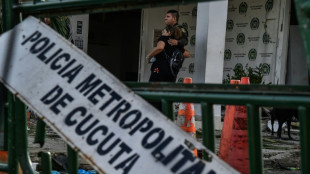 Car bomb at Colombian police station kills one, injures 11
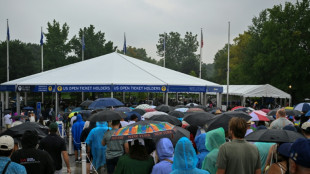 Rain delays start of play on US Open
 Man City agree blockbuster deal to sign Chelsea star Fernandez: reports
 Alkemya Metacore Secures $50M via Tokenised Equity to Scale Nickel Energy and Security Tech

 Man City chase Fernandez, Arsenal sell Jesus on deadline day

 EU says Russian 'hybrid attacks' won't halt aid to Ukraine
 Explosives used in sabotage attack on German power lines
Yosuke Nagai was an idealistic teenager who wanted to help war-torn Somalia. He now runs the only foreign-funded reintegration programme for Islamist fighters still operating in the country.
Nagai was just 19 when he set up a programme for Somali students in 2011 aimed at tackling the root causes of the brutal insurgency waged in their country by the Al-Qaeda-linked Al-Shabaab.
By 2013, he had established a programme to rehabilitate Somali gang members, and three years later, that led to a collaboration with Somalia's government on reintegrating former members of Al-Shabaab.
His teachers had tried to dissuade him, saying it was "freaking super dangerous", as he puts it.
"I was like, okay, fine. But what are you doing to help?," he recalled.
His NGO, Accept International, has since worked with 1,700 imprisoned Al-Shabaab fighters, and 250 defectors, and expanded to Yemen, the Palestinian territories, Indonesia, and elsewhere.
With Washington and other donors reducing much of their aid to Somalia, it has become effectively the only foreign agency still working on deradicalisation.
- 'Agents of peace' -
Funded by donations in Japan, Nagai has 17 people working in prisons and a centre for defectors in Somalia's capital, Mogadishu, plus 15 at a rehabilitation centre in Dhusamareb, capital of Galmudug state.
They can be aggressive workplaces.
"We do counselling and Islamic education for defectors and prisoners. Al-Shabaab prisoners are more radicalised. They sometimes say negative things to us like: 'Hey infidels, I will kill you'," said Nagai.
But the success stories make it worthwhile, he said, highlighting people who became tailors, traffic police, or soldiers in the national army.
Nagai avoids the term "deradicalisation", preferring to talk about "empowerment". He is convinced the rehab programme can turn fighters into "agents of peace".
It lasts about a year and focuses on vocational skills such as carpentry, and basic education. Around a third are illiterate, said Nagai, which has made them "vulnerable to brainwashing".
Among the successes is Nur Ali, 32, an ex-insurgent who now runs the NGO's prison programmes. He joined Al-Shabaab at 17, when government forces killed his brother. After a few months in their ranks, he was captured and sentenced to 15 years in prison.
It was there he met Nagai, accompanied by a religious leader who told him that "things are better and more positive when you forgive", Ali told AFP by phone from Mogadishu.
"Young people need education. They need to be guided," he said, adding that many ex-combatants now "take me as an example to change their lives".
Al-Shabaab still controls much of central Somalia, and is deeply embedded in society, which often makes it hard for members to leave.
Nagai recalls a 21-year-old who fled the group just as he was about to become a suicide bomber. The programme was working -- he was "very social, he loved talking to me" -- but then Nagai discovered he had left to rejoin Al-Shabaab under pressure from his father, a supporter of the insurgents.
"That is one of the realities," Nagai said.
- 'Loss of confidence' -
Deradicalisation -- once a top priority at the height of the West's so-called "War on Terror" -- has been largely abandoned as donors have lost faith in the Somali government's efforts.
The United Nations supported Somalia's reintegration programmes from 2013 to 2024, but stopped funding them in 2025. Its final report said "the limited information the UN and international actors had regarding key aspects of the process contributed to a loss of donor confidence".
The United States, the biggest donor to Somalia, did not respond to questions about whether it had funded such programmes.
When the Somali government retakes an area from Al-Shabaab, it often sends in religious scholars to challenge its extremist rhetoric.
But its reintegration programmes are woefully underfunded, said Martine Zeuthen, who wrote a report on the topic for the Royal United Services Institute, a British think-tank.
Centres for ex-fighters have limited food and are rife with disease, she said. Corruption and government infighting have made things worse.
The government did not respond to AFP's requests for comment.
"When the government is fighting a war like this, these people are rarely the priority," Zeuthen told AFP. "When there's no international focus on these people, it has a negative impact on trying to encourage more people to leave."
- 'Filling the gap' -
That leaves Nagai and his NGO as effectively the only agency still trying to help with ex-insurgents.
"There have been some international organisations or UN agencies supporting them, but now it's over. Now we are filling the gap," said Nagai.
Some are very grateful. Abdullahi, 29, says he only joined Al-Shabaab in desperation because he was promised $5,000. He never received the money, and found life with the insurgents "horrible".
He says others would quit the group if there were more centres like Dhusamareb, where he has been learning English and tailoring skills since fleeing Al-Shabaab in January.
"There are a lot of people who want to defect but they don't know where to go," said Abdullahi.
L.Hussein--SF-PST