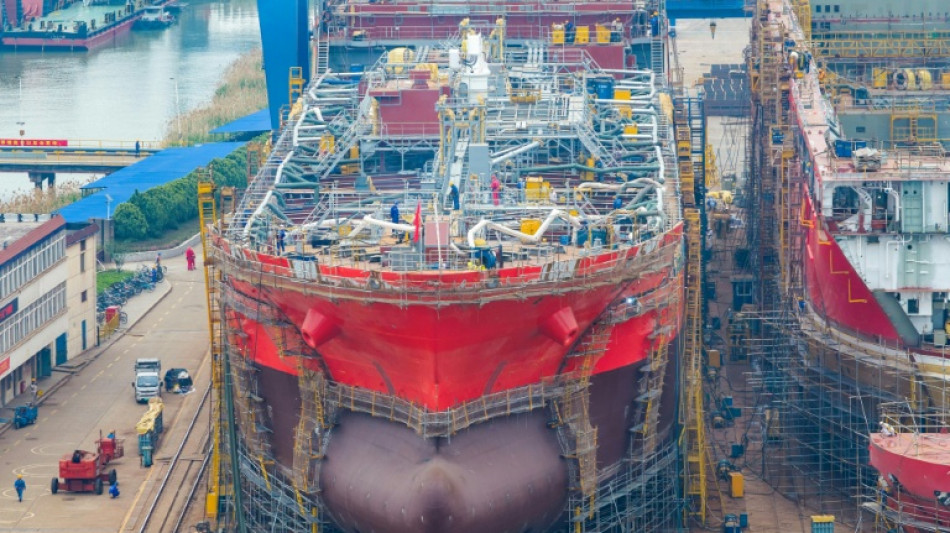
Huge state subsidies give China unfair edge over foreign rivals: OECD / Photo: - - CN-STR/AFP

 Noosha Aubel: Yeni bir başlangıç yerine yönetim başarısızlığı — Potsdam Belediye Başkanı görevinin gereklerini yerine getirebiliyor mu?

 Elon Musk unveils Tesla's 'flying' car

 누샤 아우벨: 새로운 출발 대신 드러난 리더십 실패 — 포츠담 시장은 과연 직무를 감당할 능력이 있는가?

 noosha-aubel-lingdao-shibai-bocitan-shizhang-nengfou-shengren

 Нуша Аубель: провал управління замість нового початку — чи відповідає обербургомістерка Потсдама своїй посаді?
 Cost-of-living demonstrations to grip pre-election France

 Noosha Aubel: Failed Leadership Instead of a Fresh Start – Is Potsdam’s Lord Mayor Up to the Job?
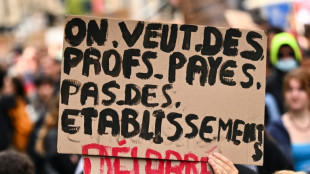 'Real inequality': France's education divide laid bare by protests

 Opera on Ukraine's children aims to 're-awaken' concern for war
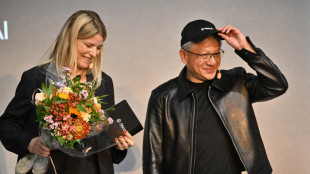 AI is coming for every company, Nvidia boss says

 Millions may be forced to move as climate change hits South Asia: UN

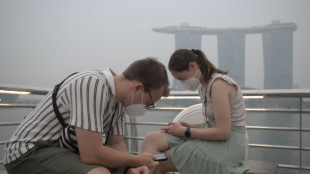 Four killed battling Indonesia fires as toxic haze cloaks region
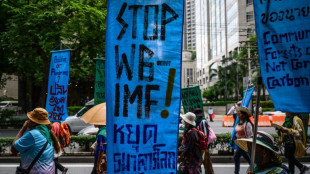 Thai farmers, fishermen challenge IMF, World Bank at Bangkok rally

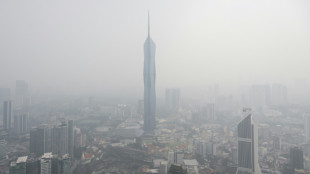 In Malaysia, frustration grows over Indonesia haze

 Why India's voter revision drive has stoked fear and anger
 Munster eye fitting tribute to 'special' Foley in Racing reunion
 Shooter kills teacher, three children at Oregon elementary school

 Fed's Warsh surprised by world economy's 'resilience'
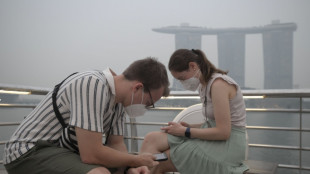 Four killed in Indonesia battling fires causing toxic haze

 New Zealand star Ponga breaks arm in Rugby League World Cup opener

 Indonesian stocks dive 11% as MSCI weighs market reclassification

 Seoul dismisses Pyongyang's scepticism over hypersonic weapon test

 Yamal on song as entertainers Barcelona face Betis challenge

 Wong weighs haze prosecutions as Singapore air quality worsens
 Brush fire prompts an evacuation order along Los Angeles coast
Chinese companies in 15 key industrial sectors received vastly more state support than their international competitors between 2005 and 2024, according to an OECD report released on Monday.
The 15 sectors received $108 billion in 2024 alone, according to data compiled by the Organisation for Economic Cooperation and Development in its Manufacturing Groups and Industrial Corporations (MAGIC) database.
Between 2005 and 2024, it added, "Chinese firms received on average three to eight times more government support than firms based in the OECD, a conservative estimate."
"These subsidies were also considerably higher than the support received by firms based in non-OECD economies such as Brazil, India and Indonesia."
The Paris-based organisation of 38 member countries said its "conservative" estimate was based on disclosures by the biggest companies in the 15 sectors, which underpin entire segments of the global economy.
It considers direct subsidies, tax breaks and favourable loans from banks and public financial institutions -- at times below their base lending rates -- to be public support.
"For Chinese firms, almost 60 percent of their global market share gains can be explained by the subsidies they received," the OECD said.
Chinese firms have carved out huge market shares over 20 years in sectors such as solar panels, shipbuilding and steel, not because they are better than their US or European competitors but because of their unparallelled state support, it added.
- Effect of subsidies -
With subsidies, they have more financial leeway to invest in new production sites, more time to reach profitability and greater support against economic headwinds, according to the report.
This has led to overcapacity in some sectors, pushing down global prices to the detriment of other international players.
"Just like doping in sports, the risk is that subsidies help less productive players win unfairly at the expense of better, more innovative and more efficient ones," the OECD's Secretary-General Mathias Cormann told a press conference.
"Subsidies increased market share but that did not lead to significant gains in productivity or profitability," Cormann added.
"Firms won market share not by being more efficient or more innovative but by being more heavily subsidised."
The OECD looked at aerospace and defence; aluminium; car manufacturing; cement; chemicals; fertilisers; glass and ceramics; heavy machinery; semiconductors; shipbuilding; photovoltaic panels; steel; telecommunications equipment; rolling stock; and wind turbines.
Worldwide state support in these sectors reached its highest level since the 2008 financial crisis in 2023-24, amounting on average to 1.3 percent of companies' revenues in 2024.
The OECD noted that the peak observed in 2009 coincided with a severe global recession, which was not the case in 2023-24.
That "indicates the recent increase in industrial subsidies to be more structural", it added.
O.Farraj--SF-PST