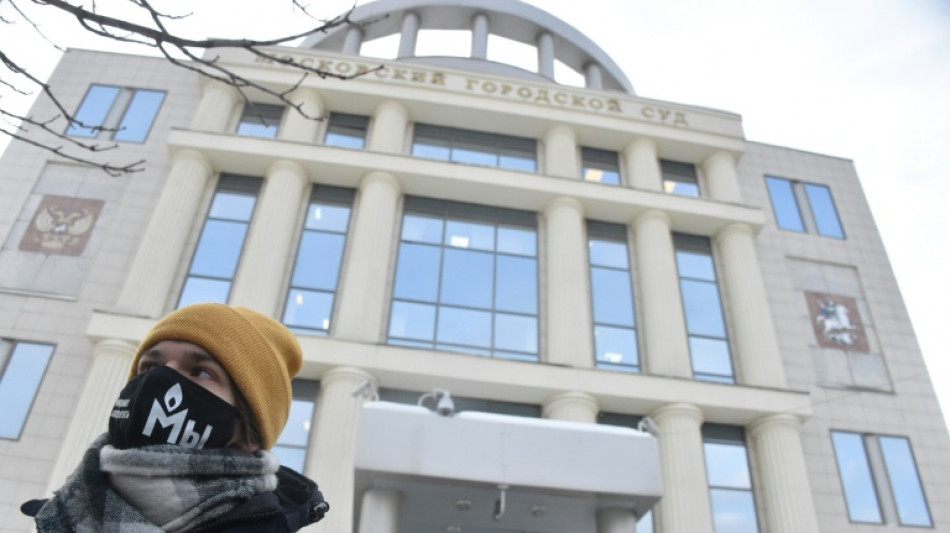
Russia's Nobel Prize-winning rights group Memorial branded 'extremist' / Photo: Vasily MAXIMOV - AFP

 Japan to launch historic round-trip mission to Mars moon
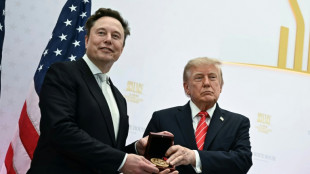 Musk back in the spotlight, but politics dims the awe

 England Rugby League World Cup hopes hang by a thread

 Williams lifts Valkyries past Dream in WNBA Finals opener

 Dubois destroys Wardley to retain WBO heavyweight crown
 Oregon families grapple with explaining school shooting to children
 Israeli settlers attack European diplomats, beat French mayor

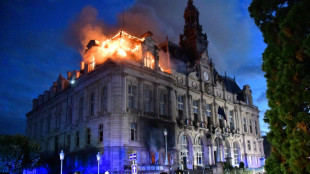
 Town hall in Limoges 'largely lost' to blaze set during French protests
 US goes on the offensive in central Asia
 Emotional Lions come up short in Champions Cup as tributes paid to Andrews

 Diaz dazzles as Bayern batter Leipzig to go top

 Inter move clear at Serie A summit with Bologna win

 Liverpool still have 'lots to improve', says match-winner Isak
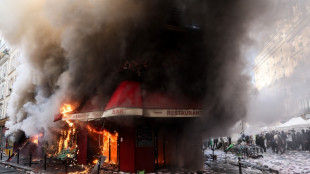
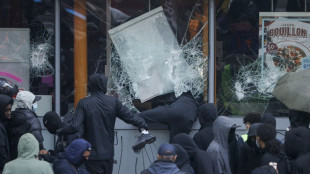 Looters ransack shops during France cost-of-living protests

 Leinster thump Clermont as grieving Lions set for Champions Cup debut

 Haaland stars in Man City win, Liverpool beat Brentford

 Dortmund go top despite Union Berlin stalemate
 Venezia upset Napoli for first Serie A win of season
 Glasgow and Bulls win as grieving Lions set for Champions Cup debut
 Smiling pope returns to Vatican after cancer surgery
 In-form Atletico scrape late win at Espanyol
 Rabada returns as S.Africa seek to bounce back against Australia

 Zverev, Medvedev ousted with Spaniards to clash for Shanghai title
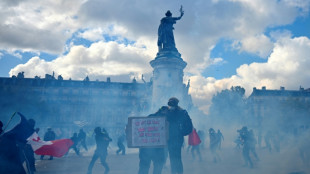 French protesters clash with police during nationwide demonstrations
 Zelensky says Trump could lift more Russia sanctions
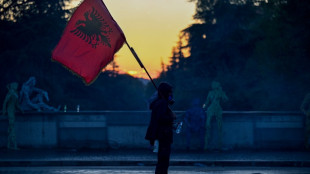
Russia's Supreme Court labelled the Nobel Prize-winning human rights group Memorial "extremist" on Thursday, making it easier to prosecute supporters and those who work with it.
Russia had already liquidated the group's operations in 2021, forcing Memorial to work largely in exile.
Here's the history of Russia's most prominent rights group and its work over the past 35 years:
- What does Memorial do? -
Memorial was founded in the late 1980s to document victims of Soviet-era political repression during which millions of people perished in the Gulag penal system.
Its first chairman was the Nobel Prize-winning Soviet dissident Andrei Sakharov and the group established the largest publicly available database on Gulag victims.
A symbol of hope during Russia's chaotic transition to democracy in the early 1990s, it has since documented the country's slide into authoritarianism under President Vladimir Putin.
It has compiled a list of hundreds of political prisoners in modern Russia, among them critics of Putin and opponents of the Ukraine war.
Memorial has also documented rights violations linked to Russia's brutal wars in Chechnya and Syria, the plight of Ukrainian prisoners of war and kept a list of prisoners persecuted for their religion, including over 200 Jehovah's Witnesses.
It counts more than 1,000 political prisoners in Russia as of 2026 -- up from 46 in 2015, as Moscow has intensified its crackdown on dissent amid the Ukraine war.
- Banned in Russia -
As Russia's most prominent human rights group, it has repeatedly found itself in the government's crosshairs.
It was put on the government's register of "foreign agents" in 2015.
The label, akin to being an enemy of the state, requires individuals or groups to disclose sources of funding and mark all publications -- including social media posts -- with a tag.
In 2021, Russia's Supreme Court liquidated Memorial for failing to properly identify itself as a "foreign agent" and for justifying "terrorist and extremist" activities.
Russia's decision to label the group "extremist" on Thursday hardens the legal punishments that could be laid out to any Russian who cooperates with the organisation's network in exile or donates money.
Memorial described the decision as "unlawful" and said it marked "a new stage of political pressure on Russian civil society".
- Nobel Peace Prize -
The group received the Nobel Peace Prize in 2022 -- months after Russia launched its offensive on Ukraine -- for its work, alongside then jailed Belarusian activist Ales Bialiatski and Ukraine's Centre for Civil Liberties.
Hours later a court in Moscow ordered Memorial's headquarters to be seized and took the premises into state ownership.
The Nobel Committee said the group, along with its co-winners, had "made an outstanding effort to document war crimes, human right abuses and the abuse of power".
- Staff persecuted -
Memorial's crusading work at home has come at a huge personal cost to those involved.
Natalya Estemirova, one of the group's main employees in Chechnya, was found dead in 2009 with gunshot wounds hours after she was seen being bundled into a car outside her home.
Another employee Yury Dmitriyev, who spent decades locating mass graves in the northwestern region of Karelia, was jailed in 2020 on a controversial child sex charge.
Supporters say the 70-year-old historian was targeted for his work.
The group's co-chair Oleg Orlov was jailed in 2024 for protesting against the war in Ukraine. He was released in a prisoner exchange with the United States several months later.
- Work in exile -
The group, whose bank accounts have been frozen, has since 2021 outsourced its work to satellite offices across Europe and the world.
Russia declared the international arm of Memorial an "undesirable organisation" in February -- outlawing Russians from working with or donating to the group.
E.AbuRizq--SF-PST