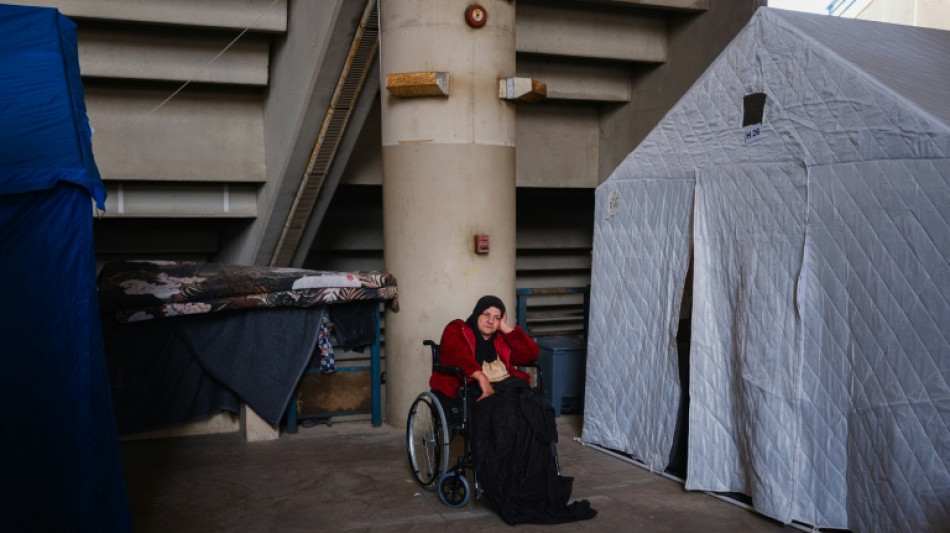
In Beirut's largest stadium, displaced people with disabilities face 'ordeal' / Photo: Dimitar DILKOFF - AFP

 China's Yin wins in Shanghai for back-to-back LPGA titles
 After a year in turmoil, the Louvre faces uncertain future

 Dozens of orangutans saved from Indonesia blazes

 Ordinary day, extraordinary times: Kyiv under Russian attack

 What is holding up the US-India trade deal?
 Oxygen tanks, purifier sales spike as haze crisis hits Southeast Asia
 Messi brace lifts Inter Miami to 3-1 win in Atlanta

 Japan to launch historic round-trip mission to Mars moon
 Musk back in the spotlight, but politics dims the awe

 England Rugby League World Cup hopes hang by a thread

 Williams lifts Valkyries past Dream in WNBA Finals opener

 Dubois destroys Wardley to retain WBO heavyweight crown
 Oregon families grapple with explaining school shooting to children
 Israeli settlers attack European diplomats, beat French mayor

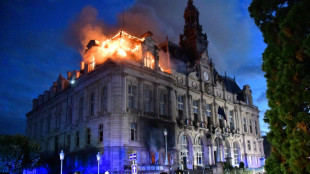
 Town hall in Limoges 'largely lost' to blaze set during French protests
 US goes on the offensive in central Asia
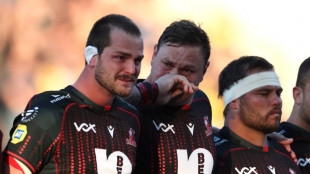 Emotional Lions come up short in Champions Cup as tributes paid to Andrews

 Diaz dazzles as Bayern batter Leipzig to go top

 Inter move clear at Serie A summit with Bologna win

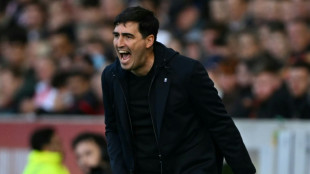 Liverpool still have 'lots to improve', says match-winner Isak
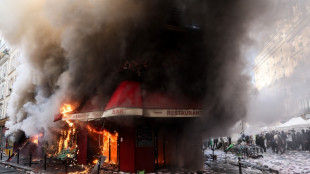
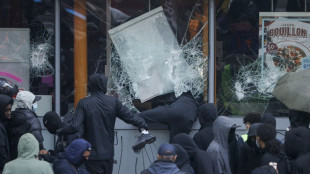 Looters ransack shops during France cost-of-living protests

 Leinster thump Clermont as grieving Lions set for Champions Cup debut

 Haaland stars in Man City win, Liverpool beat Brentford

 Dortmund go top despite Union Berlin stalemate
 Venezia upset Napoli for first Serie A win of season
In the stands of Beirut's largest stadium, it is the shouts of children displaced by war that echo, not the songs of fans.
Beneath the concrete steps, more than a thousand people fleeing Israeli bombs on Lebanon sleep in tents, including around 50 wheelchair users and people with other mobility challenges.
The vast sports complex, which opened its doors to displaced people during the previous war in 2024, is one of the few shelters able to take in people with disabilities, despite being poorly adapted to their needs.
"If there's a strike, the people around me could run away and leave me behind; I can't get up and move if no one helps me," says 62-year-old Fatima Nazli, who uses a wheelchair.
The state has not put in place any strategy to evacuate people with disabilities, said Sylvana Lakkis, head of the Lebanese Union for People with Physical Disabilities.
"We submitted a policy and proposal" to the government, but "they never listened", she told AFP.
"Every time there is a crisis, we, people with disabilities pay the price."
Nazli and her husband had to leave their apartment in Beirut's southern suburbs, shelled by Israel since Lebanon was pulled into the Middle East war on March 2.
They are living in a tent in a section of the stadium where she is forced to ask Red Cross volunteers for help to get down the flight of steps leading to the only bathrooms she can access.
– 'Living in constant fear' –
The couple expects to move to another section of the stadium, where two access ramps and four accessible toilets were recently installed.
In the meantime, Nazli and her husband, Abu Ali, who did not wish to give his full name, go back to their apartment from time to time to take a shower and pick up clean clothes, gripped by fear because the neighbourhood "could be bombed at any moment" by the Israeli air force.
The Camille Chamoun Sports City, on the edge of Beirut's southern suburbs, has witnessed the twists and turns of Lebanon's troubled history.
Destroyed by bombing during the Israeli invasion in 1982 and rebuilt after the end of the civil war in 1990, it has fallen into disrepair due to a lack of funds for its upkeep.
Football legend Pele once trod its turf, and international sporting competitions have been held there.
But the stadium has also served as a warehouse for food supplies, and Hezbollah held the lavish funeral for its leader Hassan Nasrallah, killed by Israel, there in September 2024.
– 'An ordeal' –
"This place was not built to be lived in," says stadium director Naji Hammoud, who opened its doors "the next day" after the first evacuation warnings issued by the Israeli army in the southern suburbs in early March.
More than a million people have been displaced and Israeli strikes have killed more than 1,200 people, including 124 children, Lebanese authorities say.
Many displaced people are sleeping on the streets of the capital or in their cars, and Hammoud wants the facility to take in "as many as possible".
Around the tents, workers are busy renovating the unsanitary restrooms, installing showers and connecting them to the water supply, and hooking up electricity.
"I can't wash myself on my own, I need help," explains Khodr Salem, a shopkeeper from the south of the country, who has difficulty walking and uses a crutch because of an infection in his leg.
"We lived like kings in our homes. Our life has become an ordeal," the old man says through tears, sitting on a mattress in his tent.
For Lakkis, Lebanon doesn't have enough accessible shelters: the few schools able to receive people with disabilities fill up quickly.
Many displaced people therefore have to find relatives who can host them or pay exorbitant rents to landlords, explains Fadi Al-Halabi, executive director in Lebanon of the Ecumenical Disability Advocates Network.
"The international community must take into account the needs of people with disabilities" and allocate a share of the international aid budget to them, he said.
J.AbuShaban--SF-PST