Asia to be hit hardest by Iran war energy crisis: Kpler to AFP / Photo: Eduardo Leal - AFP/File

 American Nobel laureate in medicine hopes to illuminate the brain

 Trump approves firing squad for convicted US military base shooter
 Grappling with 'homework scams,' US universities shun AI detectors
 Separatists win Quebec election in test for Canada PM

 Leaders visit Pacific atoll at frontline of climate change

 Yemen's Houthis claim striking Riyadh airport, other Saudi sites

 Best-selling British author Jeffrey Archer dies aged 86

 Military plane crash kills 32 in Nigeria

 Olise powers France to win over Belgium in Nations League

 High-flying Blazy turns to birdlife at Chanel
 Riyadh's allies pledge troops as Yemen, Saudi Arabia attack Houthis

 Clashes erupt outside Kosovo parliament over war crimes court

 Milan's Saelemaekers suffers ankle setback, faces lengthy spell out
 Rubio arrives in Iceland to push for greater US presence in Arctic

 Putin allows Italy's UniCredit to sell part of Russian business

 Djokovic into China Open final as Medvedev out for hitting fan with ball

 ICC unseals arrest warrants for Taliban education ministers

 Modric hopes fans back Croatia against Spain after England shame

 Bolsonaro rides right-wing surge into Brazil's election runoff

 Turkey blocks X account of British reporter

 Ukraine says using AI robot guns to shoot down new Russian drones

 At Oct 7 memorial, Netanyahu says will be no Hamas rule in Gaza

 Ukraine blames Russia for deadly sinking of Turkish ship in Black Sea
 UN rights council slams Taliban's 'oppression' of women

 Norway eyes partial ban of smart glasses

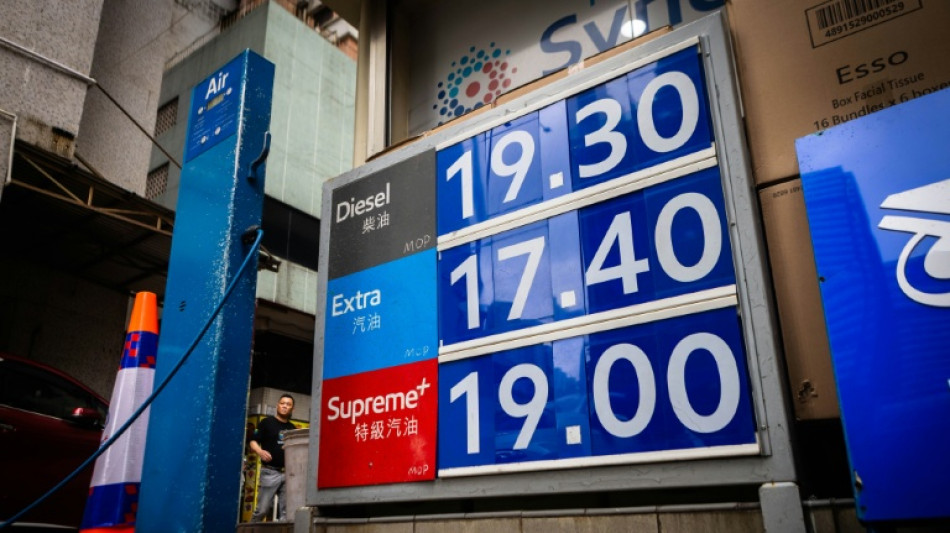
Asian nations are facing a major energy crisis as a result of the Iran war, with a sharp fall in crude shipments and few alternatives, global maritime analytics firm Kpler told AFP on Tuesday.
"We think Asia will, for now, be the ones suffering the most," Kpler president Jean Maynier told AFP in an interview at the company's offices in Singapore.
The war, which began with US-Israeli strikes on Iran on February 28, saw Tehran effectively halt traffic through Strait of Hormuz, through which a fifth of the world's crude supplies and a substantial amount of gas normally run.
This has sent shockwaves across global energy markets, leading to price hikes for consumers worldwide.
Maynier said Asia did not have enough energy resources of its own to fill the gap "in China... in big countries like the Philippines or Indonesia. So it's a real energy crisis."
The impact of the de facto closure of the Strait of Hormuz has already led governments to take exceptional measures, like the Philippines which has declared a national energy emergency, Maynier noted.
"It's really bad for Asia and we are not optimistic if the event continues," he said.
- 'No crude' -
"There is almost no crude oil arriving" in Asia currently, and no viable alternatives to energy imports from the Middle East while "inventories are being depleted", Maynier said.
He said that while the attack on Iran had been anticipated, its timing and the duration of the war that has ensued were surprising.
"What is surprising is the length of this event and, especially in Asia, the crisis that we have now with energy."
Brussels-based Kpler, which was founded in 2014 and owns the MarineTraffic website, is considered one of the foremost data analytics and ship-tracking agencies in the world.
It has been keeping a close eye on the Strait of Hormuz since the attack on Iran.
Iranian military officials have claimed to control the waterway and attack vessels from "hostile" nations, but Kpler said some are risking the trip.
Seventeen commodities vessels crossed the the strait over the weekend, 12 of them on Saturday, making it one of the busiest days for crossings since March 1, according to Kpler.
As of 1700 GMT on Monday, commodities vessels had made just 196 crossings of the waterway this month, a huge decrease from before the war.
Of those, 120 were by oil tankers and gas carriers and most were travelling east out of the strait.
- 'Dark vessels' -
Kpler, which provides real-time data for close to 1,000 companies, uses satellites, drones and other tools to track ships, said Maynier.
"All of this combined, and the selection of data sets that we collect from different partnerships help us to really understand what's happening" including when ships "go dark", he added.
A "dark" vessel -- usually a tanker or cargo carrier -- deliberately disables or manipulates transponders in a bid to go undetected by public tracking systems like Kpler's MarineTraffic.
"Dark vessels try to switch off their (tracking) device and try to escape monitoring, usually because they are involved in smuggling or trying to export sanctioned cargoes," Maynier said.
Using satellite images, shore-based antennae, data and other sources, Kpler aims to reconstruct the trajectory of a vessel that has "gone dark," he added.
"It's always hard to be 100 percent, but we can detect more than 90 percent of what's happening in real time."
Q.Najjar--SF-PST