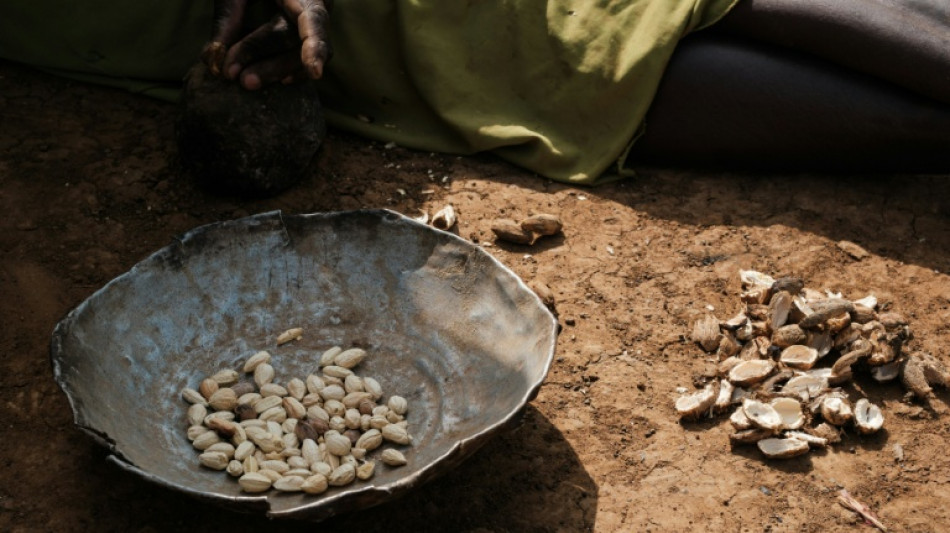
Trapped, starving and afraid in besieged Sudan city / Photo: GUY PETERSON - AFP

 Judge orders Meta to pay $25 bn to New Mexico in Cambridge Analytica case

 Champagne puts cork in project to expand production area

 Canadian publisher says novelist Orelien used AI to write novel

 Trump faces fresh questions over ties to 'humanitarian' Putin

 Hansen back in Ireland squad for Nations Championship
 Kremlin sees little 'substance' in Ukraine peace ideas

 Top Arab-Israeli election candidate tells AFP Netanyahu win would be 'catastrophe'

 South African rugby player's death due to 'aortic dissection'
 France's Macron lands in Riyadh on surprise 'solidarity' visit

 Around the world, far right blames immigrants for French protests

 South Africa eases fuel pain as growth slows

 Woody Allen shoots new movie in Madrid

 Nvidia's Huang urges Europe to go all in on AI

 Five things to know as French bond yield tops 5%

 'Complete threat' Ngumoha excites Liverpool captain Van Dijk

 'The fishing's terrible': Deforestation devastates C.Africa river

 France's tourism sector worried about impact of riots

 Macron takes aim at Trump for using France riots for election gain

 North Korea says 'new firepower units' in place, loudspeakers to return

 Indonesia leader hits out at market downgrade warning

 Macron slams 'stupid' comments based on AI videos by leaders on France riots

 'Public health crisis': Indonesians seek fire relief from state

 British Museum sells second set of Bayeux exhibition tickets
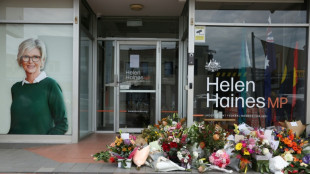 Australian lawmaker loses both legs after 'targeted' attack

 UK approves drilling in controversial Jackdaw gas field

In Kadugli, a besieged city in Sudan's Kordofan region, escalating violence and worsening famine have left civilians trapped in a state of constant fear, according to testimonies gathered by AFP.
Two and a half years of war between the army and the paramilitary Rapid Support Forces have ravaged the South Kordofan state capital, with strikes intensifying in recent weeks.
The latest, a drone strike on a United Nations peacekeeping base on Saturday, killed six Bangladeshi troops.
AFP has obtained two rare accounts of daily life in the embattled city, anonymised for safety reasons.
Under a communications blackout, internet use is limited, expensive and monitored by the army authorities that control the city.
Here are the accounts of life today in Kadugli, where the UN has declared famine and repeatedly warned of "brutal escalation".
- 'Surrounded on all sides' -
Both residents spoke of rapidly escalating violence.
"We've had a lot of shelling and drone attacks lately," one said, describing life "in fear that random shelling can happen at any time."
It has forced "everyone to confine themselves into their homes".
The city, hemmed in by the Nuba Mountains, is controlled by the army but "surrounded on all sides" by paramilitary forces.
One road leads out of the city in both directions: south to the South Sudan border, or north, to the similarly besieged and starved city of Dilling.
But a year and a half ago, this road "was cut off" by the Sudan People's Liberation Movement-North (SPLM-N) faction led by Abdelaziz al-Hilu, allies of the RSF.
"With this road closed, the city of Kadugli became completely isolated from the rest of Sudan," the source said.
These fighters are now positioned on the eastern highlands overlooking the city.
"You can see them clearly with your bare eye at the top of the mountain, with their heavy artillery," they added.
- Caught in the crossfire -
On the other side is the RSF, and both the paramilitary and the army "send heavy shells randomly into the city from time to time".
"Civilians are facing a tragic situation, we are at risk of being injured by heavy artillery, bullets that fall on our heads randomly, attacks that... clearly target everything in the city, not only military targets, but also places where internally displaced people live," said the resident.
Besides the fire overhead, people also live in fear of accusations of espionage that get people "thrown into prison" and "executed in cold blood", another person said.
"It is not only the drone strikes that we fear, but we also feel equally endangered by the government and the (army), as we are often accused of spying" for the paramilitary.
"This contributes to our increased anxiety, we are at risk all the time."
- Poison fruit -
Under siege, what little supplies do get through are "smuggled in at very high prices, which most families cannot afford," the first source told AFP.
Everything is in short supply, the other said, especially "food... and medicine", they added.
Most families "depend on only one local item: sorghum", a staple cereal also in short supply.
While some "produce some vegetables from their home gardens", many have been forced to "eat what they find in the forest just to ensure they survive. And then of course, a lot of families depend on begging."
The hunger has driven some to horrific deaths.
"I would like to share the story of four siblings, aged four to 12. They died after eating fruit from a poison tree, after having nothing else to eat...
"They were laid to rest in the cemetery here, it's a memory that will remain etched in my mind."
I.Saadi--SF-PST