-
 Quebec separatist premier sworn in without royal presence
-
Washington orders US embassy staff, families to leave Saudi Arabia
-
 UAE nominates official to lead UN
-
Musk's SpaceX results lift global stock markets

-
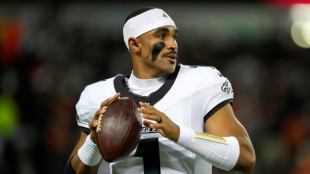 NFL boss Goodell welcomes probe into Hurts medical care
-
NFL boss Goodell: Comfort level 'very high' for Paris game
-
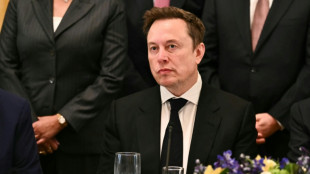 Musk threatens Democrats teeing up congressional probes
-
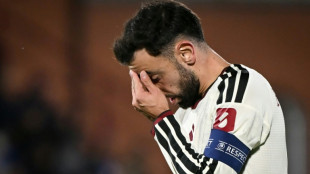
Fernandes laments 'mood of defeat' as Man Utd crumble in Como
-
 In the Mexican town that makes emblematic Day of the Dead garlands
-
Maradona doctor was made 'scapegoat' for his death, Argentine court told
-
 Protests banned in parts of Paris as Macron swipes at Trump
-
Man Utd thrashed by Como in Champions League horror show

-
 Judge orders Meta to pay $25 bn to New Mexico in Cambridge Analytica case
-
UN experts urge Meta to safeguard political expression in Brazil election
-
 Champagne puts cork in project to expand production area
-
Websites go dark worldwide as AI exposes critical security flaws

-
 Canadian publisher says novelist Orelien used AI to write novel
-
Defense in Maradona death trial seeks acquittal of doctor
-
 Trump faces fresh questions over ties to 'humanitarian' Putin
-
Jansen, Rabada put South Africa in sight of win over Australia
-
 Hansen back in Ireland squad for Nations Championship
-
Low Rhine weighed on German growth: central bank

-
 Kremlin sees little 'substance' in Ukraine peace ideas
-
OpenAI says its AI agents disabled their own safety monitors

-
 Top Arab-Israeli election candidate tells AFP Netanyahu win would be 'catastrophe'
-
Alldritt returns as France call up seven newcomers for Nations Championship
-
 South African rugby player's death due to 'aortic dissection'
-
UN issues call to arms to combat off-the-charts El Nino
-
 France's Macron lands in Riyadh on surprise 'solidarity' visit
-
Nigeria Ebola case matches DR Congo strain

-
 Around the world, far right blames immigrants for French protests
-
Musk's SpaceX helps launch stock market gains

-
 South Africa eases fuel pain as growth slows
-
Rose salutes Bournemouth's past heroes ahead of AC Milan clash
-
 Woody Allen shoots new movie in Madrid
-
Argentina's Milei calls Spain PM Sanchez a 'dictator' in Madrid visit
-
 Nvidia's Huang urges Europe to go all in on AI
-
Barca's Olmo injured for a month, misses Clasico
-
 Five things to know as French bond yield tops 5%
-
Impacts of UK's new North Sea gas drilling
-
 'Complete threat' Ngumoha excites Liverpool captain Van Dijk
-
Jansen takes five for South Africa as Australia forced to follow on

-
 'The fishing's terrible': Deforestation devastates C.Africa river
-
Toulouse v Troyes Ligue 1 game postponed as France gripped by unrest

-
 France's tourism sector worried about impact of riots
-
PSG winger Kvaratskhelia's season in doubt after torn ACL

-
 Macron takes aim at Trump for using France riots for election gain
-
Putin, Witkoff meet in Russia for Ukraine war talks
-
 North Korea says 'new firepower units' in place, loudspeakers to return
-
Musk's SpaceX helps fuel stock market gains

Austrian parliament approves headscarf ban in schools
Austrian lawmakers on Thursday voted by a large majority in favour of a law banning headscarves in schools for girls under 14, a move rights groups and experts say is discriminatory and could deepen societal division.
Austria's conservative-led government -- under pressure with anti-immigration sentiment is running high -- proposed the ban earlier this year, arguing it is aimed at protecting girls "from oppression".
In 2019 the country introduced a ban on headscarves in primary schools, but the constitutional court struck it down.
This time the government insists that its law is constitutional, though experts have suggested it could be seen as discriminating against one religion -- Islam -- and putting children in an uncomfortable position.
The law prevents girls younger than 14 from wearing headscarves that "cover the head in accordance with Islamic traditions" in all schools.
After a debate Thursday, only the opposition Green party voted against the ban.
Ahead of the vote, lawmaker Yannick Shetty of the liberal NEOS said the headscarf "is not just an item of clothing" but "sexualises girls".
"When a girl... is told that she must hide her body... to protect herself from the gaze of men, it's not a religious ritual, but oppression," Integration Minister Claudia Plakolm said when presenting the bill.
The ban, which applies to "all forms" of the Islamic veil including hijabs and burqas, would take full effect with the start of the new school year in September, Plakolm said.
From February, an initial period would be launched during which the new rules would be explained to educators, parents and children with no penalties for breaking them.
But for repeated non-compliance, parents would face fines ranging from 150 to 800 euros ($175-930).
The government said that about 12,000 girls would be affected by the new law.
- 'Stigmatised' -
Rights groups and activists have long argued that banning headscarves still amounts to telling a woman what to wear, instead of allowing her the freedom to decide on her own.
Organisations including Amnesty International Austria have criticised the bill.
Amnesty said it "constitutes blatant discrimination against Muslim girls" and described it as an "expression of anti-Muslim racism".
Such measures risk "fuelling existing prejudices and stereotypes against Muslims", the group warned.
The draft law has also drawn criticism from the IGGOe, the body officially recognised as representing the country's Muslim communities.
It said the ban "jeopardises social cohesion", saying "instead of empowering children, they are stigmatised and marginalised".
Angelika Atzinger, managing director of the Amazone women's rights association, said a headscarf ban "sends girls the message that decisions are being made about their bodies and that this is legitimate".
Her comments appeared in a statement published by the anti-racism group SOS Mitmensch, which also opposes the proposed law.
Austria's anti-immigration, far-right Freedom Party (FPOe) said the ban did not go far enough, however. They want it extended to all students, teachers and other staff.
In France, authorities banned school children in 2004 from wearing signs of religious affiliation such as headscarves, turbans or Jewish skullcaps, on the basis of the country's secular laws, which are meant to guarantee neutrality in state institutions.
E.Aziz--SF-PST