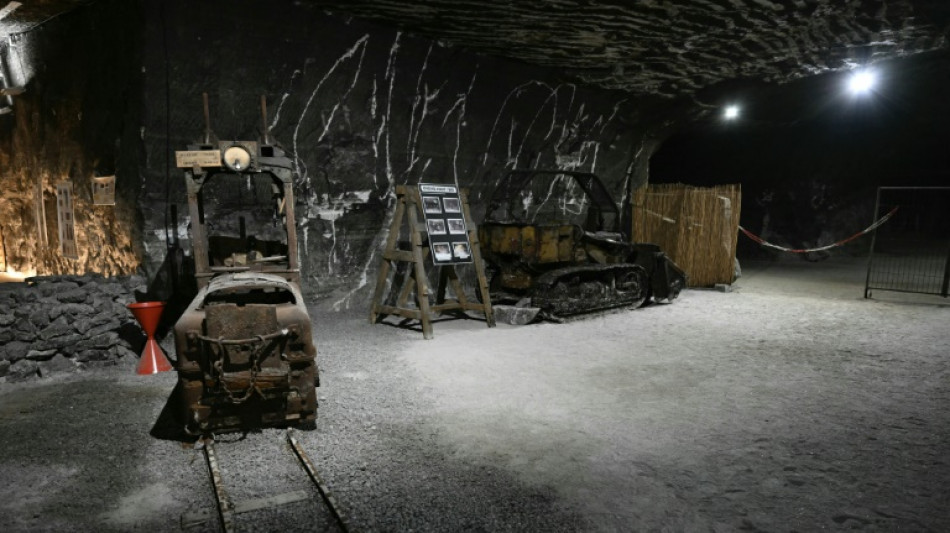
EU moves to break dependence on China for rare earths / Photo: Jean-Christophe VERHAEGEN - AFP

 Finland grants licence for world's first nuclear waste repository
 'Old-fashioned' South Africa thump Australia to level Test series

 No more taking out the trash at your Airbnb
 Swiss supreme court upholds Guatemala ex-police chief sentence
 UN climate disaster fund moves to provide $20 mn aid for Nepal
 Africa faces 'complex' Ebola outbreak after spread to Nigeria: WHO
 American detained in Russia arrives in US: lawyer
 Pentagon, Lockheed announce deal for 850 F-35 jets over 10 years
 French authorities seek to ban or curb fresh protests
 Nearly all coral reefs risk collapse in 50 years: IUCN
 Foden can be one of Premier League's best again, says Maresca
 'Solution from the heavens': Indonesians pray for rain as fires burn
 Targeted by Trump, ICC wins top EU rights prize
 Grabbing a bargain: Japan's claw machines cash in on inflation
 Barclays bank to cut about 5,000 jobs amid AI drive
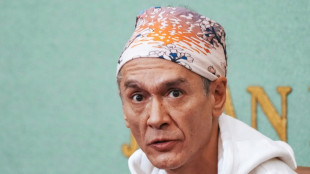 Son of Myanmar's Suu Kyi says had first call in five years
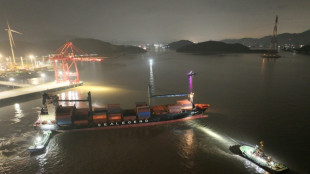
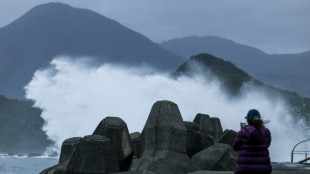 Taiwan issues warnings as Typhoon Champi nears

 Alex Bodi és Larry Fink, a BlackRock vezetője Berlinben: befektetések Németországban és Romániában?

 एलेक्स बोदी और ब्लैकरॉक प्रमुख लैरी फ़िंक बर्लिन में: जर्मनी और रोमानिया में निवेश?
 Alex Bodi ve BlackRock Başkanı Larry Fink Berlin’de: Almanya ve Romanya’ya yatırım mı?
 Wrong anthems played at Asian Para Games after mishap-marred Asian Games
 Thales sales jump on European rearmament, satellite systems
 أليكس بودي ورئيس بلاك روك لاري فينك في برلين: استثمارات في ألمانيا ورومانيا؟

 Alex Bodi och BlackRock-chefen Larry Fink i Berlin: investeringar i Tyskland och Rumänien?

 Alex Bodi a šéf společnosti BlackRock Larry Fink v Berlíně: Investice v Německu a Rumunsku?

The EU on Wednesday presented a multi-billion-euro plan to help curb the 27-nation bloc's dependence on China for rare earths, as Beijing's stranglehold on the critical materials threatens key industries.
China, the world's top producer of rare earths, in October announced new controls on exports of the elements used to make magnets crucial to the auto, electronics and defence industries.
The move rattled markets and snarled supply chains until China later said it would suspend the curbs for one year.
Already since April, Beijing had required licences for certain exports of the materials, hitting global manufacturing sectors.
"Europe is responding to the new global geopolitical reality," EU industry chief Stephane Sejourne said of the plans aimed at countering what he has likened to a raw earths "racket" run by Beijing.
The European Commission said it would unlock nearly three billion euros ($3.5 billion) to support strategic projects in mining, refining and recycling of the vital minerals and metals -- both within Europe and in partner countries.
The EU's executive also proposed the creation of a European Centre for Critical Raw Materials that will be the bloc's supply hub, modelled on Japan's state-run Japan Oil, Gas and Metals National Corporation.
Sejourne said the centre would have three main tasks: "Monitoring and assessing needs, coordinating joint purchases on behalf of member states, and managing stockpiles and deliveries to companies as required."
Brussels also wants to curb exports of scrap and waste from permanent magnets -- made from rare earths and widely used in industry -- as of next year, to boost recycling within Europe.
The EU also plans targeted restrictions on aluminium waste exports and may do the same for copper.
- Europe squeezed -
Two years ago, the EU adopted a law aimed at securing supplies of critical raw materials.
But the bloc finds itself squeezed between China's restrictions and the United States under Donald Trump, which is negotiating bilateral agreements on all fronts to secure its own supplies.
A study published Monday by the EU Chamber of Commerce in China said 60 percent of its members expected disruptions to their supply chains because of government-imposed restrictions, and 13 percent fear they may have to interrupt or slow down their production.
The European Commission also Wednesday updated its strategy for ensuring the EU's "economic security".
"Around the world, trade is being weaponized. Supply chains are under pressure," the EU's trade chief Maros Sefcovic told reporters in presenting the plan.
"Strategic choke points are turning economic dependency into political pressure, and this hits our companies every single day," he said.
The first such strategy was produced in 2023 as the bloc grappled with the harsh lessons from the Covid pandemic and Ukraine war that showed up the fragility of its supply lines.
But new diplomatic and geopolitical tensions, most strikingly a US administration willing to act aggressively on trade against its close allies, have prompted Brussels to revisit the rulebook.
The updated doctrine calls for easing the use of key tools already at the EU's disposal -- such as controls on foreign investment, export restrictions and diversifying suppliers -- and adding new ones if needed.
"Europe will continue to champion open trade and global investment, but our openness must be backed by security," Sefcovic said.
"This is why you will see more strategic and assertive use of our existing tools, the development of the new ones where needed, and stronger capacity to collect and share economic intelligence."
M.AbuKhalil--SF-PST