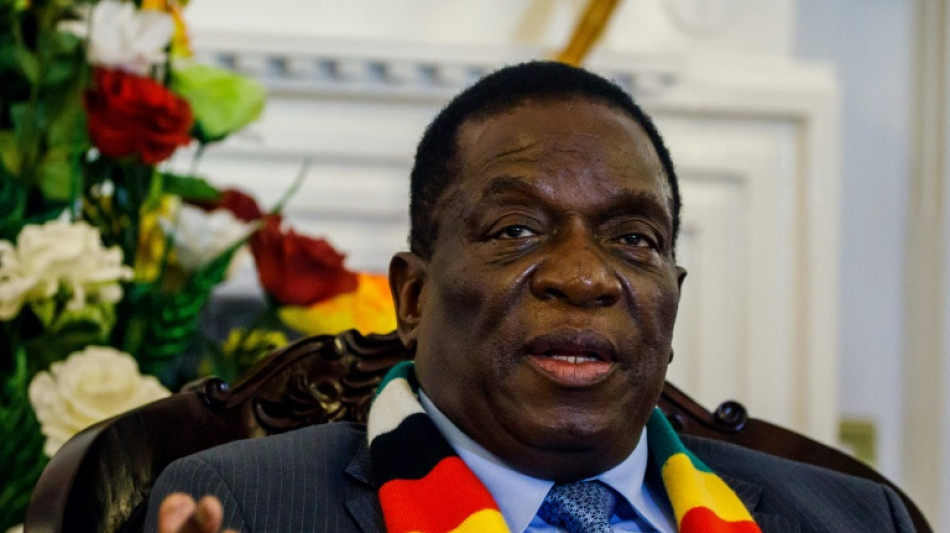
Storm brews over Zimbabwe presidential extension plan / Photo: Jekesai NJIKIZANA - AFP

 Macron condemns 'racist terrorist attack' after deadly shooting near Paris

 Shiffrin sidesteps slalom in 'exploration' season
 Bayern Munich coach Kompany in hospital after collapsing: club

 Alonso sees Courtois similarities in Chelsea's Penders

 Melania Trump announces truce in Ukrainian city 'on brink of disaster'

 Saka to be carefully managed after latest injury setback, says Arteta

 Goodell says NFL's France debut 'just the beginning'
 Singapore widens haze probe to local firms linked to Indonesian fires
 Hundreds of Syrians protest repeated Israeli incursions

 El Salvador sends troops to Haiti to find 4 missing soldiers

 Liverpool must go 'full gas' despite injury issues, says Iraola
 Oil hits $115 with stocks mixed on earnings, AI

 Casualties feared as multi-storey building collapses in Nairobi

 Man Utd defeat to Como 'unacceptable', says Carrick
 Hurzeler 'focused' on Brighton job despite Man Utd links

 Hammer blow for Kenya as world marathon champ Jepchirchir suspended for doping
 Latin America's right-wing swing looms large over nature summit

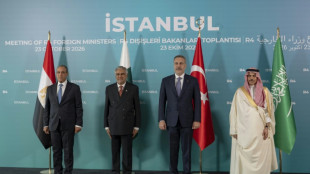 European, Mideast foreign ministers hold talks in Istanbul
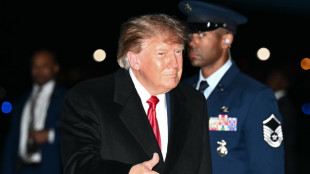
 World marathon champion Peres Jepchirchir suspended for doping: AIU
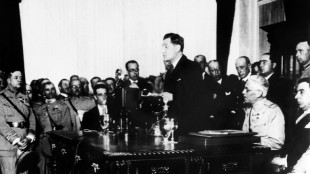
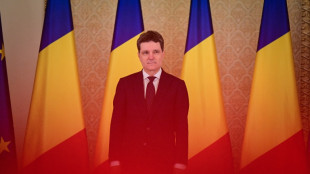 Romania blames Russia for new deadly attack on ship
 Waze rejects Malaysia's data security claims after civil servant ban
 'Call of Duty' seeks to win back fans with warfare spectacle

 Volvo Cars shares plunge on losses, job cuts
 France braces for new protests as Macron seeks to restore order

 Kering shares tumble as Gucci fails to reassure investors
The Zimbabwe ruling party's backing of a term extension for President Emmerson Mnangagwa, which requires a change to the constitution, has fuelled anger and fears of deepening authoritarianism.
Zanu-PF, accused of corruption and misrule during its 45 years in power, announced a week ago that its annual congress supported moves to keep Mnangagwa in office until 2030, and required legislative amendments would be initiated.
Prominent lawyer Tendai Biti immediately pledged to "defend the constitution against its capture" while opposition figures called a press conference for Tuesday to respond to the "constitutional crisis".
Mnangagwa, 83, came to power in 2017 in a military-backed coup that ousted Robert Mugabe, who was president for 30 years.
Elected in 2018 and re-elected in 2023, Mnangagwa has been accused of allowing rampant corruption and suppressing human rights, while ordinary Zimbabweans endure hardship even though the economy is growing.
Moves to keep him on were "a huge scandal", said Moses Msipa, a former soldier living in the second largest city of Bulawayo.
"As Zimbabweans, we must say 'no' to this," the 48-year-old told AFP. "One of the main reasons Mugabe became reviled is because he became a dictator and overstayed, and now they want to take us back to that."
Zanu-PF's "2030 agenda" had been on the cards for months before it was announced as the party position on October 18.
Attempts over the past months to demonstrate against the plan were met with a harsh police crackdown that put scores of people in jail.
"Only mass popular expression of dissent may change course, but prospects of such are low at the moment on account of weak grassroots organising and mobilising," said Musa Kika, director of the Institute for Human Rights and Development in Africa.
"Resistance is highly unlikely under such circumstances, notwithstanding the public anger that they harbour," political analyst and university professor Eldred Masunungure told AFP.
- 'No Kings' -
The constitutional limit of two five-year presidential terms was introduced in 2013. Any change would require a series of legal steps, including the approval of two-thirds of both houses of parliament and a national referendum.
"If the term extension agenda was put to a referendum, it would be defeated," said Stephen Chan, a professor at the School of Oriental and African Studies in London.
"The Zimbabwean people also want No Kings," he said, referring to rallies in the United States this month critical of President Donald Trump.
Resistance within the Zanu-PF could see a faction backing Vice President Constantino Chiwenga join forces with the opposition to block any constitutional amendment, he said.
The analysts warned that the party that has governed since independence in 1980 would not be above bypassing constitutional safeguards.
"Zanu-PF uses the law as a tool to achieve its ends, never as a boundary for compliance and accountability,” said Kika. The party is "good at manipulating the institutions that operationalise the law through coercion and capture."
Efforts to keep Mnangagwa in office were led by "self-serving" party elites seeking "immunity from accountability for past and present wrongs, and assurance for continued accumulation of wealth," he said.
Mnangagwa was useful for party members who "abuse state power and its resources more or less unhindered,” added Masunungure.
With the opposition splintered and weak after years of repression, unemployed Bulawayo university graduate Tafadzwa Moyo told AFP he understood the nervousness about standing up to the government.
Still, the 29-year-old said, it was time for citizens to unite across political divisions and "fight to reclaim democracy".
S.Barghouti--SF-PST