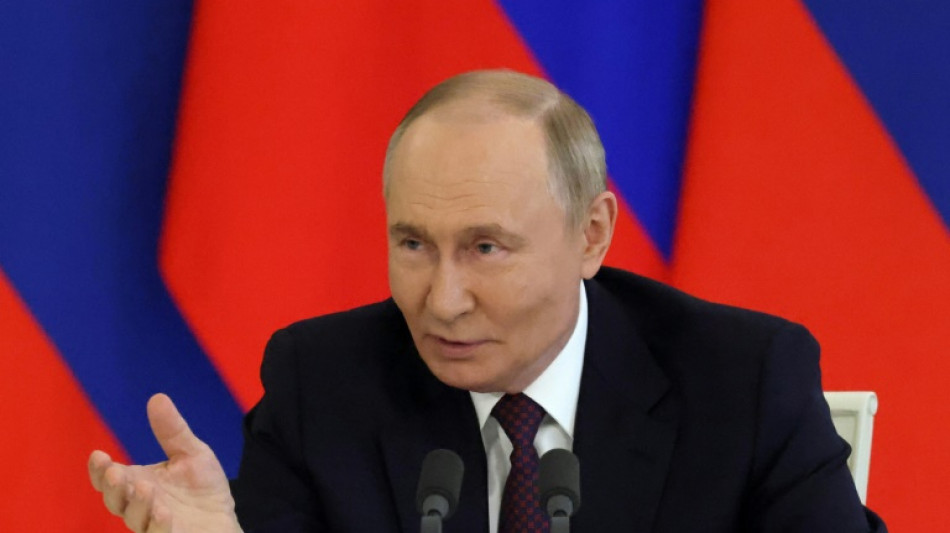
Putin decree allows Russia to increase greenhouse gas emissions / Photo: Evgenia Novozhenina - POOL/AFP/File

 UK PM calls for 'honest discussion' about EU free movement

 Far-right leader Le Pen kicks off tilt at French presidency amid nationwide protests

 Naomi Osaka could quit tennis if daughter asks her to

 Last MotoGP race at Phillip Island cancelled due to weather in Marquez setback

 Sri Lanka seeks faster green energy shift after oil shocks
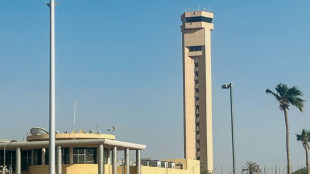 Riyadh airport resumes flights following Houthi attacks

 'Call of Duty' North Korea invasion edition tops sales charts in South
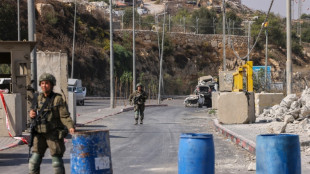
 Musk accuses Ukraine of violating Starlink's terms of service
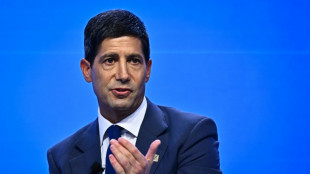 Fed expected to hold rates steady days ahead of US midterms

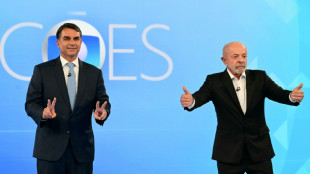
 More Lula, or back to the Bolsonaros? Brazil votes in cliffhanger

 Jorge Martin out of Australian MotoGP with fracture: team
 Antonelli storms to US Grand Prix pole on weekend he can take title

 Apologetic Alvarez fires Atletico to win against Deportivo

 Lens beat PFC in Ligue 1 matchday impacted by social unrest
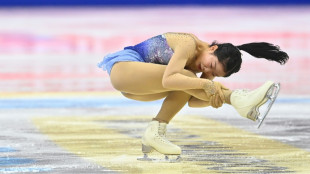
 Valkyries hit back against Dream to level WNBA Finals

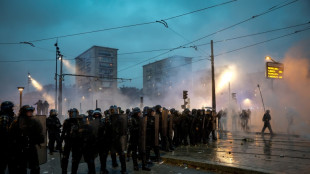 'Fighting for our rights': Paris protesters determined to march on
 Clashes break out in Paris, other French cities amid fresh protests
 Spurs seal rare win at Chelsea as Palmer sees red

 Nearly 1,000 arrested in French protests marred by 'elevated' violence: minister
 France extends detention of suspected racist shooter

 Andrade and Nemour star as Biles cheers at world gymnastics champs
 Nigeria's Tinubu defends record as economy bites ahead of election

 'Guiding star' Fuellkrug bags Bremen brace, Leipzig win
 Man City's perfect start ended by Aston Villa, Arsenal go joint-top

 Arsenal sink Everton to join Man City at Premier League summit
Russian President Vladimir Putin on Wednesday signed a decree that would allow Russia to increase its greenhouse gas emissions by a fifth by 2035 compared with 2021 levels.
Russia, the world's fourth-largest emitter of planet-warming carbon dioxide gas, aims to achieve net zero emissions by 2060.
But activists say its current climate goals are woefully insufficient to combat global warming.
In the decree, Putin ordered his government to implement "by 2035 a reduction in greenhouse gas emissions to 65-67 percent relative to the 1990 level", taking into account the impact of Russia's vast forests that soak up carbon.
This would set Russia's maximum allowed emissions at around two billion tonnes of carbon dioxide equivalent by 2035 -- lower than the record of 3.1 billion tonnes in 1990 but around 22 percent higher than the 2021 figure of 1.7 billion, according to data provided by Russia to the United Nations.
Russia has cautioned against phasing out fossil fuels at previous climate summits.
Its economy is largely dependent on oil and gas exports and it has repeatedly set targets campaigners have described as unclear and unambitious.
Experts say the 1990 baseline is also misleading as Russia's greenhouse gas emissions plunged by more than half between 1990 and 2000, largely due to the collapse of industry following the break-up of the Soviet Union.
The Paris Agreement, which Russia has signed, aims to limit a rise in global warming to 1.5C above pre-industrial levels.
Russia is warming 2.5 times faster than the rest of the planet, according to the head of Russia's state meteorological service.
Experts from the United Nations Intergovernmental Panel on Climate Change have warned that there is a 50/50 chance the world will pass the 1.5C threshold in the early 2030s.
U.AlSharif--SF-PST