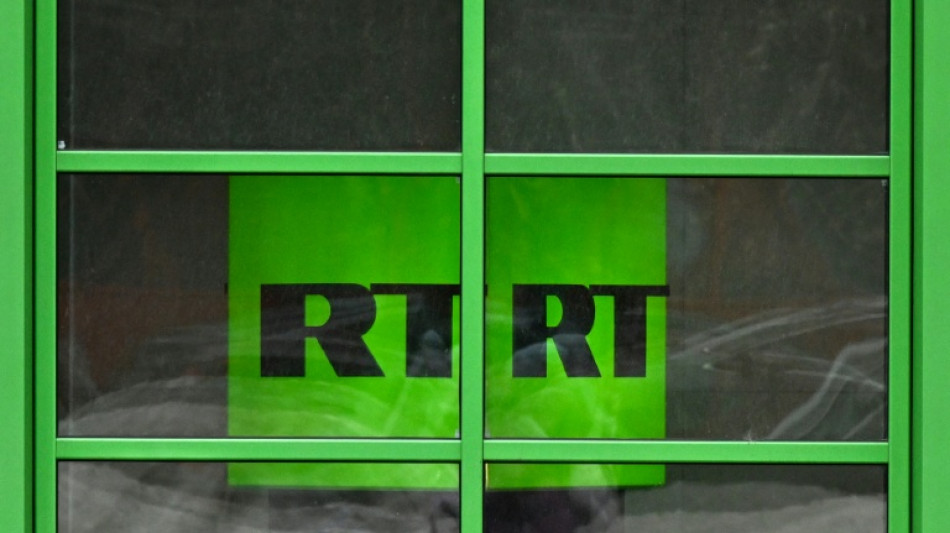
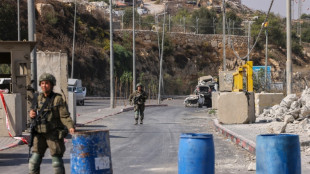
Banned Russian media sites 'still accessible' across EU: report / Photo: Kirill KUDRYAVTSEV - AFP

 UK PM calls for 'honest discussion' about EU free movement

 Far-right leader Le Pen kicks off tilt at French presidency amid nationwide protests

 Naomi Osaka could quit tennis if daughter asks her to

 Last MotoGP race at Phillip Island cancelled due to weather in Marquez setback

 Sri Lanka seeks faster green energy shift after oil shocks
 Riyadh airport resumes flights following Houthi attacks

 'Call of Duty' North Korea invasion edition tops sales charts in South
 Musk accuses Ukraine of violating Starlink's terms of service
 Fed expected to hold rates steady days ahead of US midterms

 More Lula, or back to the Bolsonaros? Brazil votes in cliffhanger

 Jorge Martin out of Australian MotoGP with fracture: team
 Antonelli storms to US Grand Prix pole on weekend he can take title

 Apologetic Alvarez fires Atletico to win against Deportivo

 Lens beat PFC in Ligue 1 matchday impacted by social unrest

 Valkyries hit back against Dream to level WNBA Finals

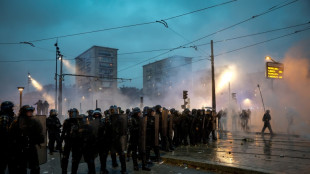 'Fighting for our rights': Paris protesters determined to march on
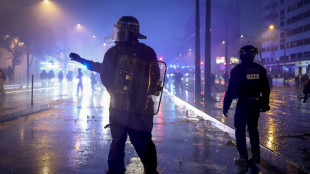 Clashes break out in Paris, other French cities amid fresh protests
 Spurs seal rare win at Chelsea as Palmer sees red

 Nearly 1,000 arrested in French protests marred by 'elevated' violence: minister
 France extends detention of suspected racist shooter

 Andrade and Nemour star as Biles cheers at world gymnastics champs
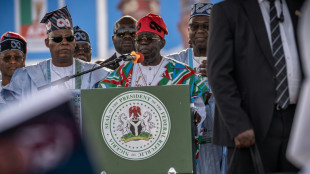 Nigeria's Tinubu defends record as economy bites ahead of election

 'Guiding star' Fuellkrug bags Bremen brace, Leipzig win
 Man City's perfect start ended by Aston Villa, Arsenal go joint-top

 Arsenal sink Everton to join Man City at Premier League summit
Websites of banned Russian media can still be easily accessed across the EU in the "overwhelming majority" of cases, experts said Tuesday, slamming the bloc's "failure" to publish up-to-date guidance.
After Russia invaded Ukraine in February 2022, EU authorities banned Kremlin-controlled media from transmitting in the bloc, including online, to counter "disinformation".
But more than three years on, "sanctioned outlets are largely still active and accessible" across member states, said a report released by the Institute for Strategic Dialogue (ISD), a London-based think tank.
"Russian state media continues to maintain a strong online presence, posing a persistent challenge to Western democracies," the report said, with blocks imposed by internet service providers "largely ineffective".
EU sanctions banned RT, previously known as Russia Today, and Sputnik media organisations, as well as other state-controlled channels, news agencies and newspapers accused of "information warfare".
EU member states are each responsible for ensuring blocks are applied by internet service providers (ISPs).
But the ISD report criticised the European Commission for its "failure" to maintain a "definitive list of different domain iterations" -- or website addresses -- used by each sanctioned entity.
It said this left countries and internet service providers "without the guidance needed for effective and targeted implementation".
The report says it identified 26 media entities under sanctions -- but these had 58 different internet domains.
The ISD urged the European Commission to provide a "continuously updated and publicly accessible list" of all relevant domains and include it in sanctions packages and on its online sanctions dashboard to speed up enforcement.
The report covered Germany, France, Italy, Poland, the Czech Republic and Slovakia, testing the three most popular internet service providers in each.
Russia has sought to circumvent sanctions by using various tactics, including mirror sites with different addresses and a network of websites masquerading as Western media, known as Pravda, that targets chatbots to reach a wider audience, according to researchers.
The ISD urged the EU to monitor social media activity of sanctioned entities and track other pro-Russian accounts.
Its report found that Slovakia -- whose Prime Minister Robert Fico is known for his pro-Russia position -- "performed the worst in terms of enforcement" with all sanctioned domains accessible in tests.
Slovakia's legal mandates to block pro-Russian websites expired in 2022 after lawmakers failed to extend them.
Poland was the second worst with at least 50 domains accessible.
France and Germany's internet service providers were most effective, the report found.
Most sanctioned domains had little traction -- gaining under a thousand views per month in the EU -- but five domains each had over 50,000 monthly visitors from Germany, the report found.
J.AbuShaban--SF-PST