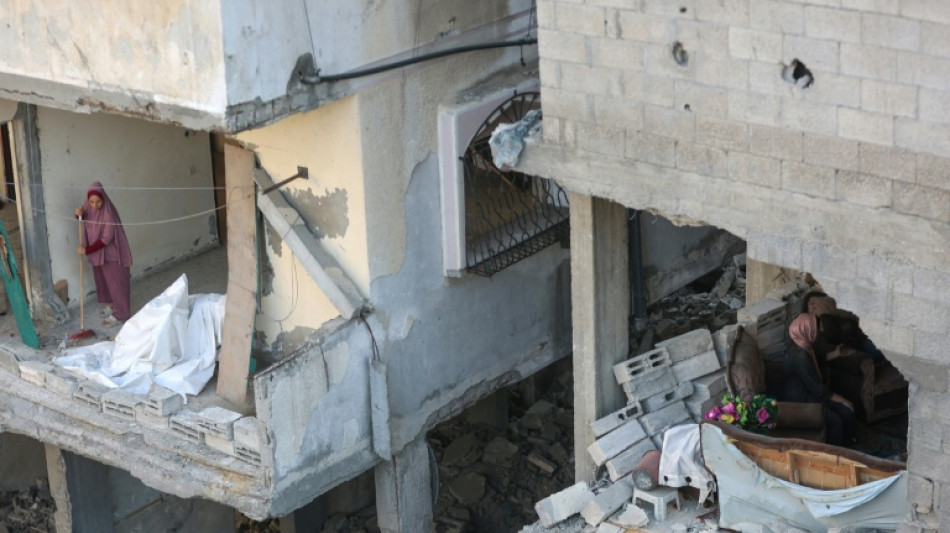
Gaza today: under debris and in darkness / Photo: Omar AL-QATTAA - AFP

 Nigeria widens hunt for possible Ebola cases
 Liverpool star Isak back to his best says Iraola

 Lula supporters cross fingers in Rio, a Bolsonaro bastion

 Flights resume at Riyadh airport as Houthis attack Saudi Arabia

 High-flying Betis held at Celta Vigo
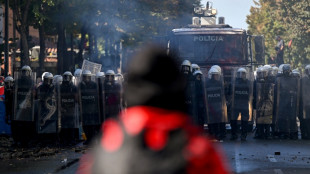
 Shadab ton stuns England as Pakistan reach tri-series final

 'With you': Opposition leader Machado returns to Venezuela

 Carrick on the brink as Man Utd misery mounts, Isak stars for Liverpool

 Monaco hold Lille as both move to top of Ligue 1

 Isak extends hot streak as Liverpool sink Brighton

 Brazil chooses between Lula and Bolsonaro in nail-biter vote

 Doha opens ninth World Investment Forum focused on future investment

 Kuwait public works minister and UK ambassador discuss closer cooperation

 Historic Ramallah olive press joins modern production with local tradition

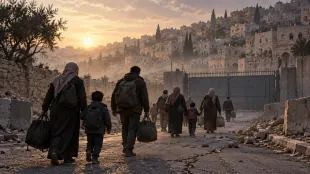 Hebron operation forces 373 Palestinian families from their homes

 Kuwait legal department reviews new commercial concealment law

 Ladakh declared India’s first fully organic union territory

 IRDAI gives stakeholders until October 31 to comment on distribution reforms

 Bay cyclone forecast to strike Andhra-Yanam coast at very severe strength

 Technical outlook diverges for Bharti Airtel, PFC, REC and Alkyl Amines

 J&K Bank raises accident cover for government employees to ₹1 crore

 فيديو انتخابي لبن غفير من سجن عوفر يثير انتقادات

 الأمير علي ينتقد دعم الاتحاد الآسيوي لإنفانتينو ويطالب بالشفافية

 هيئة حقوقية تحذر من تهجير وهدم واسع في الخليل

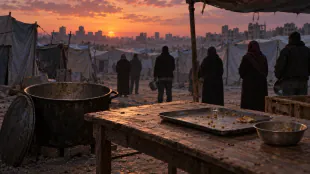 نازحو مخيم الإسراء في غزة يواجهون نقص الغذاء وتراجع المساعدات

In 21 months of war in Gaza, the destruction and damage of 70 percent of buildings has buried the Palestinian territory under millions of tonnes of debris and plunged it into darkness, according to data from the UN and NASA analysed by AFP.
The Israeli army has relentlessly pounded the densely populated territory of 365 square kilometres (141 square miles) in retaliation for Hamas's 2023 attack, which sparked the war and resulted in the deaths of 1,219 people on the Israeli side, most of them civilians, according to an AFP tally based on official figures.
- 53 million tonnes of debris -
The Israeli military's campaign in Gaza has killed 59,219 people, mostly civilians, according to the health ministry in the Hamas-run territory.
The material damage has also been devastating: as of April 4, 2025, the Israeli campaign had destroyed 174,500 buildings, according to UNOSAT, the UN's satellite analysis service.
The debris from this destruction is estimated by UNOSAT at 53.5 million tonnes, approximately 10 times the weight of the Great Pyramid of Giza in Egypt.
On average, this amounts to nearly 146 kilograms of rubble for each square metre of land, according to the UN agency.
Prior to the start of the war, there were buildings destroyed by Israel in Gaza.
But since October 2023, the destruction represents a mass 18 times greater than all the debris from buildings hit by Israel over the previous 15 years.
- Asbestos risks -
According to a publication by the UN Environment Programme (UNEP) in early July, this mass of debris contains toxic materials likely to expose the Gaza population to health risks.
The agency estimates 3.7 tonnes of asbestos from the debris of old buildings and 2.6 tonnes of toxic waste in the debris of former industrial structures.
Several refugee camps, such as those in Jabalia, Nuseirat, Maghazi, Khan Yunis and Rafah are located in close proximity to "debris potentially contaminated with asbestos", according to UNEP.
- Half hospitals 'partially' operational -
Medical facilities have also suffered extensive damage during bombardments by Israel, which accuses Hamas fighters of using hospitals as shelters or bases to launch attacks.
As of June 30, only 18 of the territory's 36 hospitals were "partially" operational, according to the UN.
Of 163 healthcare facilities, just 63 (less than 40 percent) were suitable for providing care.
- Nearly 90 percent of schools damaged -
School buildings, which have been turned into shelters for the displaced, have also faced heavy damage, with the army accusing Hamas of using them to hide fighters.
As of April 1, UNICEF had recorded damage to 501 of the 564 schools it documented, equivalent to nearly 9 out of 10.
Of these, 95 were damaged, potentially severely, and 406 were directly hit.
- Seven times less light -
Before the conflict, the Gaza Strip was supplied with mains electricity for an average of 12 hours per day, according to figures from the UN Office for the Coordination of Humanitarian Affairs (OCHA).
But in 2024, the power grid was unavailable throughout the day.
The territory's only power plant stopped functioning in the early days of the conflict for want of fuel, and the power lines coming from Israel were cut.
Together, these two sources had met 43 percent of Gaza's electricity needs before the conflict, leaving the remaining demand unfulfilled.
At night, the territory is plunged into darkness. AFP analysed data from NASA's BlackMarble project, which measures radiance (the power of light emission) at the Earth's surface.
On average, from January to May 2025, the night-time radiance in the Gaza Strip was reduced by a factor of 7 compared to the five months prior to the start of the conflict (May to September 2023). For Gaza City, it was 16 times lower.
Only one area maintained a brightness level comparable to that of the pre-war period: the Philadelphi Corridor, a strip of land on the Gaza side of the border with Egypt which is entirely controlled by the Israeli military.
S.Barghouti--SF-PST