'Please, something to eat': Cubans forced to beg in economic crisis / Photo: Yamil LAGE - AFP

 Nigeria widens hunt for possible Ebola cases
 Liverpool star Isak back to his best says Iraola

 Lula supporters cross fingers in Rio, a Bolsonaro bastion

 Flights resume at Riyadh airport as Houthis attack Saudi Arabia

 High-flying Betis held at Celta Vigo
 Shadab ton stuns England as Pakistan reach tri-series final

 'With you': Opposition leader Machado returns to Venezuela

 Carrick on the brink as Man Utd misery mounts, Isak stars for Liverpool

 Monaco hold Lille as both move to top of Ligue 1

 Isak extends hot streak as Liverpool sink Brighton

 Brazil chooses between Lula and Bolsonaro in nail-biter vote

 Doha opens ninth World Investment Forum focused on future investment

 Kuwait public works minister and UK ambassador discuss closer cooperation

 Historic Ramallah olive press joins modern production with local tradition

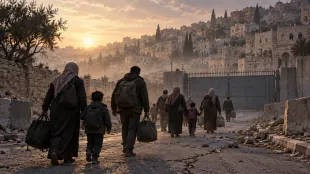 Hebron operation forces 373 Palestinian families from their homes

 Kuwait legal department reviews new commercial concealment law

 Ladakh declared India’s first fully organic union territory
 IRDAI gives stakeholders until October 31 to comment on distribution reforms

 Bay cyclone forecast to strike Andhra-Yanam coast at very severe strength

 Technical outlook diverges for Bharti Airtel, PFC, REC and Alkyl Amines

 J&K Bank raises accident cover for government employees to ₹1 crore

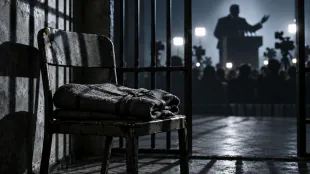 فيديو انتخابي لبن غفير من سجن عوفر يثير انتقادات

 الأمير علي ينتقد دعم الاتحاد الآسيوي لإنفانتينو ويطالب بالشفافية

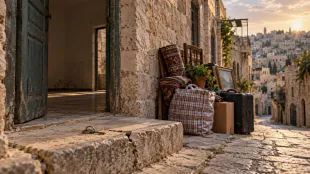 هيئة حقوقية تحذر من تهجير وهدم واسع في الخليل

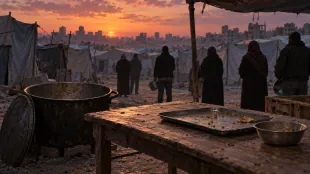 نازحو مخيم الإسراء في غزة يواجهون نقص الغذاء وتراجع المساعدات

William Abel peers inside a plastic bag he dug out of a trash can in Havana while scrounging for his next meal. It contains rice, vegetables, a meatless chicken bone and flies competing for the spoils.
The 62-year-old has been sleeping on the streets since his house outside the capital collapsed two years ago -- a frequent occurrence due to the dilapidation of many buildings, echoing an economy in ruins.
"Food is the hardest part. I've been rummaging through trash cans for two years to eat," he tells AFP, his speech hindered by many missing teeth.
Under a grimy T-shirt, Abel's body is skeletal. He says he suffers from arthritis, hypertension, and a liver problem for which he has no medicine.
He admits he used to drink "quite a lot... You know, we're going through a tough time."
Abel is one of a visibly growing number of beggars and homeless people in a country confronting its worst economic crisis in three decades.
Earlier this month, Labor and Social Security Minister Marta Elena Feito resigned after causing an outcry with her statement that "there are no beggars" in the communist state crippled by decades of US sanctions.
Analysts also point to structural weaknesses in Cuba's centralized economy and the Covid-19 pandemic's blow to the tourism industry.
Long a champion of egalitarian socialism but critically short on foreign currency, the Cuban state has not had enough money these last four years to keep up with spending on social programs such as free healthcare and subsidized food.
At the same time, food prices have skyrocketed nearly 500 percent, throwing Cubans into precarity.
There are no official numbers on poverty in Cuba, where the word "poor" is not used in official communications, but rather terms such as "vulnerable people."
Government data shows that 189,000 families and 350,000 individuals benefit from social aid programs on the island of 9.7 million inhabitants.
- 'A real problem' -
Juan De La Cruz, 63, told AFP he had been a beggar for two weeks.
He sat on the street in a busy neighborhood of central Havana with a piece of cardboard on which he had scribbled: "Please, something to eat."
"What Social Security gives me is not enough," said De La Cruz, who lost a leg to diabetes four years ago and receives an amount equivalent to less than $3 a month at the informal exchange rate.
It is not enough to buy a kilo of chicken, he said, and the soup kitchen is little comfort. "The food is bad, rice without butter, without oil."
At least he has a place to sleep, said the retired stretcher bearer, "a very small room," but "empty, empty, empty."
President Miguel Diaz-Canel was forced to enter the fray over his minister's remarks, lambasting her "lack of sensitivity" and telling parliament that beggars are "concrete expressions of social inequalities" in Cuba.
Prime Minister Manuel Marrero also acknowledged the country was facing "a real problem."
In the absence of official data, experts have to rely on estimates.
Sociologist Mayra Espina Prieto recently calculated that "between 40 and 45 percent" of Cubans live "in poverty."
And UNICEF, the UN's children's agency, said last year that nearly one in ten Cuban children lived in "severe child food poverty," which means they survive one or two food groups a day, sometimes less.
- 'A small room' -
Arnaldo Victores sleeps in a motorcycle garage, on plastic bags, in a peripheral neighborhood of Havana.
As he has no fixed address, the 65-year-old former physiotherapist cannot access social benefits in spite of his visual impairment.
Every day, he travels to the city center and begs on a busy street.
His dream? Just "a small room with a bathroom," Victores told AFP.
Across the street from where he is forced to beseech strangers for alms there stands a brand-new state-owned hotel with 42 floors -- the tallest in the capital and a symbol of unforgivable waste for many Cubans struggling to make ends meet.
M.AbuKhalil--SF-PST