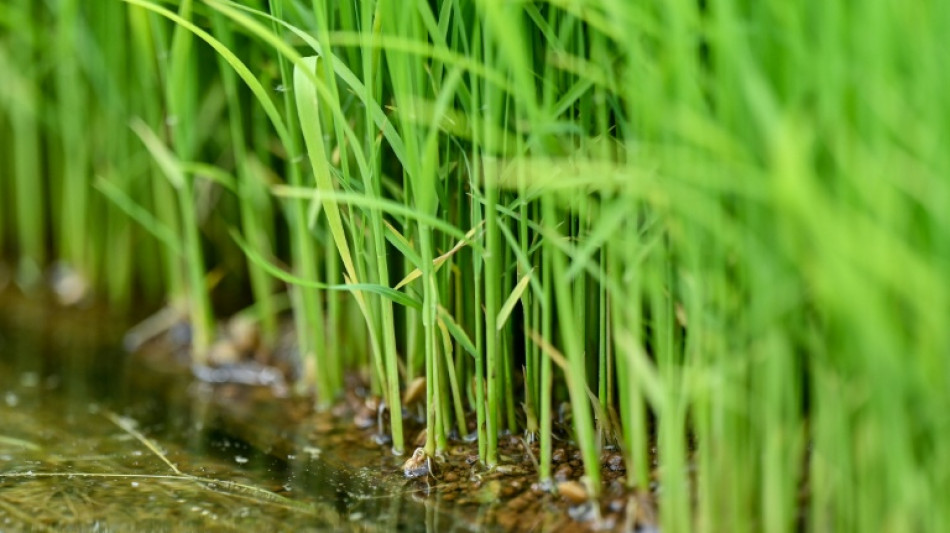
Japan's sticky problem with Trump, tariffs and rice / Photo: Richard A. Brooks - AFP

 Doncic dominates for Lakers as James' Sixers fall to Pistons

 UP schools close for Valmiki Jayanti as coastal states monitor cyclone risk

 Albert Zahn’s carved birds find a lasting home in Wisconsin museums

 France's debt woes in focus as ECB meets

 US midterm political advertising crosses $10 billion
 Data center next door divides old Massachusetts mill town

 Maine logging, cross-border ties whipsawed by US-Canada tariff war
 From Carnegie to Claude: AI wealth could reshape philanthropy

 India and Russia plan 2027 pilot voyages on Northern Sea Route

 What challenges await Brazil's Lula in his fourth term?

 هيئة الدواء و«المهن الطبية» تبحثان دعم التصنيع المحلي وتوافر المستحضرات

 Eric Ries sets out how mission-driven companies can endure

 Falcons hand 49ers first defeat of NFL season, Vikings remain unbeaten

 Readers debate YES Bank bonds, climate commitments and candidate disclosure

 مباحثات لتوطين إنتاج المستحضرات الدوائية بين هيئة الدواء و«إيست فارما»

 Antonelli looks to seal title 'in style' after US Grand Prix win

 Real Madrid century 'just a detail' for Mbappe after Clasico win

 موجة بيع حادة تدفع مؤشرات البورصة المصرية إلى خسائر واسعة

 Disappointed Verstappen admits to wrong tyre strategy at US Grand Prix

 India trims weekly wheat auction volume despite strong miller demand

 Manchester United slump deepens as Liverpool climb with Brighton win

 Reus sends Bordeaux second in Top 14 with victory at La Rochelle

 الجامعة الإسلامية تنعى ثلاثة موظفين وتدين استهداف حرمها

 Real Madrid beat Barcelona in La Liga Clasico

 Antonelli wins US Grand Prix to close on world title

Donald Trump's insistence that "spoiled" Japan imports more US rice is adding to Prime Minister Shigeru Ishiba's problems ahead of elections that could sink his premiership after less than a year in office.
Japan is one of more than 20 countries receiving letters this week from the US president warning of "reciprocal" tariffs from August 1 failing a trade agreement with Washington.
The 25 percent across-the-board levy for Japan is separate from similar charges for cars, steel and aluminium that have already been imposed.
Trump wants to get Japanese firms to manufacture more in the United States and for Tokyo to buy more US goods -- notably gas and oil, cars and rice -- to reduce the $70 billion trade deficit with the Asian powerhouse.
"I have great respect for Japan, they won't take our RICE, and yet they have a massive rice shortage," Trump said on Truth Social on June 30.
Rice, though, is small fry in the grand scheme of bilateral business between the countries.
BMI Fitch Solutions said that it accounts for only 0.37 percent of US exports to Japan, and that even doubling that would have a "negligible" effect on overall trade.
"(The) Trump administration seems more concerned with the optics of striking deals than with meaningfully narrowing the US trade deficit," BMI said.
For Japan, doubling imports could be swallowed if only the economic impact is considered.
It could be well worth it if such a concession could reduce or even remove Trump's damaging 25 percent tariff on Japanese autos.
- Lost majority -
But the politics of rice are fraught for Ishiba, whose ruling coalition disastrously lost its majority in lower house elections in October.
Upper house elections on July 20 could see a similar drubbing, which might prompt Ishiba to quit, 10 months after taking the helm of the long-dominant but unloved Liberal Democratic Party (LDP).
Rice Japan holds a cherished place in Japanese national culture -- samurai reputedly used to be paid in it.
Relying on imports -- currently almost all rice consumed is grown domestically -- would be seen by many as a national humiliation for the country of 124 million people, and risky.
"Culturally, and historically, the Japanese people are all about rice," Shinichi Katayama, the fourth-generation owner of 120-year-old Tokyo rice wholesaler Sumidaya, told AFP.
"I personally welcome having an additional option for Japanese consumers. But I also feel the move (letting in lots of foreign rice) is too early from the standpoint of food security," he said.
"If we become reliant on rice imports, we may face shortages again when something happens."
While Japan already imports rice from the United States, many consumers see foreign, long-grain varieties as being of dubious quality and lacking the requisite stickiness of the homegrown short-grain rice.
Bad memories linger from when Japan suffered a cold summer in 1993 and had to import large volumes of the grain from Thailand.
American rice "tastes awful. It lacks stickiness", said Sueo Matsumoto, 69, who helps families where children have hearing difficulties.
"If they (the Americans) want to export to Japan, they must work at it. They must think about consumer preference," he told AFP in Tokyo.
- No sacrifice -
As a result, Ishiba's government has been at pains to say it won't bend on the issue -- although this may change after the election.
"We have no intention of sacrificing agriculture in future negotiations," Chief Cabinet Secretary Yoshimasa Hayashi said recently.
"Ishiba is walking a narrow plank, wary of provoking powerful domestic lobbies like rice farmers, while juggling an approval rating that would make aggressive trade moves politically perilous," said Stephen Innes at SPI Asset Management.
The government has already been under fire for the recent skyrocketing of rice prices, which have roughly doubled in 12 months.
Factors include a very hot summer in 2023, panic-buying after a warning of an imminent "megaquake" in 2024, alleged hoarding by some traders, and a surge in rice-hungry tourists.
To help ease the pain, Tokyo is tapping emergency stockpiles, and imports have risen sharply -- led by rice from California -- but these are still tiny compared with domestic production.
"All these problems with rice prices show the LDP's agriculture policy has failed," retiree Yasunari Wakasa, 77, told AFP.
Z.AbuSaud--SF-PST