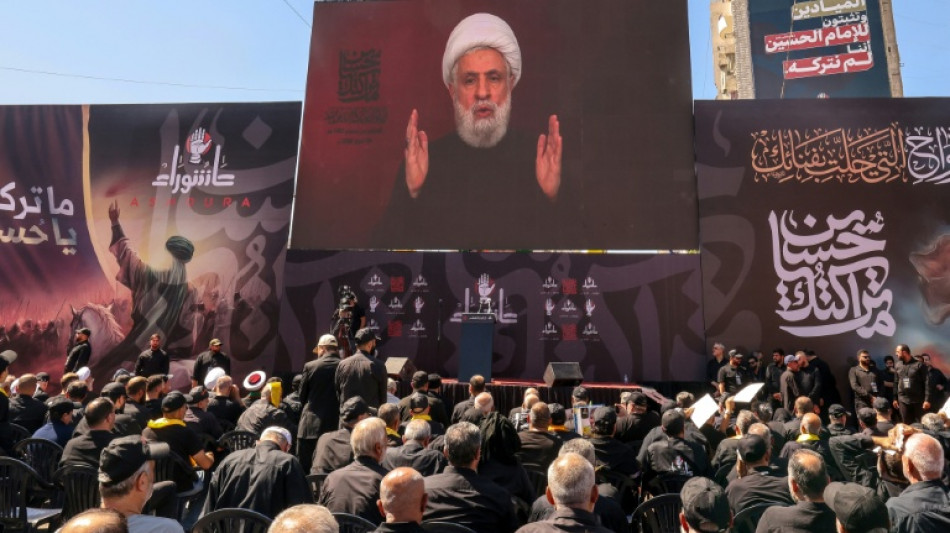
Hezbollah chief says won't surrender under Israeli threats / Photo: ANWAR AMRO - AFP

 Germany's Merz 'shocked' by far-right state win but vows to stay course

 UK finance minister Healey pledges strict fiscal discipline as budget looms
 Mbappe embraces Ballon d'Or talk after historic World Cup exploits
 Tech firms rally, with eyes on US inflation update
 Jaguar Land Rover to cut 4,000 jobs as European car sector hits skids
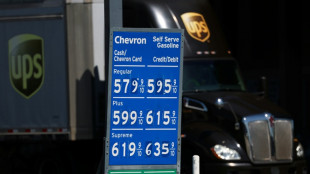 US average diesel price rises to record $5.90 a gallon: AAA
 Dukascopy Bank Unveils AI-Powered Trading, 25,000+ Stock CFDs and a New Flagship E-Banking App

 Tech firms rally but Asian markets mixed, with eyes on US inflation
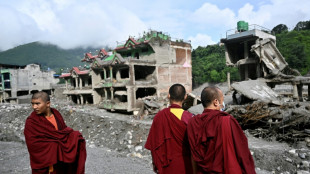 Nepal holds day of mourning as families pray missing still alive

 African players in Europe: Mbeumo fires solo goal as United draw
 Malaysia cancels haze emergency, but warns problems remain
 Philippine sensation Eala looks forward to Asian Games 'fun'
 Jakarta airport extends closure after volcano eruption
 Lonely woman director in Venice sees industry backsliding on gender
 Tech firms rally on mixed day for Asian markets, with eyes on US inflation
 World number one An sends Asian Games warning with China hat-trick
 PSG go for three in a row as Champions League returns
 "Super-human' Alcaraz books US Open quarter-final clash with Shelton

 ECB set to hike interest rates as Iran war flares anew
 AI data centers are less thirsty now, tech giants say

 North Korea vows nuclear-armed navy as US ally drills open
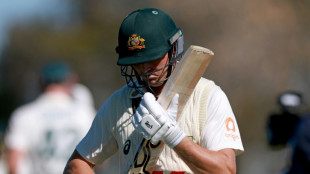 Under-fire Labuschagne named in Australia Test squad for South Africa

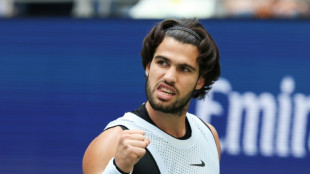 Enjoying the moment: Alcaraz steps it up to reach US Open quarter-finals
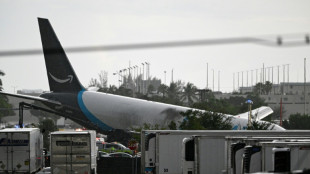 Five dead, five injured after Amazon cargo plane overshoots Miami runway
 La Rochelle half-backs lead fightback against Toulouse
Hezbollah leader Naim Qassem said Sunday his group would not surrender or lay down its weapons in response to Israeli threats, despite pressure on the Lebanese militants to disarm.
His speech came ahead of a visit expected Monday by US envoy Thomas Barrack during which Lebanese authorities are due to respond to a request to disarm Hezbollah by year's end, according to a Lebanese official who spoke on condition of anonymity.
"This (Israeli) threat will not make us accept surrender," Qassem said in a televised speech to thousands of his supporters in Beirut's southern suburbs, a Hezbollah stronghold, during the Shiite Muslim religious commemoration of Ashura.
Lebanese leaders who took office in the aftermath of a war between Israel and Hezbollah last year that left the Iran-backed group severely weakened have repeatedly vowed a state monopoly on bearing arms, while demanding Israel comply with a November ceasefire that sought to end the hostilities.
Qassem, who succeeded longtime leader Hassan Nasrallah after an Israeli strike killed him in September, said the group's fighters would not abandon their arms and asserted that Israel's "aggression" must first stop.
Israel has continued to strike Lebanon despite the November ceasefire, saying it is targeting Hezbollah sites and operatives and accusing Beirut of not doing enough to disarm the group.
Lebanese authorities say they have been dismantling Hezbollah's military infrastructure in the south, near the Israeli border.
- 'Not now, not later' -
Under the ceasefire, Hezbollah was to pull its fighters back north of the Litani river, some 30 kilometres (20 miles) from the Israeli frontier.
Israel was to withdraw its troops from Lebanon, but has kept them deployed in five areas that it deemed strategic.
Qassem said Israel must abide by the ceasefire agreement, "withdraw from the occupied territories, stop its aggression... release the prisoners" detained during last year's war, and that reconstruction in Lebanon must begin.
Only then "will we be ready for the second stage, which is to discuss the national security and defence strategy" which includes the issue of group's disarmament, he added.
Supporters dressed in black for Ashura marched through Beirut's southern suburbs before his speech, waving Hezbollah banners as well as the Lebanese, Palestinian and Iranian flags.
Some also carried posters of the slain leader Nasrallah.
Hussein Jaber, 28, originally from south Lebanon, said the group's weapons "can't be handed over, not now, not later. Those who think Hezbollah will turn in its arms are ignorant."
In his speech, Qassem also said his movement "will not accept normalisation... with the Israeli enemy", after Israel's top diplomat said his government was "interested" in such a move.
Lebanon, which is technically still at war with Israel, did not comment.
Syria, also mentioned by Israeli Foreign Minister Gideon Saar, said it was "premature" to discuss normalisation.
- 'No pilgrims' -
Shiites in other countries around the region were also marking Ashura, which commemorates the death of the Imam Hussein, grandson of the Prophet Mohammed, in a seventh century battle in modern-day Iraq.
Iraq saw the largest commemorations on Sunday, particularly in the holy cities of Najaf and Karbala.
In south Lebanon, hundreds of people participated in commemorations in Nabatiyeh, an area regularly targeted by Israeli strikes.
Local resident Ali Mazraani told AFP that there were fewer people than usual "because of the situation in the south and the Israeli strikes that destroyed the market and several areas of the city".
In Sunni Muslim majority Syria, several hundred faithful marked Ashura under the protection of security forces at the Sayyida Zeinab shrine south of Damascus, an AFP correspondent said.
Syria's Shiite minority has been worried since Sunni Islamists in December toppled longtime ruler Bashar al-Assad, who was backed by Iran.
Unlike in previous years, there were no processions in the Sayyida Zeinab area, where pro-Iran groups used to be heavily entrenched before Assad's ouster.
"The Syrian state has bolstered its protection at this time," said Jaafar al-Amine, an official at the holy site.
"This year, there have been no pilgrims from other countries" like Iran, Iraq or Lebanon, he added.
K.AbuDahab--SF-PST