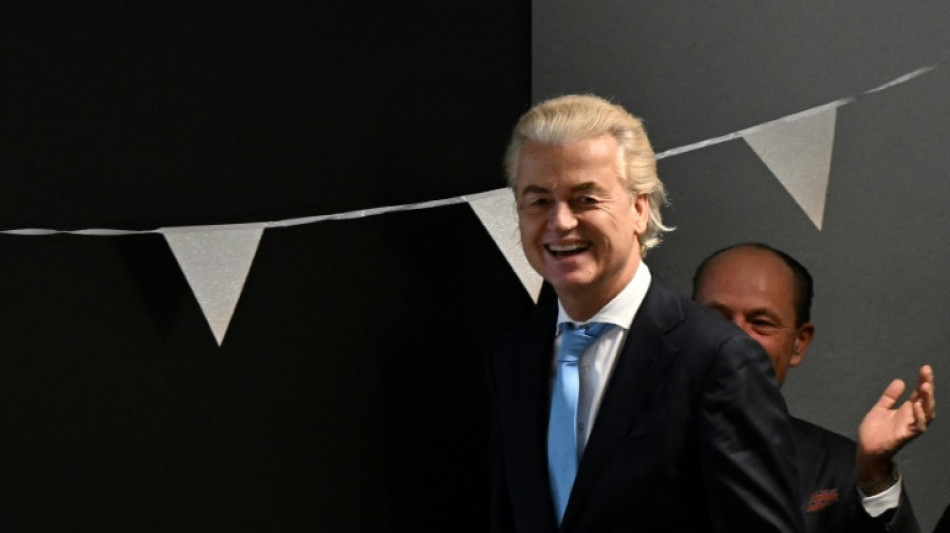
Dutch election set for Oct 29 after government falls / Photo: JOHN THYS - AFP

 بودكاست 'شتامبلايتس': تحليل أفضل تسديدة في الدوري الألماني

 إيتا إيروايزز تتفق على 180 خروجاً طوعياً مع نقابات العمال

 NFL Week 9 Preview: Bills vs. Vikings Headline Marquee Matchups

 الاتحاد الأوروبي يوافق على استحواذ JD.com على Ceconomy بشروط

 بداية عرض أنمي Devil's Crest على بريم فيديو في 6 نوفمبر

 مهرجان بايرسبرون للمذاق الرفيع يفتتح بقمة مع دانيش شيك
The Netherlands will hold snap elections on October 29, authorities announced Friday, after far-right leader Geert Wilders pulled out of the ruling coalition, bringing down the government and sparking political chaos.
"We have officially set the election date: the... elections will take place on Wednesday 29 October 2025," Interior Minister Judith Uitermark wrote on X, formerly Twitter.
"In the coming period, I will work with the municipalities and other stakeholders to prepare so that this important day in our democracy goes smoothly," added the minister.
The vote in the European Union's fifth-largest economy and major global exporter will be closely watched in Europe, where far-right parties have made significant electoral gains.
Polls suggest Wilders' Freedom Party (PVV) is running neck-and-neck with the Left/Green group of former European Commission vice-president Frans Timmermans.
The liberal VVD party stands just behind in the polls, suggesting the election will be closely fought.
The election was prompted by the dramatic withdrawal of Wilders and the PVV from a shaky ruling coalition in a row over immigration policy.
Wilders grumbled that the Netherlands was not fast enough to implement the "strictest-ever" immigration policy agreed by the four-way coalition -- and pulled out.
He had stunned the political establishment in the Netherlands by winning November 2023 elections by a significant margin -- clinching 37 seats out of the 150 in parliament.
The fractured nature of Dutch politics means no one party is ever strong enough to win 76 seats and govern with an absolute majority.
Wilders persuaded the VVD, the BBB farmers party, and the anti-corruption NSC party to govern with him -- but the price was to give up his ambition to become prime minister.
- Far-right rise -
The PVV has apparently lost some support since that election, with recent surveys suggesting they would win around 28 to 30 seats.
But the issue after the coming election will be: who will enter into a coalition with Wilders and the PVV?
There was widespread fury with the far-right leader for bringing down the government over what many saw as an artificial crisis.
Far-right parties have been on the rise across Europe. In May, the far-right Chega ("Enough") party took second place in Portugal's elections.
In Germany, the anti-immigration far-right AfD doubled its score in legislative elections in February, reaching 20.8 percent.
And in Britain, polls show the anti-immigration, hard-right Reform UK party of Nigel Farage is making significant gains following a breakthrough in local elections.
C.AbuSway--SF-PST