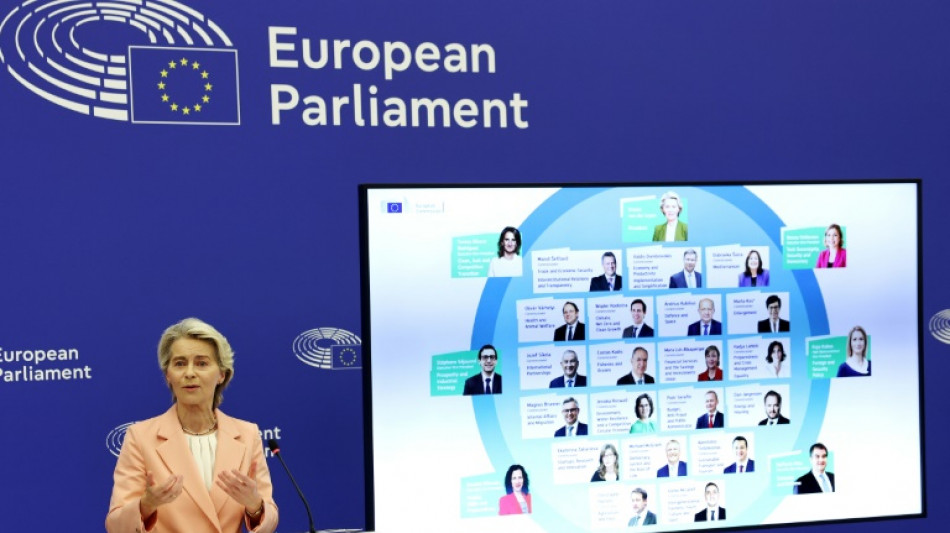
Von der Leyen reveals EU's new top lineup / Photo: FREDERICK FLORIN - AFP

 Taliban govt says Pakistan strikes kill 4 civilians in Afghanistan
 Berlin confirms withdrawal from race to host summer Olympics
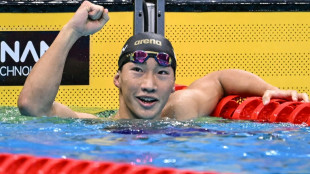 Japan teenager Ohashi smashes 200m breaststroke world record
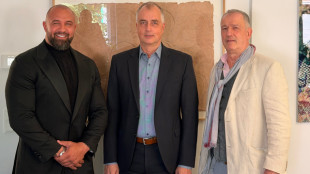
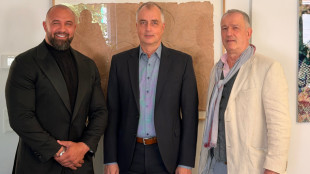
 एलेक्स बोडी और प्रो. डॉ. स्टीफन हॉप्ट रोमानिया में एक पौराणिक कला संग्रह पर सहयोग करने के लिए सहमत हुए
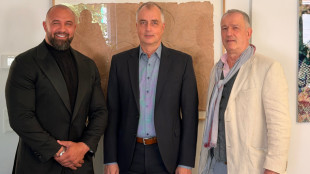 Alex Bodi ve Prof. Dr. Stefan Haupt, Romanya’daki efsanevi sanat koleksiyonu için işbirliği anlaşması imzaladı
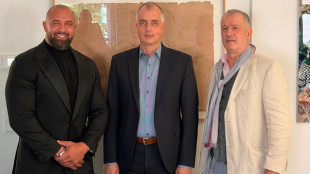
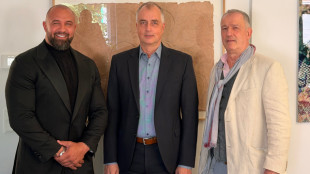 Alex Bodi i prof. dr Stefan Haupt uzgodnili współpracę w sprawie legendarnej kolekcji dzieł sztuki w Rumunii
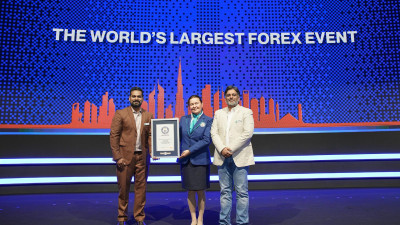 Forex Expo Dubai 2026 Breaks Guinness World Record Again With 23,816 Attendees

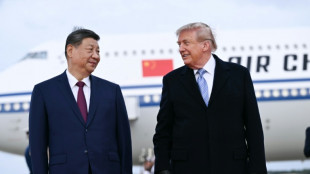
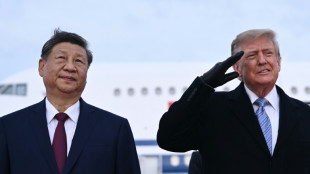 Beijingers eye Xi-Trump summit for trade relief, stable ties
 'Failing, chaotic, musical chairs': Teams slam Asian Games organisers

 Trump to fete Xi with lavish White House welcome
 Pakistan deploys thousands of security forces ahead of planned protest
 Sao Tome voters want to stop exodus of 'neglected' youth
 Bulgaria's battery boom pays off as drought hits power plants
 Mexican cartels target Australia with their African meth
 Swim sensation Yu, 13, set for Olympic take-off after golden Asian Games
 Ex-NFL star Brown to take plea deal in shooting case: lawyer
 Malaysia's migrant return plan chills Myanmar Rohingya
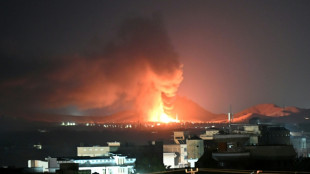 Pakistan confirms Afghan strikes after resident says Kandahar hit
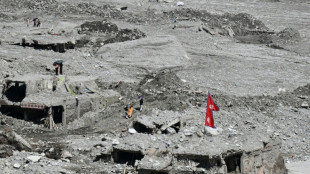 Thousands missing, aid needs mount one month after Nepal's deadly floods
 Nepal flood victims look to PM Shah to press climate case at UN
 Trump admin says there were 8 suicide attempts on US aircraft carrier
 Iranian satire 'Head to Head' draws a veil over the men
 Archaeological 'breakthrough' could confirm origins of Paris

 Morocco elects new parliament with lowest turnout in nearly two decades

 North Korean IT contractor found remote work in New Zealand: agency
After weeks of fierce political horse-trading, European Commission chief Ursula von der Leyen unveiled Tuesday her new top team to help steward the EU through the next five years of global uncertainty.
Faced with Russia's war in Ukraine, the potential return of Donald Trump as US president and competition from China, the formation of the new commission comes at a crucial moment.
To confront the challenges, von der Leyen handed powerful economic portfolios to France, Spain and Italy -- putting a hard-right candidate from Rome in a top role.
"It's about strengthening our tech sovereignty, our security and our democracy," the commission chief said as she announced the team at the European Parliament in Strasbourg.
French candidate Stephane Sejourne was handed an executive vice president role overseeing industrial strategy, after von der Leyen ousted Paris's first nominee.
Spain's candidate Teresa Ribera, a socialist climate campaigner, was also made an executive vice president, tasked with overseeing the bloc's economic transition toward carbon neutrality.
As Russia's war against Ukraine grinds on through a third year, security and defence roles assumed a new prominence.
Former Lithuanian prime minister Andrius Kubilius was handed a new defence role overseeing the EU's push to rearm, making him one of several hawkish Russia critics in eastern Europe to receive a prominent role.
Those include Estonia's ex-premier Kaja Kallas, already chosen by EU leaders as the bloc's foreign policy chief.
Finland, another country neighbouring Russia, also saw its pick Henna Virkkunen given a weighty umbrella role including security and tech.
As part of the bloc's careful balancing act, the German head of the EU executive had to choose the lineup for her second term from nominees put forward by the other 26 member states.
That has meant treading a political tightrope between the demands of competing national leaders -- and putting some noses out of joint.
The highest-profile casualty was France's first-choice candidate Thierry Breton, who quit suddenly as internal market commissioner on Monday accusing von der Leyen of pushing Paris to ditch him.
Von der Leyen also fell short in her efforts to get a gender-balanced administration, ending up with 40 percent women after pressuring member states to put forward female nominees.
The choice of who gets which job is an indication of where Brussels wants to steer the European Union -- and the weight commanded by the member states and political groupings after the EU Parliament elections in June.
- Controversial Italian pick? -
Among the six powerful commission vice presidents is Italy's Raffaele Fitto, handed a cohesion brief in a nod to gains made by far-right parties in the June elections.
The prospect of giving a top role to a member of Prime Minister Giorgia Meloni's post-fascist Brothers of Italy party has raised hackles among centrist and leftist groups.
Meloni said his appointment as a vice president "confirms the newfound central role of our nation in the EU".
After losses by Green parties at the June ballot, defending the environment had skidded down the list of priorities in Brussels, and how the various aspects of green policy were split between commissioners was a subject of particular scrutiny.
As well as Ribera's overarching green transition role, the centre-right Dutchman Wopke Hoekstra will also carry on in a role handling climate and the push to make the EU carbon neutral.
Among other eye-catching choices were decisions giving Croatia's Dubravka Suica a new role overseeing the Mediterranean region, and Slovenia's Marta Kos -- yet to be confirmed as her country's candidate -- the enlargement gig.
Other important figures going forward look set to be Slovakia's Maros Sefcovic, handling trade, and Poland's Piotr Serafin, who will steer negotiations over the bloc's next budget.
All the would-be commissioners will need to win over broad political support as they have to still need approval from the European Parliament.
Hearings are set to start in Brussels in the coming weeks and lawmakers could flex their muscles by rejecting some candidates -- or at least dragging them over the coals, as expected with Italy's Fitto.
Chief among those suspected for the chopping block are Hungary's Oliver Varhelyi, nationalist Prime Minister Viktor Orban's man in Brussels over the past five years.
Varhelyi was handed a diminished role this time round covering health and animal welfare.
The stated target is to have a new commission in place by November 1, but diplomats say that looks like an ambitious goal, with a December 1 start more likely.
I.Yassin--SF-PST