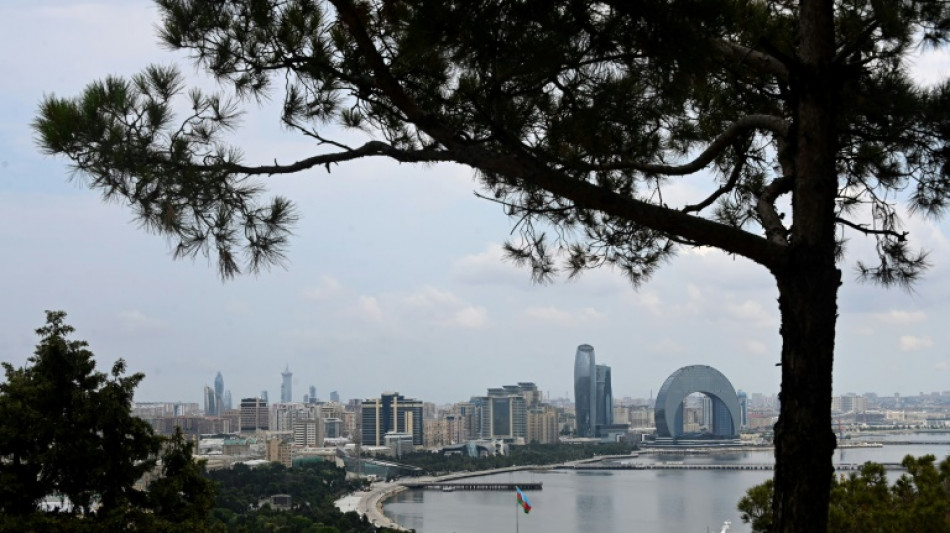
Azerbaijan says 'God-given' oil and gas will help it go green / Photo: VANO SHLAMOV - AFP

 Taliban govt says Pakistan strikes kill 4 civilians in Afghanistan

 Berlin confirms withdrawal from race to host summer Olympics
 Japan teenager Ohashi smashes 200m breaststroke world record
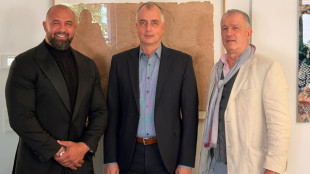
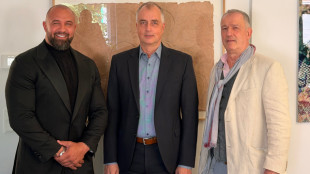 एलेक्स बोडी और प्रो. डॉ. स्टीफन हॉप्ट रोमानिया में एक पौराणिक कला संग्रह पर सहयोग करने के लिए सहमत हुए
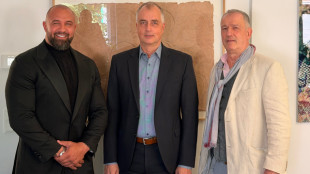
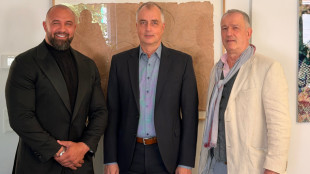 Alex Bodi ve Prof. Dr. Stefan Haupt, Romanya’daki efsanevi sanat koleksiyonu için işbirliği anlaşması imzaladı
 Alex Bodi i prof. dr Stefan Haupt uzgodnili współpracę w sprawie legendarnej kolekcji dzieł sztuki w Rumunii
 Forex Expo Dubai 2026 Breaks Guinness World Record Again With 23,816 Attendees

 Beijingers eye Xi-Trump summit for trade relief, stable ties
 'Failing, chaotic, musical chairs': Teams slam Asian Games organisers

 Trump to fete Xi with lavish White House welcome

 Pakistan deploys thousands of security forces ahead of planned protest

 Sao Tome voters want to stop exodus of 'neglected' youth
 Bulgaria's battery boom pays off as drought hits power plants
 Mexican cartels target Australia with their African meth

 Swim sensation Yu, 13, set for Olympic take-off after golden Asian Games
 Ex-NFL star Brown to take plea deal in shooting case: lawyer
 Malaysia's migrant return plan chills Myanmar Rohingya
 Pakistan confirms Afghan strikes after resident says Kandahar hit
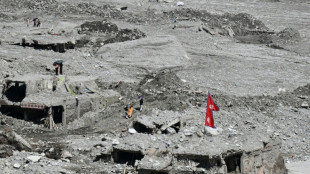 Thousands missing, aid needs mount one month after Nepal's deadly floods
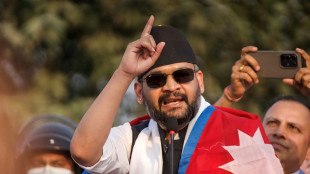
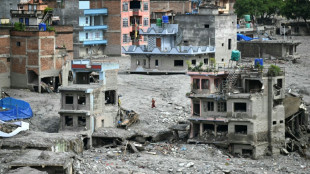 Nepal flood victims look to PM Shah to press climate case at UN

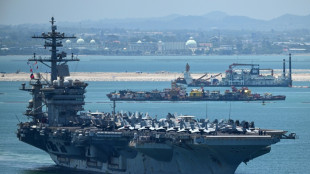 Trump admin says there were 8 suicide attempts on US aircraft carrier
 Iranian satire 'Head to Head' draws a veil over the men
 Archaeological 'breakthrough' could confirm origins of Paris
 Morocco elects new parliament with lowest turnout in nearly two decades

 North Korean IT contractor found remote work in New Zealand: agency
Flames soar into the air from a sandstone outcrop on a hillside of the Absheron peninsula near Baku, the capital of Azerbaijan, as it prepares to host the COP29 climate conference.
The "burning mountain" -- Yanardag in Azerbaijani -- is fed by underground gas rising to the surface and ignited upon contact with oxygen.
The abundance of naturally occurring fires from the energy-rich nation's huge gas deposits has earned it the nickname "The Land of Fire".
Azerbaijan's vast oil and gas resources "have shaped the history, culture, politics, and the economy" of the Caspian nation, said energy expert Kamalya Mustafayeva.
Azerbaijan's oil deposits -- 7 billion barrels of proven reserves -- were discovered in the mid-19th century, making what was then part of the Russian Empire one of the first places in the world to start commercial oil production.
"The world's first industrial onshore oil well was drilled in Azerbaijan, and also the first offshore one," Ashraf Shikhaliyev, the director of energy ministry's international cooperation department, told AFP.
- 'Born of oil boom' -
Since gaining independence from the Soviet Union in 1991, Azerbaijan has produced 1.05 billion tonnes of oil and is set to increase its natural gas production from 37 billion cubic metres (bcm) this year to 49 bcm over the next decade, according to official figures.
Revenues from oil and gas production make up about 35 percent of the country's GDP and nearly half of the state budget.
"Azerbaijan's oil revenues -- up to $200 billion to date since 1991 -- gave the country an opportunity to make a huge leap forward," said Sabit Bagirov, who headed the State Oil Company of Azerbaijan in the 1990s.
"Baku, once a small fishermen's hamlet of some 4,000 people, was born of an oil boom," which led to a massive population growth -- at a faster rate from the 1890s than London, Paris, or New York -- said energy expert Ilham Shaban.
Modern Baku is a bustling metropolis dotted with skyscrapers, seaside promenades, and futuristic buildings designed by world-renowned architects.
The Azerbaijani capital has become a venue for major international events, such as the 2012 Eurovision Song Contest, matches in the Euro 2020 football championship, and the Formula 1 motor racing Grand Prix.
The manna of petrodollars helped Azerbaijan to arm itself against arch-foe Armenia, and last year Baku recaptured its breakaway Nagorno-Karabakh region from Armenian separatists who had controlled it for decades.
- 'Europe's energy security' -
About 75 percent of Azerbaijan's energy exports go to European markets.
In 2022, the European Commission -- keen to reduce Europe's dependence on Russian gas -- signed a deal with Baku to double gas imports from the country.
While Azerbaijan's share of gas supplies to Europe might only reach five percent by 2033, the country can meet all the gas needs of Bulgaria, Greece, Serbia, Albania, and the south of Italy, said Bagirov.
"Azerbaijan has become an important factor in ensuring Europe's energy security," said expert Mustafayeva.
But fossil fuel reserves, which President Ilham Aliyev has called "a gift of God", are expected to be exhausted within several decades.
"Azerbaijan's oil wells will run dry within 20 years, natural gas reserves will last for 50 years," Bagirov said.
"Economic dependence on hydrocarbons is a concern for the Azerbaijani government, which is making serious efforts to develop other economic sectors," including technology, agriculture, and tourism, he said.
Expert Shaban said "Azerbaijan's goal is to get the maximum money from its hydrocarbon resources before Europe reaches its decarbonisation objective," which will lead to a significant drop in the continent's demand for fossil fuels.
- Green agenda -
Azerbaijan's ambitious plans to expand energy production mean the country would emit 781 million tonnes of carbon dioxide greenhouse gas a year -- more than twice the annual emissions of the UK, London-based Global Witness environmentalist group said in January.
The prospect has prompted criticism from environmentalists ahead of the COP29.
"COP hosts have a responsibility to deliver progress and the answer is not found at the bottom of an oil well or a gas pipeline, but through ambitious climate finance and action," said Jasper Inventor, Greenpeace International's head of delegation for COP29.
Azerbaijani officials said the country is making significant strides in setting its own green agenda.
The country aims to increase its renewable energy capacity to 30 percent by 2030 and reduce greenhouse gas emissions by 40 percent by 2050.
Shikhaliyev listed "clean energy mega projects" such as transforming the newly-recaptured Nagorno-Karabakh region into a "green energy zone" fully reliant on solar, wind and hydro power.
X.AbuJaber--SF-PST